As an affiliate, we may earn a commission from qualifying purchases. We get commissions for purchases made through links on this website from Amazon and other third parties.
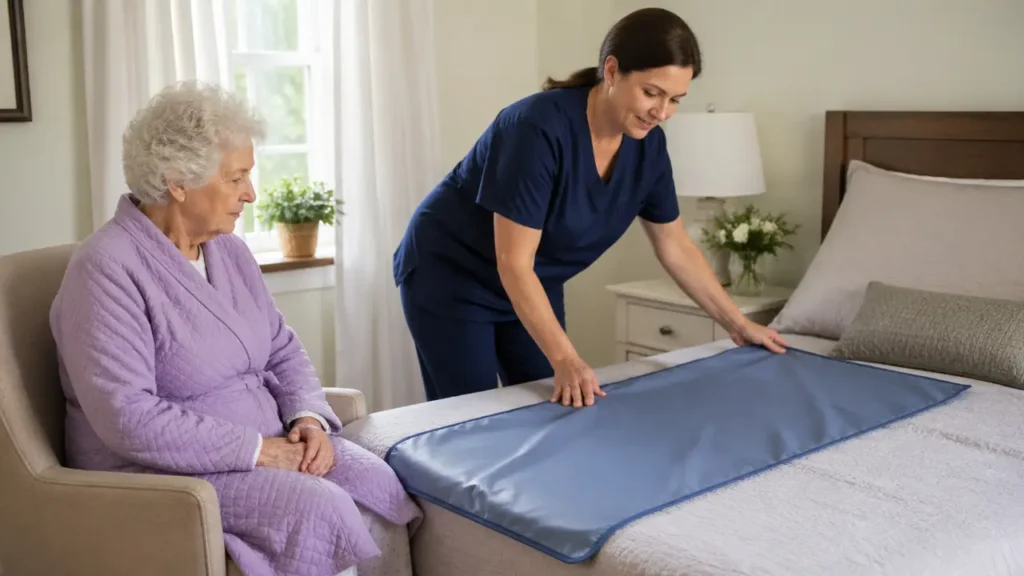
A sliding sheet or transfer mat can make a move feel much easier, but only if you use it for the right kind of transfer. These tools are meant to reduce friction during horizontal moves. They are not meant to replace a standing transfer, and they are not meant to be used like a lifting sling.
That distinction matters. A sliding sheet helps the body glide across a support surface instead of being dragged. A transfer mat or transfer board helps bridge a gap between two surfaces during a lateral move. Used the right way, they reduce strain on the caregiver and reduce friction and shear on the person being moved. Used the wrong way, they create sliding, skin injury, and loss of control. If you want the broader method decision first, start with pivot vs. sliding transfer and repositioning in bed without lifting.
If friction-reduction tools are only one part of the move, the mobility and transfers master guide connects the wider transfer and equipment picture.
When to Use This
Sliding sheets and transfer mats are best for horizontal movements where the person's body stays supported.
Common uses include:
- moving someone up in bed
- turning or rolling in bed
- centering someone in bed after they have drifted sideways
- lateral transfers from bed to a stretcher, shower stretcher, or another bed
- some bathroom or seating adjustments when the body is still supported
These tools are especially useful when the main problem is friction. Instead of lifting body weight, the goal is to let one low-friction surface move against another.
A simple way to think about it:
- sliding sheet: lowers friction under the body for boosting, turning, and sliding
- transfer mat or board: bridges a gap or edge between two surfaces during a lateral move
Many safer bed-to-bed or bed-to-stretcher moves use both. The sheet helps the body slide. The board or mat protects the gap between surfaces.
This is not the right tool for:
- a stand-pivot transfer
- carrying someone from one place to another
- pulling on a person who is half-standing and half-falling
- leaving a slippery surface under someone without a clear reason and close supervision
If the real job is a seated transfer, see sliding board transfer basics. If the real job is a standing transfer, compare two-person assist and sit-to-stand lift setup.
Before You Start
Check the person, not just the equipment
Before using a sliding aid, check for:
- fragile skin
- pressure areas or existing wounds
- pain with rolling or turning
- drainage tubes, catheters, or oxygen tubing
- spinal precautions or reasons to avoid a standard log roll
- bariatric size that may need more coverage or more helpers
This matters because the move that protects one person may aggravate another. If skin shear is already a problem, keep positioning basics to reduce pressure and shear open in your plan too.
Choose the right size and enough helpers
The sheet or mat has to cover the movement path well enough to work. If the body is wider than the tool, or the feet and heels are left rubbing on the bed, friction problems come right back.
That means checking:
- whether the sheet covers shoulders to hips
- whether the heels need their own sliding protection
- whether one sheet is enough for body width
- whether the task needs two or more caregivers
Larger bodies and lateral transfers often need more than one helper and sometimes more than one sheet.
Inspect the tool before use
Do not grab the nearest sheet and assume it is fine.
Check for:
- tears
- worn edges
- soiling
- wrinkled folds that will sit under the person
- handles or straps hanging off the edge in a way that changes how it works
Low-friction tools work best when they are flat, intact, and the right size.
Set the room and surfaces first
Before the move:
- lock the brakes on beds, stretchers, wheelchairs, or commodes as appropriate
- adjust the bed to a good working height
- lower the head of the bed if the move allows it
- clear any gap, rail, or equipment that will catch the body
- have another caregiver on the far side when the person could roll or slide off
For lateral transfers, the receiving surface is often safer when it is level with or slightly lower than the starting surface. If there is a gap, a firm transfer board or transfer mat should bridge it instead of leaving open space under the body.
Decide how the sheet will go under the person
A sliding sheet can be inserted in more than one way. Common methods include:
- log roll
- unfolding or unravelling
- tucking or burrito-style insertion
Log rolling is familiar, but it is not always the best choice. Some people with pain, fractures, spinal precautions, or certain medical conditions may do better with a method that reduces the roll itself. If rolling precautions are part of the case, compare spinal precautions: log roll and transfers.
Step-by-Step Technique
The exact sequence depends on whether you are boosting in bed, turning, or moving laterally to another surface. But the same rule stays true in all of them: slide, do not lift.
1. Insert the sliding sheet with the least disruptive method
Use the insertion method that fits the person's condition.
The goal is to place the sheet:
- flat
- without big wrinkles
- under the body area that needs to move
- without twisting lines or pulling on the limbs
If you are using two sliding layers, make sure the friction happens between the two layers and not against the person's skin.
2. For boosting up in bed, keep the movement horizontal
When moving someone up in bed:
- protect the head from the headboard
- have the person bend knees and help push if able
- place hands or handles near the shoulders and hips
- keep hands gliding close to the mattress
- move on a count together
The move should look like a slide up the bed, not a lift up into the air. If you find yourself picking the person up instead of gliding them, stop and reset.
3. For turning in bed, pull level, not upward
When using the sheet to turn:
- one caregiver supports the person on the receiving side
- the other gathers the top sheet near the hips and shoulders
- the sheet is pulled toward the caregiver in a level direction
- the body rolls on its own axis
The mistake here is pulling up instead of across. Upward pulling increases strain and can increase skin shear instead of reducing it.
4. For lateral transfer between surfaces, bridge the gap first
For bed-to-bed, bed-to-stretcher, or bed-to-shower-stretcher moves:
- bring surfaces close together
- bridge the gap with a firm transfer mat or board
- keep caregivers on both sides
- use a push-pull plan, not random tugging
In many safer lateral transfers, one caregiver helps push from the starting side while another pulls from the receiving side. This spreads the work and keeps the body moving in a flatter, more controlled line.
5. Move at a controlled pace
Sliding aids are slippery by design. That means speed control matters.
Move:
- on a clear count
- in one agreed direction
- with short controlled force
- slowly enough that the head, heels, and lines stay protected
Faster is not safer here. The goal is predictable glide, not momentum.
6. Remove the sheet after the move unless there is a specific reason not to
In most home and routine care situations, sliding sheets should come out after the repositioning or transfer is done. They are usually not meant to stay under the person because the low-friction surface can create unwanted sliding and skin risk.
A common removal method is to peel or invert the sheet under itself rather than yanking it straight out. That reduces friction during removal too.
Safety Checks and Common Errors
Common mistakes
- using a sliding sheet as if it were a lifting sling
- forgetting to bridge the gap during a lateral transfer
- leaving wrinkles under the body
- trying to move too fast because the sheet feels slippery
- using too few helpers for the size of the person or the task
- letting the heels or part of the body drag on the bed surface
- leaving the sliding aid under the person without a clear plan
Another common mistake is reaching too far over the bed. Sliding tools reduce friction, but they do not erase bad posture. If the bed is too low or the caregivers are overstretched, strain comes right back.
Watch for skin and pressure problems
Sliding aids help reduce friction and shear, but only if they are used flat and removed appropriately.
Pay attention to:
- redness after the move
- complaints of burning, pinching, or rubbing
- new heel soreness
- creases under the hips or shoulders
If pressure management is already a major issue, add pressure relief schedule ideas and best wheelchair cushions for pressure relief where relevant.
Red flags that the method is wrong for the task
Stop and rethink the method if:
- the move is turning into a vertical lift
- the person is half-standing instead of fully supported
- the gap between surfaces is still exposed
- the person keeps sliding the wrong way
- the caregivers cannot control the pace
- the person is too painful or too medically unstable for the insertion method
Those are signs the task may need a different device, more helpers, or a clinician-guided plan.
When to Stop or Get Help
Get more help when:
- the person cannot tolerate rolling or insertion
- a bariatric body size needs more staff or larger aids
- fragile skin or wounds make every move high risk
- the person cannot stay safely centered on the support surface
- the transfer path includes a gap, height difference, or edge you cannot protect well
- the task really belongs to a hoist, stand aid, or seated transfer device instead
This is also the point to bring in PT, OT, nursing, or home health if the same difficult move keeps coming up. The best answer may be:
- safe patient handling policies at home
- what to do if a transfer starts to fail
- best slide sheets and transfer mats
- passive Hoyer-type lifts
Frequently Asked Questions
What is the main job of a sliding sheet?
Its main job is to reduce friction during horizontal moves like boosting, turning, and lateral transfers.
Is a sliding sheet the same as a transfer mat?
Not exactly. A sliding sheet reduces friction under the body, while a transfer mat or board helps bridge the gap between surfaces during a lateral move.
Can I use a sliding sheet to lift someone?
No. Sliding sheets are for sliding, not lifting.
When should I use a transfer board or mat with the sheet?
Use it when moving between two surfaces that have a gap or edge that needs to be bridged safely.
Should the sliding sheet stay under the person afterward?
Usually no. In most routine use, it should be removed after the repositioning or transfer is complete.
Does every slide-sheet move need two caregivers?
Not every move, but many boosting and lateral transfers are safer with at least two people, especially when the person cannot help much or the move crosses between surfaces.
What if the person has spinal precautions or cannot tolerate a log roll?
Use an insertion method that fits the condition and get clinician guidance if standard rolling is not safe.
What is the biggest mistake caregivers make with slide sheets?
Trying to lift with them instead of using them to create a flat, controlled glide.
If the real issue is in-bed repositioning, continue with repositioning in bed without lifting and positioning basics to reduce pressure and shear. If the move crosses between surfaces, compare sliding board transfer basics and pivot vs. sliding transfer.