As an affiliate, we may earn a commission from qualifying purchases. We get commissions for purchases made through links on this website from Amazon and other third parties.
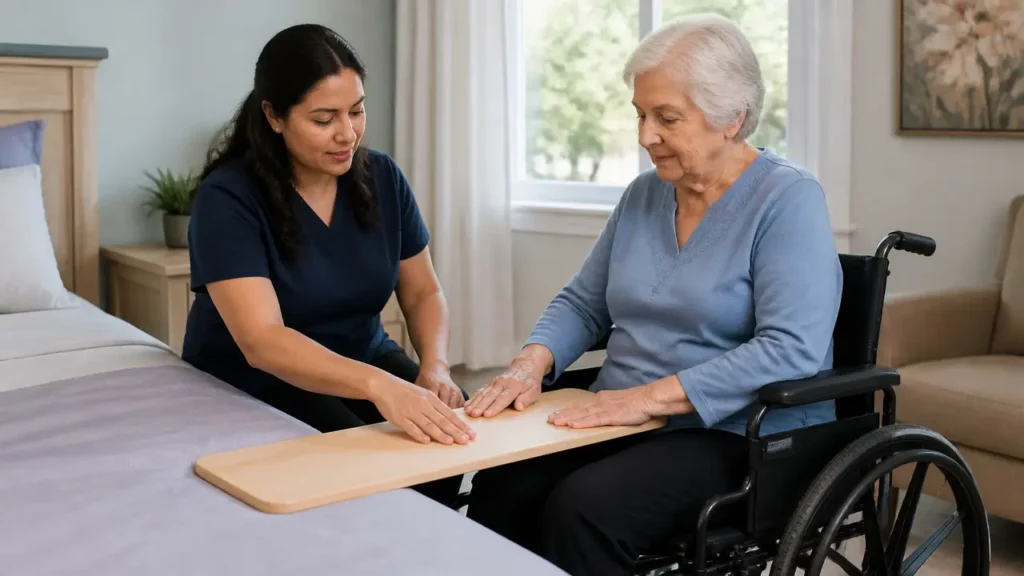
A sliding board transfer is not just "slide over and hope for the best." It is a planned seated transfer that bridges two surfaces and reduces how much standing is needed. When it is set up well, it can protect both the person and the caregiver from the strain and last-second collapse that happen during bad pivot transfers.
But the board only helps when the setup is right. Surface height, board placement, sitting balance, skin protection, and hand position all matter. If you want the broader method comparison first, start with pivot vs. sliding transfer: when to use each and best transfer boards for home use.
If a board transfer is only one method in the bigger plan, the mobility and transfers master guide connects the wider transfer and equipment picture.
Why This Matters
A sliding board can help someone move between surfaces without doing one big standing lift. That matters when the person:
- cannot safely pivot in standing
- needs to move from wheelchair to bed or chair
- has enough sitting control to help with short lifts and scoots
- wants more independence than a full lift allows
The board can also reduce caregiver strain, but it is not automatic. Bad setup creates new risks:
- skin pinching and rubbing
- fingers caught under the board
- the wheelchair rolling away
- the person sliding toward the floor instead of the destination
- too much wrist and shoulder strain
That is why board transfers are usually safer when they are taught in stages instead of improvised on the first hard day.
Key Factors That Change the Decision
Whether the person can manage a seated transfer
A board is best for someone who cannot safely stand and pivot but can still:
- sit with enough upper-body control
- follow the transfer steps
- use the arms to help with lift-and-scoot movements
- tolerate short, repeated movements across the board
If upper-body control while sitting is poor, cooperation is unreliable, or the person is too unpredictable to follow the move, a board may not be the safer answer.
Whether the surfaces are close and stable
Board transfers work best between surfaces of similar height or to a slightly lower surface. They become much harder when:
- the gap is large
- one surface moves
- the target is much higher
- there is not enough room for the board to rest well
Transfers between two mobile surfaces are especially risky. A toilet, shower commode, or car transfer may need more training and more setup than a basic bed-to-wheelchair move.
Whether skin and sensation are already a concern
Board transfers can create friction and shear if the person drags instead of doing short lift-and-scoot moves. If skin protection is already an issue, pair this article with positioning basics to reduce pressure and shear and using a sliding sheet or transfer mat.
Whether the right board is actually being used
Use a real transfer board, not a random board-shaped object. Length, width, surface texture, and handles all affect control. Keep the board within reach and matched to the person's size and the transfer distance.
How to Use, Choose, or Set It Up Safely
Set up the wheelchair and destination first
Before the board comes out:
- bring the wheelchair or chair as close as possible
- lock the brakes
- move footrests and the nearest armrest out of the way if needed
- line up the front castors for better stability
- clear bags, cords, and clothing out of the path
The less gap there is, the safer the move usually feels.
Place the board with control
A common setup looks like this:
- help the person lean away from the transfer side
- slide about one-third of the board under the upper thigh or buttock
- rest the far end securely on the target surface
- angle it so the path is clear of the wheel
The board is a bridge, not a diving board. It should feel planted before the first movement begins.
Use short lift-and-scoot moves, not a long drag
The safest transfer is usually a series of small moves:
- lean forward enough to take weight off the starting surface
- push through the arms
- move the hips a short distance
- lower with control
- reset hand and foot position
- repeat until fully across
This protects the skin better than dragging the buttocks down the full board length in one motion.
Head and shoulders often move slightly in the opposite direction of the hip move. That counterbalance can make each small lift easier.
Keep feet, hands, and skin protected
Good habits during the move:
- keep the feet flat when the transfer style allows it
- reposition the legs one at a time if they drift
- use clothing or a transfer sheet to reduce rubbing
- keep fingers and hands out from under the board
- consider using fists instead of flat hands if wrists are getting overloaded
If the move is rubbing the skin, hitting the wheel, or jamming the hands, stop and reset instead of forcing the next scoot.
Progress from beginner to intermediate on purpose
A beginner board transfer is usually:
- between level surfaces
- in a roomy setup
- with a trained helper
- over a short gap
An intermediate board transfer may involve:
- less helper assistance
- more independent board placement
- slightly more complex home surfaces
- better timing and fewer rests
Do not jump straight from a basic bed transfer to a cramped toilet or car transfer without training. Those are different skill levels.
Common Mistakes and Red Flags
Common mistakes:
- forgetting to lock the wheelchair
- using the board over a large height difference
- placing too little board under the body
- dragging across the board instead of doing short lifts
- putting fingers under the board
- trying the move when sitting balance or cooperation is poor
Red flags:
- repeated skin pinching or redness
- the person cannot clear the wheel
- hands and wrists are taking too much load
- the person slides forward instead of across
- the move only works with a near-dead-lift from the helper
Those are signs the setup, the skill level, or the method itself needs to change.
When to Get More Help
Get PT or OT help when:
- the transfer is moving to a toilet, shower commode, car, or couch
- the person has limited sensation or skin breakdown risk
- upper-body weakness makes each scoot unsafe
- obesity, fear, or unpredictability means a second helper may be needed
- you are deciding between sliding boards, slide sheets, or a lift
If the hardest transfers involve public or tight bathroom setups, continue with public restroom and tight space transfers and toilet transfers safely.
Frequently Asked Questions
Who is a sliding board transfer best for?
Someone who cannot safely do a standing pivot but can still help with seated balance and short scooting movements.
How much of the board should go under the body?
Usually only part of the board, often about one-third, should be under the upper thigh or buttock while the rest bridges to the target surface.
Should the wheelchair be straight or angled?
It should be close and stable. The exact angle varies, but the main goal is a short, clear path that avoids wheel interference.
Is a sliding board safer than a pivot transfer?
It can be safer when standing is weak or unsafe, but only if the person has enough seated control and the surfaces are set up well.
Can I use a transfer board for toilet transfers?
Sometimes, but toilet transfers are more advanced because space is tighter and hand placement is often worse.
Why does the move hurt the skin sometimes?
Usually because the body is dragging instead of doing short lift-and-scoot moves, or because the setup is causing pinching and shear.
When is a board not the right choice?
When sitting balance and upper-body control are poor, the person cannot follow directions, the surfaces are too unstable, or the helper is still doing most of the lifting.
If the next question is friction reduction rather than board setup, continue with using a sliding sheet or transfer mat and positioning basics to reduce pressure and shear. If the real decision is method choice, return to pivot vs. sliding transfer and transfers with a non-weight-bearing leg.