As an affiliate, we may earn a commission from qualifying purchases. We get commissions for purchases made through links on this website from Amazon and other third parties.
Repositioning in bed should not mean manually lifting a person higher on the mattress. That is one of the fastest ways to hurt a caregiver and drag the person's skin at the same time. The safer goal is to reduce friction, use the bed and the person's own movement when possible, and switch to slide aids or more help before the task turns into brute force.
This matters because boosting and turning in bed happen often. They also happen when caregivers are tired, working alone, and trying to be quick. That is exactly when people twist, pull under the arms, or tug on a pad that was never meant to move body weight. For the broader transfer picture, start with the mobility and transfers master guide and pair this article with positioning basics to reduce pressure and shear.
Why This Matters
Bed repositioning becomes high risk when:
- the person slides toward the foot of the bed
- the person cannot help much
- the bed height is wrong
- the caregiver is reaching too far
- skin is fragile or already red
The common goals are:
- boost higher in bed
- turn to the side
- center the body again
- relieve pressure
- set up for eating, sleeping, or care
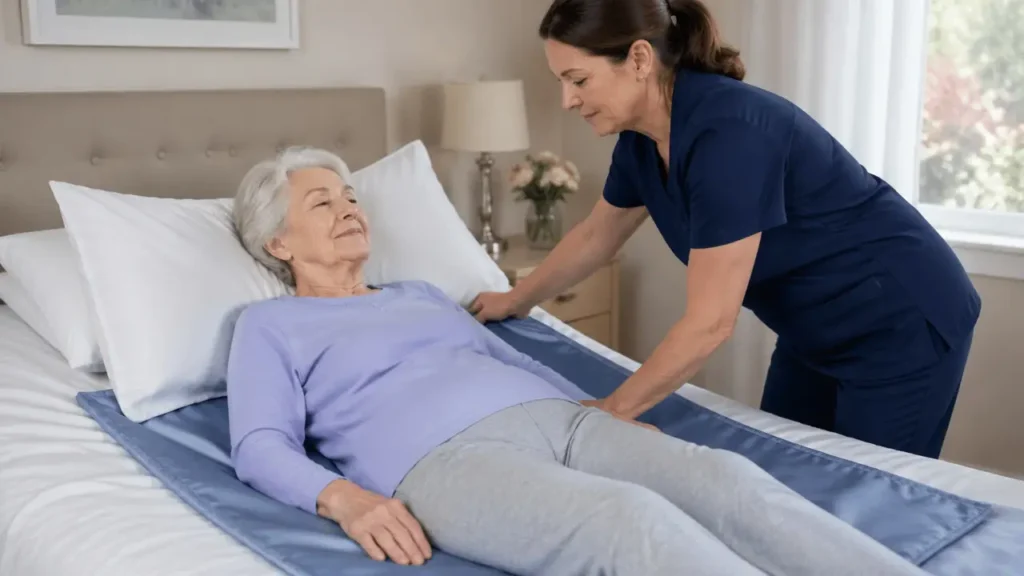
In practice, a slide sheet can cut down the force and awkward posture needed for boosting and some turning tasks.
Key Factors That Change the Decision
How much the person can help
Some people can:
- bend knees
- push with the heels
- reach the rail or trapeze
- roll with verbal cueing
Others cannot help enough for a one-person move to stay safe. That changes the whole plan.
Bed height and bed features
The safer working setup usually means:
- the bed raised high enough for the caregiver to avoid deep bending
- the head of bed lowered if medically appropriate
- enough room on both sides when turning is needed
If the bed setup itself is a problem, compare bed height and bed rail safety and turn in bed and dangle safely.
Friction and skin risk
Dragging the body across sheets increases friction and shear. That matters even more when the person has:
- fragile skin
- incontinence moisture
- a pressure area
- pain with movement
That is why slide sheets and repositioning sheets matter so much. They reduce force on the caregiver and reduce skin drag on the person.
How to Use, Choose, or Set It Up Safely
Start with a plan before touching the person
Quick safe handling still needs planning:
- know whether the person can help
- decide whether this is a one-person or two-person task
- gather the slide aid or repositioning sheet first
- clear lines, tubing, and pillows
- set bed height and lower the head of bed if allowed
This is much safer than starting to pull and then realizing halfway through that the move is too hard.
Use the person's own movement when possible
If the person can participate, ask for simple actions like:
- bend your knees
- push through your heels
- look and roll toward me
- reach across your body
Those small moves reduce the amount of force the caregiver has to supply.
Use a slide sheet or repositioning aid for boosting
Boosting higher in bed is one of the highest-strain tasks. Safer basics include:
- reduce friction with a slide sheet or low-friction aid
- work with the body close to you, not at arm's length
- avoid pulling on the arms or shoulders
- move in short controlled boosts, not one giant yank
If there is no slide aid and the person cannot assist enough, that is usually the point to stop and get another person or a better device.
Turn with rolling, not dragging
For side turning:
- cross the far leg if appropriate
- position the far arm
- use the sheet or body mass to roll, not scrape
- support pillows or wedges once the turn is complete
Turning should relieve pressure, not create new shear at the sacrum, hips, or shoulders.
Protect yourself too
Safer caregiver mechanics still matter, but they are not the whole answer. Useful basics are:
- feet apart for balance
- hips and knees bent, not spine rounded
- body close to the load
- pivot with the feet instead of twisting
But if the task still feels too heavy, the solution is not "better body mechanics." The solution is more help or better equipment.
Common Mistakes and Red Flags
Common mistakes:
- pulling the person up by the arms
- using an incontinence pad as the main lifting tool
- keeping the bed too low
- leaving the head of bed high during a boost
- trying to do a two-person task alone
- dragging instead of using a slide aid
Red flags:
- the caregiver must hold their breath or strain hard
- the person's skin reddens or complains of burning afterward
- lines or tubing are getting trapped
- the person is too heavy or too dependent for the current method
- every repositioning attempt feels like a near-injury
If the main problem is pressure management after the move, pair this article with pressure relief schedule ideas.
When to Get More Help
Get more help when:
- the person cannot assist enough to make the move safe
- the home setup lacks the right slide aid or bed features
- back pain or shoulder pain is already happening to the caregiver
- there are pressure injuries, severe pain, or bariatric needs
This is also the point to ask PT, OT, nursing, or home health for a specific repositioning plan rather than improvising from memory.
Frequently Asked Questions
Should I ever manually lift someone up in bed?
No. Repositioning should use slide aids, the person's own effort, bed setup, or more helpers instead of manually lifting total body weight.
Is a drawsheet enough?
Sometimes it helps, but a low-friction slide sheet or repositioning aid is often much safer for boosting and turning.
Why lower the head of the bed before boosting?
Because it reduces sliding force and makes it easier to move the person upward without dragging.
Can one person reposition someone safely in bed?
Sometimes, but only when the person can help enough and the right equipment is available.
Is it okay to pull on the arms to help someone higher in bed?
No. That increases injury risk to the shoulders and does not control the body well.
What if the caregiver keeps getting back pain from this task?
That usually means the current method is too force-heavy and needs a slide aid, more help, or a different plan.
When does this become a clinician problem instead of a family workaround?
When the person is too dependent, the skin is at risk, or the caregiver is getting hurt trying to keep up.
If the bed setup keeps causing strain, continue with bed height and bed rail safety, positioning basics to reduce pressure and shear, and pressure relief schedule ideas. If transfer equipment is starting to make more sense, compare using a sliding sheet or transfer mat and safe patient handling policies at home.