As an affiliate, we may earn a commission from qualifying purchases. We get commissions for purchases made through links on this website from Amazon and other third parties.
A slide sheet can save a caregiver's back, but only when it matches the move. Some are best for pulling someone higher in bed. Some work better for side-to-side repositioning. Some are useful for cars, wheelchairs, or recliners. The wrong one can bunch up, feel too small, or create too much slip in the wrong moment. If you want the full transfer picture first, start with the main mobility and transfers guide.
These tools work by reducing friction, not by replacing good judgment. A slide sheet is for repositioning, turning, and short lateral movement with control. It is not a lifting device, and it is not the answer when a transfer is already failing. If the bigger problem is full-body lifting or supported standing, it helps to compare full-body lifts and slings and sit-to-stand lifts for home use before buying another low-friction aid.
Quick Picks
- Best Overall: Coated Slide Sheet for Patients for the easiest all-around bed repositioning and quick cleanup.
- Budget Pick: Tubular Slide Sheet for Patient Transfer for low-cost bed, chair, and car repositioning help.
- Premium Pick: Patient Aid 78 x 55 Reusable Slide Sheet for larger people, bigger coverage, and heavier-duty daily work.
- Best for Daily Use: EZ Assistive 56 x 78 Flat Slide Sheet for repeated in-bed repositioning with strong washability and long-term durability.
Best Overall
Budget Pick
Premium Pick
Best for Daily Use
Comparison Table
| Product | Best For | Key Strength | Main Tradeoff |
|---|---|---|---|
| Coated Slide Sheet for Patients | Most bed repositioning and short lateral moves | Very slick coated surface, light weight, fast cleaning, and easy storage | Width can feel limited for larger people or bigger turns |
| Tubular Slide Sheet for Patient Transfer | Budget bed, chair, recliner, and car repositioning | Tubular design slides easily in both directions and is easy to remove after use | Smaller size and shorter fit range make it less universal |
| Patient Aid 78 x 55 Reusable Slide Sheet | Bariatric or larger-body repositioning | Bigger size, stronger fabric, and up to 500 lb support | Bulkier sheet and usually best with two caregivers |
| EZ Assistive 56 x 78 Flat Slide Sheet | Repeated daily in-bed repositioning | Durable low-friction fabric, strong washability, and long service life | Large flat sheet takes a little more setup than a small tubular design |
Quick Decision Guide
- Pick the coated flat sheet if you want the cleanest all-around option for pulling someone up in bed, turning, and side-to-side repositioning.
- Pick the tubular sheet if you need a simpler low-cost aid for bed, chair, recliner, or even car-seat movement.
- Pick the Patient Aid sheet if the person is larger or you need more fabric coverage and sturdier handling.
- Pick the EZ Assistive sheet if the tool will be used every day and washability plus durability matter most.
- If the goal is seated lateral transfer rather than bed repositioning, compare transfer boards for home use before buying another sheet.
- If the person mainly slips downward in bed instead of needing side-to-side moves, compare positioning bed pads because a grabbier repositioning aid may solve the real problem better.
Best Slide Sheets and Transfer Mats: Top Picks
1 / 4 Type Flat coated low-friction slide sheet Surface Very slick waterproof nylon coating Use Case Turning, shifting, and repositioning in bed or over a small transfer gap Care Machine washable and quick drying Tradeoff Narrower coverage can feel limiting with larger bodies or bigger movesCoated Slide Sheet for Patients

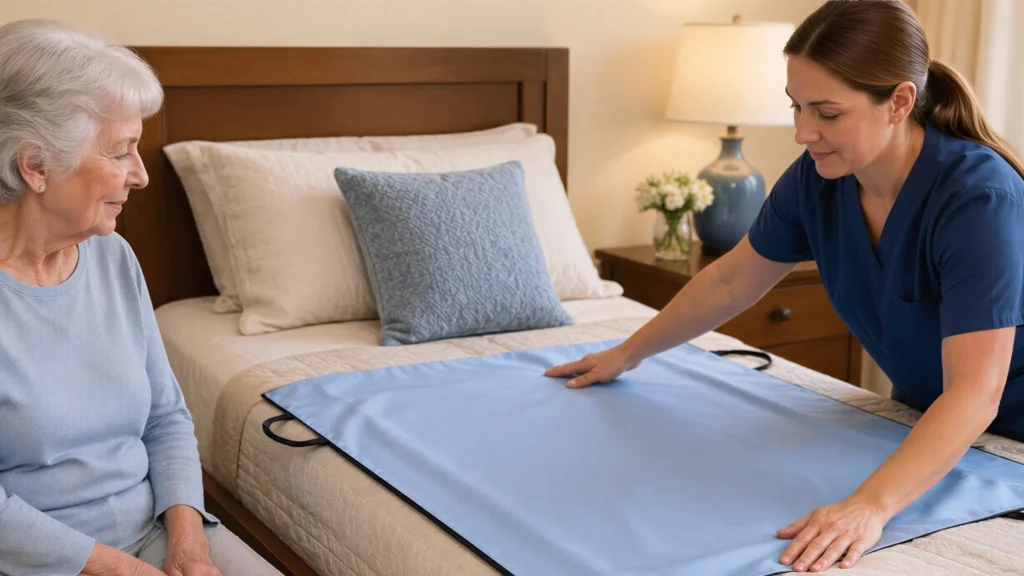
This coated slide sheet is the easiest all-around option for most families because it does the basic job cleanly. The slick surface reduces drag quickly, folds away easily, and washes without much fuss. For common home tasks like pulling someone up in bed, helping with a side turn, or making a short lateral adjustment, it does exactly what a good slide sheet should do: cut the effort without making the setup complicated.
It also feels practical in a normal home-care routine. It is light, thin, and easy to keep nearby instead of buried in a closet. That matters because repositioning tools only help when they are easy enough to use every day. The waterproof nylon and fast drying are also helpful when cleanup happens often. In a family home where laundry and cleanup both matter, that is a real advantage.
Its limit is size and coverage. For larger people, bariatric care, or moves that need more sheet under the body, a broader sheet feels more secure. But for routine repositioning and short transfers with a small gap, this is the most broadly useful starting point.
Why It Helps:
- The low-friction coated surface makes common bed moves much easier on the caregiver.
- It is light, compact, and easy to keep within reach for daily use.
- Cleanup is simple, which matters when the sheet gets used often.
What To Keep In Mind:
- Narrower coverage is less forgiving for larger people or more complex repositioning.
- This is a repositioning aid, not a lifting sling or a tool for long unsupported transfers.
2 / 4 Type Tubular low-friction slide sheet Size About 53 x 30 in Weight Very light at about 0.4 lb Use Case Bed, wheelchair, recliner, and car-seat repositioning Care Washable, breathable, and waterproof Tradeoff Shorter size fits some bodies and transfer situations better than othersTubular Slide Sheet for Patient Transfer
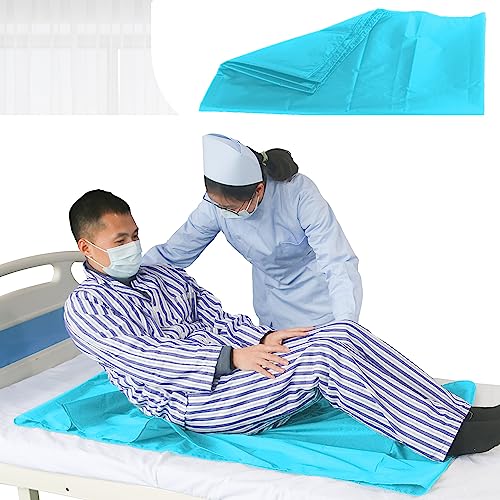
The tubular slide sheet is the budget choice because it does more than many families expect from a very simple design. The tubular shape lets the top layer glide over the bottom layer, which makes it useful for bed repositioning, chair adjustments, and even getting in and out of a car or recliner with less drag. That two-way slide is the reason many caregivers end up preferring tubular sheets for quick daily movement.
It is also very easy to manage. The sheet is light, folds small, and can be added and removed without the extra bulk of a bigger flat sheet. That makes it a strong choice when the goal is not heavy-duty bariatric movement but everyday help for someone who is painful, weak, or stiff and just needs friction reduced. Families caring for one person at home often get a lot of mileage out of exactly this kind of simple tool.
The tradeoff is fit range. It is not the most universal size, and it will not give the same broad body coverage as a larger flat slide sheet. But for the price and the sheer usefulness across beds, chairs, and vehicles, it is one of the smartest low-cost options here.
Why It Helps:
- The tubular design makes repositioning feel smoother and more controlled than a basic flat cloth.
- It works in more places than just the bed, including chairs and car seats.
- The small, light build makes it easy to keep on hand instead of treating it like a bulky piece of gear.
What To Keep In Mind:
- Shorter people and smaller-body transfers fit it best.
- It should be removed after the move instead of left under the person as a permanent layer.
3 / 4 Type Large reusable flat slide sheet Size About 78 x 55 in Capacity Up to 500 lb Material Smooth, soft nylon with easy-grip sides Use Case Larger-body repositioning, turning, and transfer support Tradeoff Bulkier setup and usually better with two caregivers than onePatient Aid 78 x 55 Reusable Slide Sheet

The Patient Aid sheet is the premium choice because it gives more coverage, more strength, and more margin when the person is larger or harder to reposition. A bigger sheet is not just about weight capacity. It also gives the caregivers more working area, more control over shoulder and hip movement, and less risk of running out of fabric in the middle of a turn or bed adjustment. In harder home-care situations, that extra material makes the move calmer.
This is the sheet that makes the most sense when the person is bariatric, bedridden, or simply very difficult to reposition with a small pad. The nylon glides well, the stated strength is much higher than the smaller options, and the build feels intended for repeated heavy work instead of occasional light use. When there is no room for a lift and the goal is still to reduce pulling and dragging, this kind of larger sheet can be a real help.
The tradeoff is that it is not the easiest small-space tool. A larger sheet means more setup, more fabric to manage, and usually better results with two caregivers instead of one. If the job is modest and daily, one of the simpler sheets above may be easier to live with. But for heavier-duty repositioning, this is the strongest option in the group.
Why It Helps:
- Extra size gives caregivers more control during bigger bed moves and larger-body repositioning.
- The stronger fabric is better suited for repeated heavy work.
- It offers a safer-feeling margin when a smaller sheet would feel too skimpy.
What To Keep In Mind:
- More fabric means more handling and usually a two-person setup for best results.
- It is better for in-bed work than for quick chair or car repositioning.
4 / 4 Type Large flat low-friction slide sheet Size About 56 x 78 in Use Case Daily in-bed repositioning, turning, and some bed-to-bed or chair moves Care Machine washable at high temperature and easy to disinfect Durability Designed to keep slip performance after repeated washing Tradeoff Large flat sheet takes a little more positioning work than smaller tubular optionsEZ Assistive 56 x 78 Flat Slide Sheet

The EZ Assistive sheet makes the most sense for repeated daily bed work. It is large enough for real repositioning, slippery enough to cut effort quickly, and built around the reality that families and aides wash these things again and again. The high-temperature washability and wipe-clean routine make it especially practical when the sheet is part of everyday care rather than an emergency purchase.
It also hits a good middle ground between the smaller coated sheet and the bigger heavy-duty bariatric option. You get enough size for broad in-bed moves, enough slickness to help with repositioning and short lateral transfers, and enough durability that the sheet does not feel disposable. For someone who slides down in bed, needs turning help several times a day, or requires regular positioning for comfort and skin protection, that consistency matters.
Its tradeoff is setup simplicity. A big flat sheet is a little more work to place well than a smaller tubular product, especially in a cramped room. But when the tool lives on the bed and gets used constantly, the larger working area and longer lifespan are worth it.
Why It Helps:
- Strong durability and repeat washability make it a good daily-care tool instead of a short-term fix.
- The larger size supports full in-bed repositioning better than smaller pads.
- It keeps the low-friction feel that helps protect caregiver backs over time.
What To Keep In Mind:
- A larger flat sheet takes more setup than a quick tubular slide sheet.
- It is most useful for bed work, not as a substitute for a dedicated board or lift.
How to Choose Slide Sheets and Transfer Mats
First, decide whether the move is in bed, between surfaces, or into a chair or car. Flat slide sheets are usually best for pulling someone up in bed, turning, and larger repositioning tasks. Tubular sheets are often easier for quick friction reduction under the hips or trunk and can be especially helpful with chairs, recliners, and vehicle entries. If the move is a seated lateral transfer with more of a gap, transfer boards for home use may be the safer tool.
Size matters more than people expect. A sheet that is too small forces awkward pulling angles and gives you less control over the shoulders and hips. A sheet that is too large can be harder to place neatly in a tight bedroom. If the person is larger, slides down in bed often, or needs repeated turning for skin protection, larger coverage is usually worth it. That is also where positioning bed pads can complement a slide sheet instead of competing with it.
Material matters too. The best sheets are slippery where they need to be, but not so hard to handle that they become dangerous. Washability also matters in real home care. If the sheet will be used every day, easy machine washing and quick drying quickly become more important than fancy marketing. The same is true of how easy the sheet is to remove after the move.
Most important, keep the tool in the right lane. A slide sheet helps reduce friction. It does not create strength, balance, or standing ability. If the transfer already needs lifting or supported standing, sit-to-stand lifts for home use, full-body lifts and slings, or gait belts may be the better next step depending on the situation.
It also helps to think about what happens if the move goes wrong. If a person is at real risk of sliding off the bed or collapsing mid-transfer, the sheet is not the rescue plan. That is where what to do if a transfer starts to fail matters more than buying a different fabric.
Common Mistakes When Choosing Slide Sheets and Transfer Mats
- Buying the slickest sheet without thinking about where it will be used or how it will be removed afterward.
- Choosing a small sheet for a larger person and then fighting the fabric on every move.
- Using a slide sheet as if it were a lifting device instead of a friction-reduction tool.
- Ignoring washability even though the sheet will be part of daily care.
- Trying to solve every transfer problem with a sheet when the real need is a board, lift, or standing aid.
The biggest mistake is using a slide sheet too late in the transfer. These tools work best when the move is planned, the person is positioned well, and the caregivers are ready before they start pulling. Once a person is already slipping, twisting, or dropping out of position, the sheet is no longer the main answer. Good setup still matters more than the product.
Frequently Asked Questions About Slide Sheets and Transfer Mats
What is a slide sheet used for?
A slide sheet is used to reduce friction during repositioning, turning, and short lateral moves. It helps caregivers move someone with less dragging and less physical strain.
Are slide sheets safe for bed repositioning at home?
Yes, when used correctly and for the right task. They work best for planned bed moves, not for catching someone during a fall or doing a full unsupported lift.
What is the difference between a flat slide sheet and a tubular one?
A flat slide sheet gives broader coverage for in-bed repositioning. A tubular sheet is often easier for quick two-way sliding, chair adjustments, and car or recliner movement.
Can one caregiver use a slide sheet alone?
Sometimes, especially for lighter people and smaller moves, but not always. Larger people or bigger repositioning tasks are often safer with two caregivers.
Can a slide sheet be left under the person all day?
Usually no. Most are meant to help with the move and then be removed, unless the product is specifically designed to stay in place as part of a repositioning system.
When is a transfer board better than a slide sheet?
A transfer board is often better for seated lateral transfers when there is a real gap between surfaces. Slide sheets are better for reducing friction during repositioning and short controlled moves.
What if the person cannot help at all with the move?
That does not automatically rule out a slide sheet for in-bed repositioning, but it often means the overall transfer setup needs more support. In many cases a lift, sling, or different transfer plan becomes safer.
If the person is mostly bed-bound, compare positioning bed pads and full-body lifts and slings so the sheet is only one part of the setup. If seated side-to-side movement is the bigger problem, move next to transfer boards for home use instead of expecting a slick sheet to do a board's job.