As an affiliate, we may earn a commission from qualifying purchases. We get commissions for purchases made through links on this website from Amazon and other third parties.
Pressure injuries do not start only because someone stayed in one position too long. They also start during everyday repositioning, transfers, and sitting when the body slides, drags, or rests too long on the same bony area. That is where pressure and shear work together. Pressure pushes tissue down. Shear happens when the skin stays put while the deeper tissue shifts.
This is why good positioning is not just about comfort. It is a skin-protection strategy. Small setup changes, like lowering the head of bed when possible, offloading the heels, or using a lift sheet instead of dragging, can change whether the skin tolerates the day well or starts to break down. For the broader transfer picture, start with the mobility and transfers master guide.
Why This Matters
People at higher risk include those who:
- spend long periods in bed or a chair
- cannot shift weight on their own
- have fragile skin
- have moisture from sweat or incontinence
- are thin over bony areas or have poor nutrition
- have nerve damage, poor sensation, or impaired mobility
Common high-risk spots include:
- sacrum and tailbone
- buttocks and ischial areas
- heels
- hips
- elbows
- shoulder blades
The risk increases fast when repositioning turns into rubbing, dragging, or slumping. If you are already seeing redness or recurring hot spots, add pressure relief schedule ideas and best wheelchair cushions for pressure relief to the plan.
Key Factors That Change the Decision
The safest position depends on four things:
How much the person can move
Someone who can shift weight independently needs reminders and timing. Someone who cannot move well needs a full repositioning plan and the right tools.
How long they sit or lie in one place
Long chair sitting without weight shifts raises risk around the sacrum and ischial areas. Long bed time raises risk at the sacrum, hips, and heels.
Whether the body is sliding
Sliding down in bed is one of the biggest shear problems at home. It often happens when:
- the head of bed is raised high
- the person is sitting on slick bedding
- the knees are not supported
- repositioning is done by pulling instead of lifting
Skin condition right now
Red, discolored, moist, fragile, or painful skin changes the whole plan. NCBI pressure injury guidance notes that red or discolored skin over bony areas should be acted on right away, not watched passively.
How to Use, Choose, or Set It Up Safely
Reduce drag during every move
Never drag the body across sheets, pads, or a chair surface when you can lift, roll, or use a low-friction aid instead. Safer options include:
- slide sheets
- repositioning sheets
- transfer mats
- lift-assisted repositioning when needed
This is especially important for repositioning in bed without lifting and using a sliding sheet or transfer mat.
Offload bony areas, not just "make them comfortable"
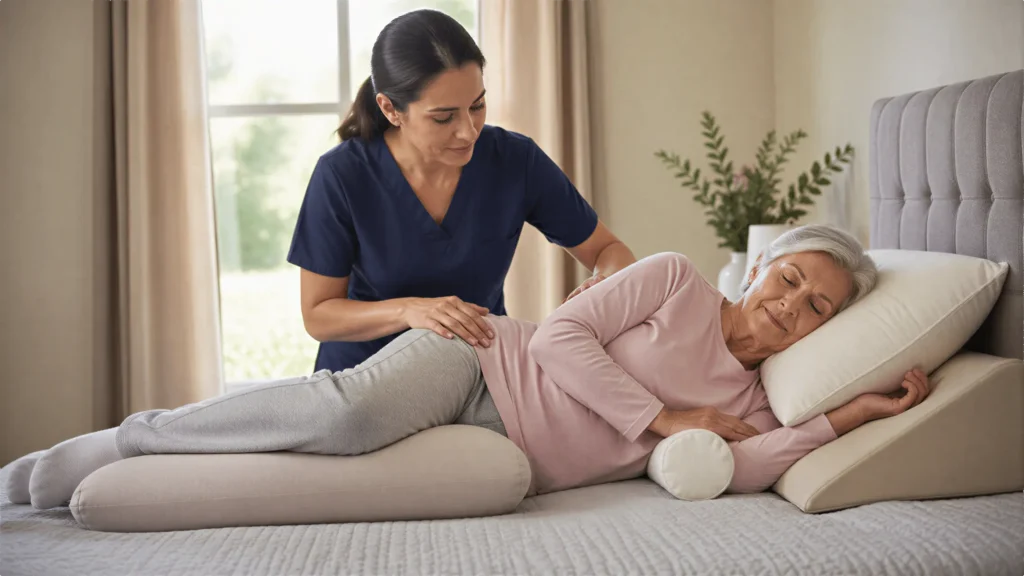
Pillows and wedges should do real work. Good positioning usually means:
- heels floated off the bed instead of resting directly on it
- knees and lower legs supported so the body does not slide
- hips and sacrum shifted off constant pressure points
- ankles protected from rubbing together
The goal is pressure redistribution, not random padding.
Watch the head-of-bed angle
The more upright the person is in bed, the more likely they are to slide downward and create shear at the sacrum and heels. When it is medically okay, lower the head of bed after meals, care tasks, or breathing support are done. If the person must stay more upright, use knee bend and supportive positioning to limit slide.
Use small regular position changes
Do not wait until the person looks uncomfortable. A better routine is:
- check the skin
- make small planned weight shifts
- vary side, back, and chair pressure points
- reassess after each change
That is why the transfer care plan template should include who repositions, how often, and what skin areas are watched.
Keep moisture and friction under control
Wet skin breaks down faster. Use a plan for:
- prompt incontinence care
- breathable fabrics when possible
- clean dry skin
- barrier products when prescribed or appropriate
Avoid massaging red skin. That adds friction and can damage already stressed tissue.
Common Mistakes and Red Flags
Common mistakes:
- pulling on a drawsheet instead of using a low-friction move
- leaving the person slumped down in bed
- propping the head of bed high without checking for sacral slide
- forgetting heel offloading
- using positioning devices but never reassessing skin
- thinking support surfaces replace repositioning
Red flags that should change the plan:
- redness or discoloration that does not settle after pressure is removed
- pain or burning over a pressure point
- new skin breakdown
- repeated sliding in bed or chair
- moisture that is not staying controlled
If transfers themselves are creating the rubbing, review pivot vs. sliding transfer choice and bed-to-chair transfer technique.
When to Get More Help
Get clinical help when:
- there is an open area, blister, or skin breakdown
- redness keeps returning in the same spot
- the person cannot be repositioned safely with current equipment
- chair sitting is causing visible skin problems
- heels, sacrum, or hips are becoming hard to protect
PT, OT, nursing, wound care, or the prescriber may need to reassess the mattress, cushion, turning plan, or lift equipment. If chair sitting is part of the problem, pair this with pressure relief schedule ideas and wheelchair cushion choices.
Frequently Asked Questions
What is the difference between pressure and shear?
Pressure pushes tissue down into a surface. Shear happens when the skin stays still but deeper tissues shift underneath it.
Why is sliding down in bed such a problem?
Because it creates shear at the sacrum and heels, especially when the head of bed is raised.
Do pillows under the heels really matter?
Yes. Floating the heels helps keep constant pressure off one of the highest-risk areas.
Can a pressure-relief mattress replace turning?
No. Better support surfaces help, but they do not replace regular repositioning and skin checks.
Should I massage red skin to improve circulation?
No. Massaging red or discolored skin can increase friction and tissue damage.
What if the person keeps sliding in the chair?
That usually means the seating angle, cushion, foot support, or transfer setup needs to be reassessed.
When should I worry about redness?
Worry when it stays after pressure is relieved, comes back in the same area, or is paired with pain, warmth, or skin breakdown.
If bed setup is the main issue, continue with repositioning in bed without lifting, bed height and bed rail safety, and turn in bed and dangle safely. If chair time is the bigger issue, compare pressure relief schedule ideas, wheelchair cushions for pressure relief, and measure wheelchair fit.