As an affiliate, we may earn a commission from qualifying purchases. We get commissions for purchases made through links on this website from Amazon and other third parties.
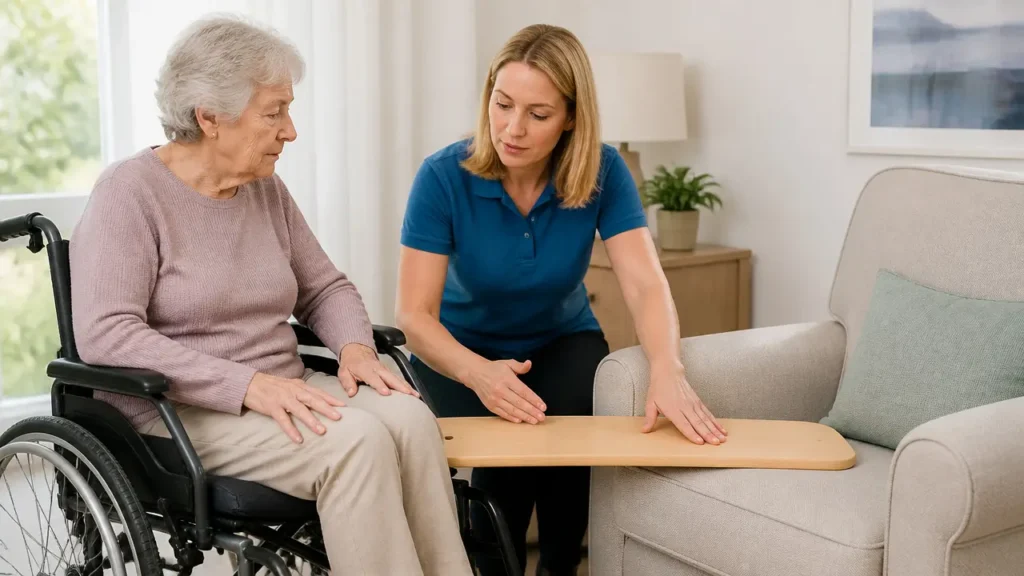
A transfer board can make a seated move much safer, but only when the person using it can still help with the transfer. That is the key point. A board is not a lift. It is a bridge between two surfaces for a controlled slide, usually from wheelchair to bed, chair, car, tub bench, or toilet setup. If you want the bigger mobility picture first, start with the main mobility and transfers guide.
The right board matches the transfer path, the body size, and the surface height. The wrong one feels too rough, too straight, too slippery, or too awkward to place well. Families often buy the first board that looks sturdy and then realize later that the curve, taper, or handhold layout matters much more than the brand name. If the move is mostly in bed rather than across a gap, compare slide sheets and transfer mats before you buy a transfer board for the wrong job.
Quick Picks
- Best Overall: DMI Transfer Board and Slide Board for the best mix of grip, bevel, stability, and home-transfer versatility.
- Budget Pick: Vive Transfer Board for a simple wooden board that covers the basic home transfer jobs well.
- Premium Pick: Platinum Health UltraSlide Premium Transfer Board for the smoothest sliding surface and the most refined curved design.
- Best for Daily Home Rehab Use: LOSCHEN Slide Transfer Board for lighter handling and a shape that works well in repeated home practice.
Best Overall
Budget Pick
Premium Pick
Best for Daily Home Rehab Use
Comparison Table
| Product | Best For | Key Strength | Main Tradeoff |
|---|---|---|---|
| DMI Transfer Board and Slide Board | Most home seated transfers | Good grip on the underside, beveled edges, useful handles, and strong all-around stability | Traditional wood surface is not as slick or easy to clean as premium plastic |
| Vive Transfer Board | Basic value-focused home transfers | Smooth sealed wood, dual handholds, and a familiar 30 x 8 in size | More basic finish and less refined edge design than the stronger pick |
| Platinum Health UltraSlide Premium Transfer Board | Frequent transfers where smooth glide matters most | Curved plastic design, full tapered edges, anchor pads, and very easy cleaning | Heavier than expected and more expensive than wood boards |
| LOSCHEN Slide Transfer Board | Repeated home rehab and lighter daily use | Curved design, simple handle, anti-slip backing, and easy positioning | Lower 320 lb capacity than the other boards in this roundup |
Quick Decision Guide
- Pick the DMI board if you want the safest all-around wooden board for bed, wheelchair, chair, toilet, and vehicle transfers.
- Pick the Vive board if you want a straightforward budget wooden board and do not need premium shaping or plastic glide.
- Pick the UltraSlide if the main problem is friction, skin comfort, or rough wooden-board feel during frequent transfers.
- Pick the LOSCHEN if home rehab is ongoing and you want a lighter curved board that is easy to position and practice with.
- If the transfer is mostly in bed or from side to side rather than across a gap, compare slide sheets and transfer mats instead.
- If the person cannot help enough with arm strength, sitting balance, and upper-body control to do a safe board transfer, move up to full-body lifts and slings or sit-to-stand lifts instead of forcing the slide.
Best Transfer Boards for Home Use: Top Picks
1 / 4 Type Wood transfer board with dual cutout handles Size About 30 x 8 x 1 in Capacity About 440 lb Surface Sanded and sealed wood with tapered ends Use Case Wheelchair, bed, chair, sofa, commode, and vehicle transfers Tradeoff Wood is durable but not as low-friction or easy to sanitize as premium plastic boardsDMI Transfer Board and Slide Board

The DMI board is the safest starting point for most home transfers because it gets the small details right. The beveled ends help it slide into position more easily, the underside has enough grip to resist shifting at the start and finish points, and the top surface is slick enough to support movement without feeling uncontrollably slippery. Those little details make a big difference when a caregiver and the person are both trying to feel stable during a seated transfer.
It also suits the most common home board transfers well: wheelchair to bed, wheelchair to commode, wheelchair to sofa, and even vehicle seat transitions when the board length is right. The dual cutout handles are actually useful, both for placement and for the person's grip. That makes it a practical board for family caregivers who need one good tool instead of a collection of slightly different boards for each room.
Its main limit is simply that it is still a traditional wooden board. That means it is not as easy to wipe down as a plastic board, and it does not have the ultra-smooth feel of the premium pick. But as a dependable all-around board that works well in real homes, this is the best-balanced choice in the roundup.
Why It Helps:
- The board shape and bevel make it easier to place securely between common home surfaces.
- Useful handholds and a stable underside help the transfer feel more controlled.
- It works across many home situations instead of being specialized for only one transfer.
What To Keep In Mind:
- A wooden board needs more attention to wear and cleaning than a non-porous plastic board.
- It still requires seated balance, upper-body help, and a reasonably matched transfer height.
2 / 4 Type Wood transfer board with dual cutout handles Size About 30 x 8 in Capacity About 440 lb Surface Sealed smooth wood with tapered ends and rounded corners Use Case Bed, chair, wheelchair, toilet, bathtub, and car transfers Tradeoff Basic board profile without the extra shaping or anchoring of higher-end modelsVive Transfer Board
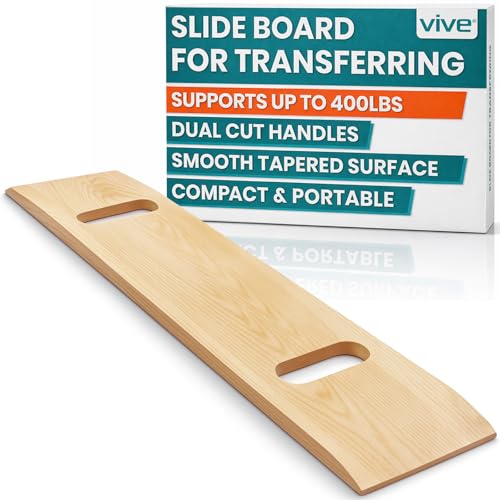
The Vive board is the budget pick because it covers the classic transfer-board job well without trying to reinvent it. It is a sealed wooden board with dual handholds, tapered ends, and a familiar size that fits many standard home transfers. For families who simply need a good board for wheelchair-to-bed or wheelchair-to-chair movement, that is often enough.
Its strength is simplicity. It is light enough to carry around the home, the finish is smooth enough to move across without catching clothing, and the corners are rounded to reduce snagging on upholstery or skin. In other words, it behaves the way people expect a board to behave. That makes it especially good for homes where the person or caregiver is just learning board transfers and does not need a more specialized shape yet.
What you give up is refinement. The board works, but it does not offer the same carefully curved profile, anchor features, or skin-friendly edge design as the premium pick. For straightforward value, though, it is a solid home board.
Why It Helps:
- The classic shape works for many everyday seated transfers without much learning curve.
- Rounded corners and a sealed finish reduce snagging and rough contact.
- It is easy to carry from room to room for different transfer setups.
What To Keep In Mind:
- It is a simpler board, so placement and technique matter even more.
- Wood can still feel less smooth than premium plastic when transfers are frequent.
3 / 4 Type Curved plastic transfer board with center handle Surface Extra-smooth non-porous plastic Safety Non-slip pads under both ends Shape Curved board with full perimeter tapered edges Care Very easy to clean Tradeoff Heavier than many shoppers expect and costs more than standard wood boardsPlatinum Health UltraSlide Premium Transfer Board
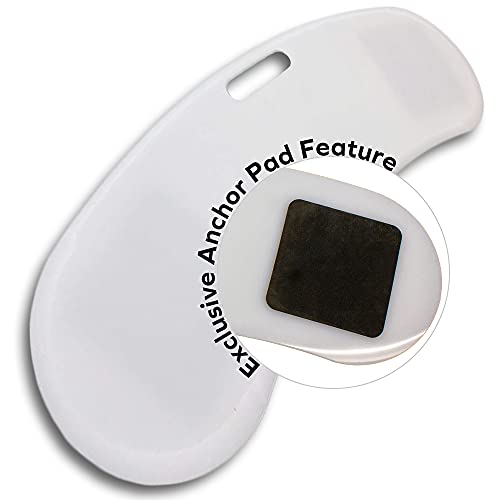
The UltraSlide is the premium choice because it solves the most frustrating part of basic transfer boards: they can feel rough, awkward, and harsher on skin and clothing than they need to be. The plastic surface on this board is much smoother than standard wood, the tapered edge runs around the whole board instead of just the ends, and the curve makes it easier to bridge a real home transfer path instead of forcing a perfectly straight line.
That shows up most clearly in difficult setups like wheelchair to car seat, bed edge to wheelchair, or chair transfers where the approach angle is not ideal. The anchored pads at the ends also help the board feel more planted, which is important because confidence is a big part of successful board transfers. If the board shifts unexpectedly, everything gets harder. This one is designed to reduce that problem.
Its tradeoff is cost and weight. It is not the board to buy when you only need the cheapest way to bridge a short gap once in a while. But when transfers are frequent, friction is a real problem, or skin protection matters, this board feels like a real upgrade over standard wood.
Why It Helps:
- The smooth plastic surface makes sliding easier and more comfortable than many wooden boards.
- Curved shape and full tapered edges give more positioning options in awkward home setups.
- Non-porous construction is easier to clean and maintain over time.
What To Keep In Mind:
- It is heavier than it first looks, which matters if the board gets moved often.
- The premium build only pays off if board transfers are a regular part of daily care.
4 / 4 Type Curved slide transfer board with handle Capacity About 320 lb Safety Anti-slip backing and smooth sliding surface Use Case Wheelchair to bed, toilet, tub, car, and home rehab transfers Shape Curved edges for easier positioning Tradeoff 320 lb limit is lower than the heavier-duty boards aboveLOSCHEN Slide Transfer Board

The LOSCHEN board makes the most sense for repeated home rehab work where the person is practicing transfers often and the caregiver wants something lighter and easier to place. The curved shape helps in common home angles, and the board seems to hit a useful middle ground between a basic straight wood plank and a more expensive premium transfer board. That makes it a practical daily-use piece for many homes.
It also seems to work well for people learning the transfer process. The handle is easy to manage, the board is thin enough to position without fighting it, and the anti-slip backing helps it stay put once it is set. For a caregiver doing one-on-one home work after stroke, surgery, or coming home from rehab, those qualities matter more than brand prestige. When repetition is part of the plan, ease of placement and a predictable feel become very important.
Its main limit is capacity. At 320 pounds, it does not cover the same range as the stronger boards above. If the person is heavier or the transfers are particularly demanding, the DMI or UltraSlide makes more sense. But for daily practice and lighter home use, this is a strong fit.
Why It Helps:
- The lighter curved design is easier to position during repeated home rehab transfers.
- Anti-slip backing helps reduce the feeling that the board will slip away mid-move.
- It can work very well for one-caregiver home practice when the person still participates well.
What To Keep In Mind:
- The 320-pound capacity is more limiting than the other boards in this roundup.
- It is best for people who can still help actively with the slide, not fully passive transfers.
How to Choose a Transfer Board for Home Use
Start with the transfer itself. A transfer board is for seated lateral movement between surfaces that are reasonably close in height. That usually means wheelchair to bed, wheelchair to chair, wheelchair to toilet, or wheelchair to car seat. If the move is mostly about repositioning in bed, a board is often the wrong tool. In that case, slide sheets and transfer mats usually make more sense.
Then look at the person's real ability. A transfer board still requires arm strength, seated balance, enough upper-body control, and enough participation to move in small stages across the board. If those pieces are missing, the board will feel unsafe no matter how smooth the surface is. That is where full-body lifts and slings or sit-to-stand lifts may be safer.
Board shape matters more than people expect. Straight boards are simple and familiar. Curved boards often fit better around wheelchairs and car seats. Tapered edges help with placement, and good handholds matter for both the caregiver and the person transferring. If the board will be used for car transfers often, car transfer aids like swivel cushions and support bars may also help, because the board alone is not always enough to solve the whole move.
Surface height also matters. Transfer boards work best when the surfaces are reasonably matched. The bigger the height difference, the harder the slide becomes. If the move starts with a risky bed or chair setup, it helps to review bed-to-chair transfer steps instead of blaming the board when the geometry is wrong from the start.
Finally, keep the emergency line clear. A transfer board is not the tool for a person who is already sliding away, collapsing, or losing sitting balance in the middle of the move. That is where what to do if a transfer starts to fail matters more than the board choice.
Common Mistakes When Choosing Transfer Boards
- Buying a board for someone who cannot safely help with a seated slide.
- Choosing by price alone and ignoring board shape, taper, and handle placement.
- Using a transfer board for in-bed repositioning when a slide sheet is the better tool.
- Ignoring seat-height mismatch between the starting surface and the destination.
- Expecting a board to solve a transfer that really needs a lift, sling, or standing aid.
The biggest mistake is thinking the board does the work. It does not. The board reduces friction and bridges a gap, but the setup, body position, hand placement, and the person's participation still decide whether the transfer is safe. A good board helps a good transfer. It does not rescue a bad one.
Frequently Asked Questions About Transfer Boards
What is a transfer board used for?
A transfer board is used to help a person slide in a seated position from one surface to another, such as from a wheelchair to a bed, chair, toilet, tub bench, or car seat.
Who should use a transfer board at home?
It is best for someone who can sit with reasonable balance, help with the move using their arms or legs, and follow the transfer steps. It is not meant for a fully passive transfer.
Is a curved transfer board better than a straight one?
Sometimes. Curved boards often fit better around wheelchairs and car transfers, while straight boards can be simpler and work well for basic bed and chair moves.
Can one caregiver use a transfer board alone?
Sometimes, yes, but it depends on the person's size, strength, and control. Many home board transfers are still safer with good setup, supervision, and sometimes a second person nearby.
Are plastic transfer boards better than wooden ones?
Plastic boards are often smoother and easier to clean. Wooden boards are usually more affordable and still work very well when they are properly finished and placed correctly.
When is a transfer board not enough?
It is not enough when the person cannot help with the slide, cannot sit safely, or the move involves too much height difference or instability. In those cases a lift or different transfer setup is safer.
Can a transfer board be used for car transfers?
Yes, many are used that way, especially curved or tapered boards. The transfer still has to match the car-seat height, the doorway opening, and the person's ability to scoot safely.
If the move is mostly bed repositioning, return to slide sheets and transfer mats. If the person is no longer strong enough for a seated slide, move up to full-body lifts and slings or sit-to-stand lifts for home use before the board becomes a struggle instead of a help.