As an affiliate, we may earn a commission from qualifying purchases. We get commissions for purchases made through links on this website from Amazon and other third parties.
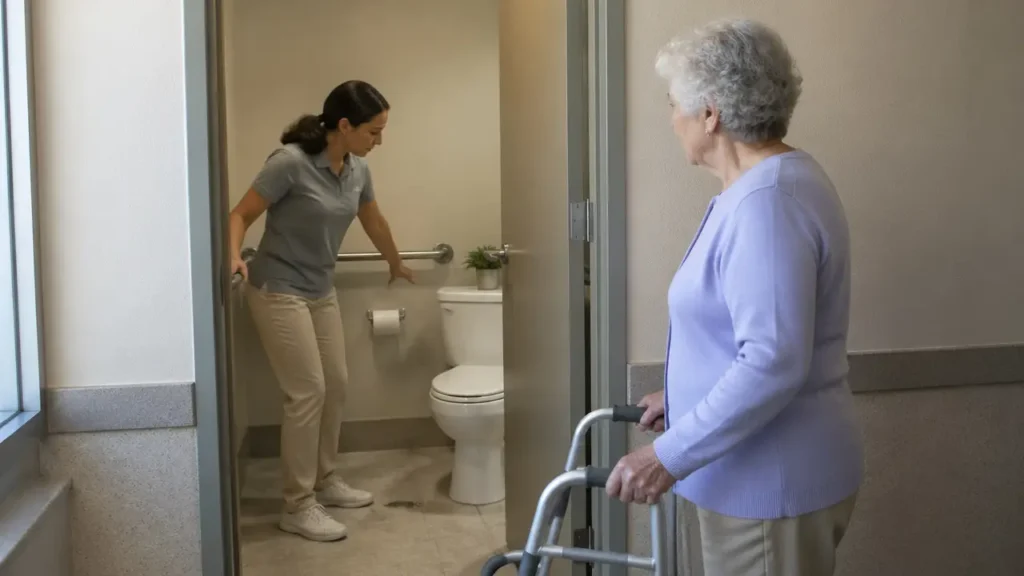
Public restroom transfers are hard because the space is often working against you. There may be wet floors, awkward stall layouts, heavy doors, poor lighting, crowded turning space, and fixtures that do not line up the way your home setup does. The biggest mistake is trying to force the same transfer pattern that works at home without checking whether the room supports it.
In tight spaces, success comes from planning before the transfer starts. That means picking the right stall, setting the chair or walker at the best angle, controlling clothing and bags, and being willing to abandon the attempt if the room is not safe enough. For the wider transfer picture, start with the mobility and transfers master guide.
Why This Matters
Transfers in public restrooms are higher risk because of:
- slick or damp floors
- cramped turning space
- limited room for caregivers
- grab bars in awkward positions
- clutter from bags, coats, and mobility devices
- rushing because the person urgently needs the toilet
ADA accessibility standards help, but real public restrooms vary a lot. Even an "accessible" stall may still be hard for a specific body size, wheelchair width, or transfer pattern. If width or turning fit is already close at home, check wheelchair measurements and fit and proper walker height and posture too.
Key Factors That Change the Decision
Which device is being used
A wheelchair, walker, rollator, cane, scooter, or caregiver-assist transfer all need different space. A rollator seat may take up too much room inside a stall. A wheelchair may fit through the door but still not line up well at the toilet.
Which direction the person transfers
Many people transfer better to one side. That matters a lot in public restrooms because the grab bar layout may only help from one direction. If one-sided weakness is part of the picture, compare mobility after stroke with one-sided weakness.
Urgency and fatigue
People make worse decisions when they are rushing, tired, or scared of an accident. That often leads to half-locking brakes, skipping setup, or trying a transfer from a bad angle.
How to Use, Choose, or Set It Up Safely
Scout before you commit
Before you start the transfer, check:
- is the floor dry enough
- is there room to turn or back in
- which side has the better grab bar support
- can the device be parked close enough
- is there enough room for the caregiver to stay close at the waist and hips
If the answer is no, find another stall or another restroom. Backing out is safer than improvising.
Set the device first
For wheelchairs:
- get as close as possible to the toilet
- choose the angle that matches the stronger transfer side
- lock the brakes
- move footrests and any armrest parts if your setup requires it
For walkers or rollators:
- keep the device within reach but not blocking the transfer path
- use grab bars and stable surfaces for the actual sit and stand
- do not try to sit by hanging backward onto a moving rollator
If tight turns are a recurring issue, compare turning, pivoting, and backing up safely and pivot vs sliding transfer choice.
Control clothing and carried items
Bags, coats, purses, and supplies become trip hazards fast in a small stall. Before standing:
- decide where supplies will go
- keep hands as free as possible
- manage clothing before the final descent if appropriate
- avoid placing items where wheels or feet will catch them
Use the bars, but do not overreach for them
Grab bars help only when the body is close enough to use them without twisting off balance. Good practice usually means:
- bringing the body close to the toilet first
- reaching for bars that can actually support the move
- avoiding long sideways reaches that pull the trunk away from the base of support
If bar placement is part of the problem at home too, see grab bar placement for toilet and tub transfers.
Slow down for the final sit
Many restroom falls happen during the last part:
- backing up too little
- clothing tangling at the knees
- reaching for a bar too late
- dropping quickly because the toilet seat is lower than expected
Back up until the legs touch. Reach for support. Lower slowly.
Common Mistakes and Red Flags
Common mistakes:
- choosing the first stall without checking layout
- transferring on a wet floor
- forgetting to lock wheelchair brakes
- trying to pivot in a space that is too narrow
- letting urgency overrule setup
- pulling on a caregiver instead of using stable supports
Red flags that should stop the attempt:
- there is no safe dry surface
- the chair cannot get close enough
- the person is too fatigued to stand or turn
- the helper cannot stay close enough to guard
- the stall layout forces a transfer toward the weaker side without support
If this happens often, the real issue may be device choice, timing, or restroom planning rather than transfer skill alone.
When to Get More Help
PT or OT input can help when:
- the person can no longer manage community restroom transfers
- one-sided weakness, freezing, or fatigue is changing the safest method
- a travel chair, transfer aid, or different device may help
- you need a more reliable side-transfer or stand-pivot setup
For travel planning, add hotel room mobility checks and mobility equipment rental near you if you need different equipment away from home.
Frequently Asked Questions
Should I always use the accessible stall?
Usually yes, if it is available and you need the space or grab bars. Standard stalls are often too tight for safe setup.
Is it better to back in with the wheelchair or approach from the side?
It depends on the person's stronger transfer side, the bar layout, and how close the chair can get.
What should I do if the restroom floor is wet?
If the wet area is where the transfer has to happen, look for another stall or another restroom. Do not force the transfer on a slick floor.
Can a rollator be used inside an accessible stall?
Sometimes, but many stalls are still too tight to park and turn cleanly with a rollator.
Why do public restroom transfers feel harder than home transfers?
Because the layout, bar placement, seat height, lighting, and floor traction are different and often less predictable.
What if the person urgently needs the toilet and wants to rush?
Slow the setup anyway. Rushing is one of the biggest reasons these transfers fail.
When should I stop trying to manage this in public alone?
When the setup repeatedly feels too tight, the person is losing ability, or near-falls are happening during community outings.
If tight-space turning is the main issue, continue with turning, pivoting, and backing up safely, proper walker height and posture, and posture, step length, and base of support quick wins. If travel access is the bigger issue, compare hotel room mobility checks and airplane travel with a wheelchair.