As an affiliate, we may earn a commission from qualifying purchases. We get commissions for purchases made through links on this website from Amazon and other third parties.
COPD and oxygen change a transfer because breathing becomes part of the movement plan. The person is not just standing, turning, and sitting. They may also be managing shortness of breath, a nasal cannula, long tubing, a portable tank, fear of breathlessness, and fatigue that gets worse after only a few steps.
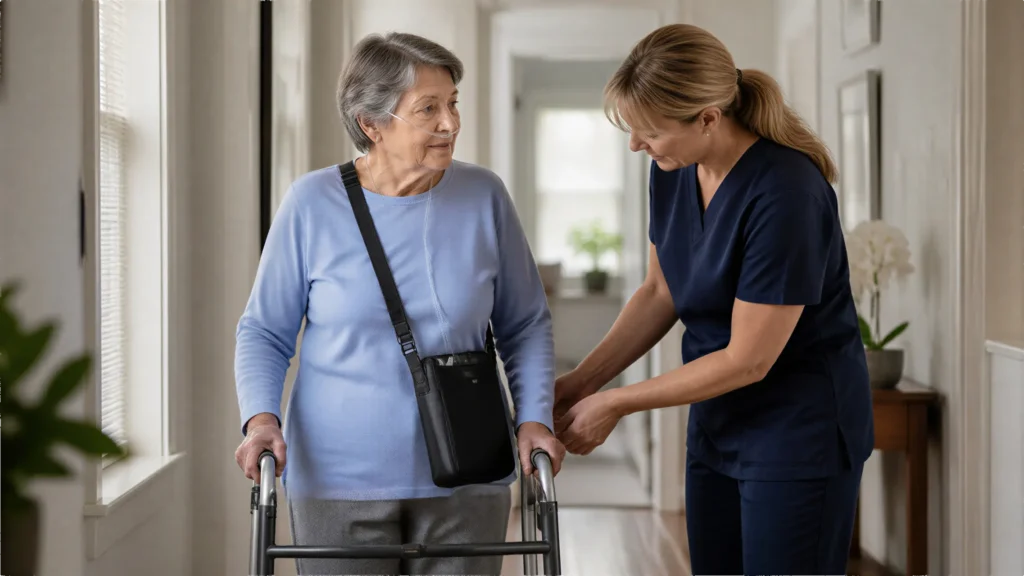
That matters because a rushed transfer can fail for two reasons at once. The person's legs may weaken, and their breathing may speed up until they panic or freeze. Oxygen tubing can also catch under a walker, wrap around a foot, or pull against the face during the turn.
The goal is not to make every transfer fast. The goal is to make each transfer calm, clear, and repeatable. If you are still building the basic transfer routine, start with the mobility transfers master guide and use this article for the COPD and oxygen-specific changes.
Quick Answer
For COPD or home oxygen transfers, set up the tubing path before standing, keep only safe slack on the floor, and build breathing pauses into the move. The person should breathe out during the hardest part of the transfer and stop if shortness of breath, chest pain, confusion, or dizziness does not settle with rest.
Why This Condition Changes the Task
COPD can make ordinary movement feel like work. Breathing may take more energy, especially during standing, walking, toileting, dressing, and getting in or out of a chair. A person may also tense their shoulders and hold their breath when they feel scared, which makes the transfer harder.
Home oxygen adds another layer. Oxygen can help the person stay active when it is prescribed correctly, but it also brings equipment that has to move with them. The concentrator, portable tank, cannula, and tubing all need a safe path. If the tubing is loose across the floor, it becomes a trip hazard. If it is too short, it can pull during the transfer.
Some people with COPD have very specific oxygen instructions. Oxygen is a medication, not just air from a machine. Many COPD care plans aim for a defined oxygen saturation range because too little oxygen is dangerous, but too much oxygen can also be unsafe for certain people who retain carbon dioxide. Do not change oxygen flow because a transfer looks hard unless the prescriber has told you how.
Breathing pacing is just as important as equipment. Pursed-lip breathing, diaphragmatic breathing, and coordinated breathing are often used to control shortness of breath. For transfers, the most useful idea is simple: breathe out during the hardest part of the movement, and do not hold the breath.
Safest Setup Before You Start
Start by clearing the route. Look at the floor from the person's chair or bed to the destination. Remove loose rugs, bags, shoes, pet bowls, and power cords. Then trace the oxygen tubing with your eyes. It should not cross the person's feet, the walker legs, the wheelchair wheels, or the caregiver's stance.
Keep only the tubing length needed for the move. Long coils on the floor may seem convenient, but they can slide underfoot. Some homes use tubing clips, swivel connectors, shorter tubing runs, or retractable tubing systems to reduce tangles. The exact product matters less than the result: the walking path has to stay clear.
Check the oxygen setup before the person stands. Make sure the cannula is in place, the tubing is connected, and the portable oxygen source has enough supply for the task. If the person uses a walker, keep the tubing routed so it does not loop around the back legs. If they use a wheelchair, keep it away from the wheels before you unlock brakes or move footrests.
Footwear matters. Slippers without backs, socks on smooth floors, or sandals that catch tubing can turn a short transfer into a fall risk. Choose shoes or slippers with backs and non-slip soles. If the person is walking to the bathroom at night with oxygen, pair this setup with night transfer lighting so they can see both the floor and the tubing.
Set the destination first. The chair should be stable. Brakes should be locked on wheelchairs and rollators. The commode, bed, or car seat should be ready before the person stands. If they are already short of breath, sit them down and reset before trying.
Technique Adjustments That Matter
Use shorter steps and more pauses. COPD transfers often fail when the person tries to move at their old speed. A safer rhythm is stand, breathe, step, breathe, turn, breathe, sit. The pauses are part of the transfer, not a delay.
Coach pursed-lip breathing in plain words. Say, "Smell the flowers, blow out the candle," if that cue works for them. Another simple cue is, "In through your nose, out slow through your lips." The out-breath should be longer than the in-breath. Many people do best when they practice this while seated before using it during a transfer.
Use coordinated breathing during the hard part. When the person pushes up from the chair, steps up, turns, or lowers down, remind them to breathe out. Holding the breath can increase strain and panic. If they cannot talk or follow cues because they are too breathless, stop and let them recover.
Keep the caregiver's hands calm and predictable. Sudden pulling can increase fear and shortness of breath. Explain each step before it happens. For example: "We are going to stand on three. Then we will pause and breathe. Then we will turn toward the chair." This kind of simple sequence also helps if the person becomes anxious during movement.
For people who use a walker, the walker should move first, then the feet, then the tubing check. Avoid stepping backward over oxygen tubing. If turning is a problem, review turning safely without getting dizzy and walker turning in tight spaces.
If the person uses a portable oxygen tank, check where it rides. A shoulder bag can swing and pull balance off-center. A cart can snag. A backpack may work for some people, but it can be too heavy for others. The right setup is the one that keeps the tubing controlled and leaves both hands available for the device or caregiver support.
Tubing Management During Common Transfers
For bed-to-chair transfers, route tubing toward the side the person will turn. Keep slack behind the person, not under their feet. If the tubing runs from a bedroom concentrator, make sure it does not cross the path between the bed and chair. A short transfer can still fail if the line catches on a bed wheel, nightstand, or blanket.
For toilet transfers, watch the turn. Bathrooms are tight, and tubing can wrap around grab bars, the toilet base, or a walker leg. Place the oxygen source outside the wet zone when possible, and keep tubing away from puddles, bath mats, and heater cords. If toileting transfers are hard, the toilet transfer guide can help you fix the setup.
For car transfers, decide where the oxygen source will sit before the person stands. Do not wait until the person is half in the vehicle to untangle tubing. If they need a portable tank, keep it upright and secure according to the supplier's instructions. The guide to sedan and SUV car transfers can help with the sit-first sequence.
For stairs or curbs, COPD and oxygen raise the risk. The person may need more rest breaks and a shorter route. If they become breathless on stairs, do not keep pushing just because the destination is close. Pause on a safe landing if available. For walker or cane curb problems, use curb and step negotiation before trying outdoor routes.
Red Flags and Common Errors
Stop the transfer if the person has chest pain, severe shortness of breath that does not settle, blue lips, new confusion, faintness, sudden weakness, or cannot speak in short phrases. Sit them down in the safest available place and follow their care plan. If symptoms are severe or do not improve, call emergency help.
Do not increase oxygen flow on your own to "push through" a hard transfer. Some people with COPD need careful oxygen targets. If breathlessness keeps interrupting transfers, the plan needs review by the prescriber, respiratory therapist, nurse, physical therapist, or occupational therapist.
Do not let tubing trail across the walking path. Loose tubing is one of the most preventable hazards in the home. The person may step over it safely ten times and trip on the eleventh when tired, dizzy, or rushing to the bathroom.
Do not ignore fear. Breathlessness can feel frightening. If the person panics during transfers, the answer is not more force. Use slower pacing, seated practice, clearer cues, and clinical help if needed.
Do not forget fire safety. Oxygen supports fire. Keep oxygen away from smoking, open flames, candles, gas stoves, and sparking equipment. Follow supplier instructions for storage and use. If oxygen is used at night, also review oxygen safety around beds and bedroom concentrator placement.
When to Get Clinical Help
Get help if the person is avoiding transfers because of breathlessness, falling over tubing, needing more physical help than before, or showing new confusion or dizziness. A physical therapist can adjust the transfer method. An occupational therapist can change the home setup. A respiratory therapist or prescriber can review oxygen use and breathing strategies.
Ask for help sooner if the person has frequent COPD flare-ups, recent hospitalization, new oxygen equipment, or a new portable tank system. The first few days with new equipment are when tubing mistakes and pacing problems often show up.
A caregiver should not have to guess. A good plan should answer: how far the person can walk, when to rest, what oxygen settings are prescribed, where tubing should run, what symptoms mean stop, and who to call if breathing does not recover.
Frequently Asked Questions
How do you manage oxygen tubing during transfers?
Keep tubing out of the foot path, walker legs, wheelchair wheels, and caregiver stance. Use only the length needed for the route, remove loose coils, and check the tubing before the person stands.
Should someone with COPD hold their breath when standing up?
No. Holding the breath can increase strain and panic. A safer cue is to breathe out during the hardest part of the movement, such as standing, stepping up, turning, or lowering down.
Can I turn up oxygen before a transfer?
Only if the prescriber has told you to do that. Oxygen is prescribed and monitored. Some people with COPD need specific oxygen targets, so changing the flow without guidance can be unsafe.
What breathing technique helps during transfers?
Pursed-lip breathing is often useful. The person breathes in through the nose, then breathes out slowly through pursed lips for longer than the inhale. Coordinated breathing also helps: exhale during effort.
When should a transfer stop?
Stop if the person has severe shortness of breath, chest pain, blue lips, new confusion, faintness, sudden weakness, or cannot recover with rest. Follow the care plan and call emergency help when symptoms are serious.
For a full movement plan, pair COPD pacing with a transfer safety checklist. If the person uses a walker, check proper walker height and posture so breathing work is not made harder by a poor device fit. For nighttime oxygen routes, make sure the bedroom setup supports safer walker and wheelchair movement.