As an affiliate, we may earn a commission from qualifying purchases. We get commissions for purchases made through links on this website from Amazon and other third parties.
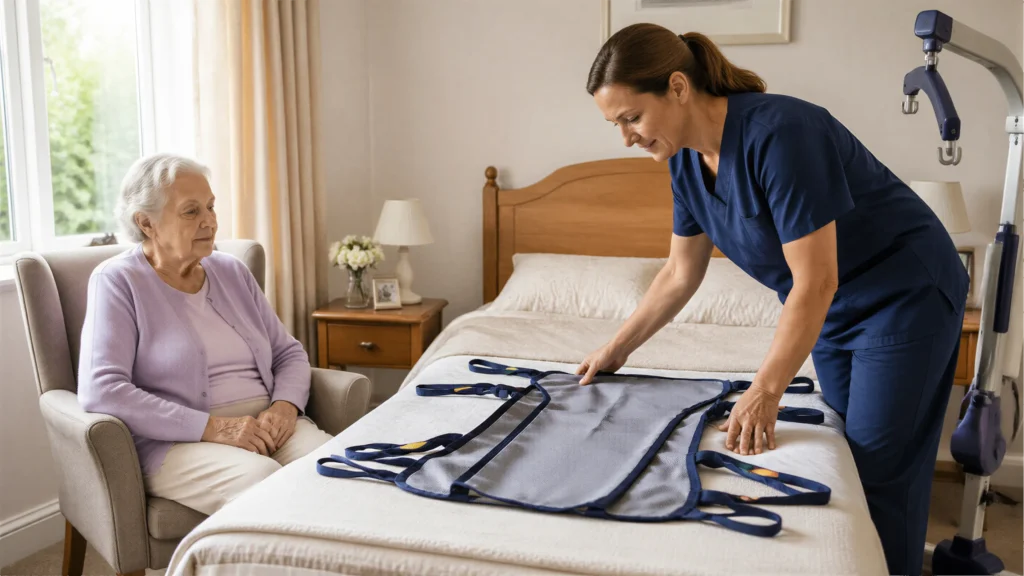
A transfer sling can give a caregiver a much better grip during a hard move, but only when it is the right kind of sling for the job. That matters here. The products in this roundup are caregiver-assist transfer slings and lift straps for repositioning, rising, and short assisted moves. They are not full-body Hoyer slings for overhead lifting. If you want the broader transfer picture first, start with the main mobility and transfers guide.
That difference is important because families often buy a “transfer sling” hoping it will solve every movement problem at once. It will not. A good assist sling can help with repositioning in bed, rising from a chair, or getting someone lined up for a safer stand. It does not replace a full patient lift and sling setup when the person cannot help enough with the move. It also does not replace a gait belt when the real need is walking support rather than lifting leverage.
Quick Picks
- Best Overall: Parabound Transfer Sling for the best mix of padding, back coverage, and everyday caregiver grip.
- Budget Pick: VobeNit Transfer Sling for a wider, multi-handle design that is especially useful for bed turning and repositioning.
- Premium Pick: Padded Bed Transfer Nursing Sling for a thicker, more supportive feel during short lifting and transfer help.
Best Overall
Budget Pick
Premium Pick
Comparison Table
| Product | Best For | Key Strength | Main Tradeoff |
|---|---|---|---|
| Parabound Transfer Sling | Most chair, bed, wheelchair, and short rise-assist moves | Good back coverage, padded build, secure handles, and 300 lb capacity | Still only a caregiver-assist sling, not a full lift sling |
| VobeNit Transfer Sling | Bed turning, repositioning, and side-lying support | Wide back panel, many handles, and useful repositioning flexibility | 260 lb limit and clear warning not to use it as a walking-assist tool |
| Padded Bed Transfer Nursing Sling | Short lifting support and close-contact home transfers | Thick padded grip points and compact, supportive feel | Smaller size and lower 220 lb capacity than the other two picks |
Quick Decision Guide
- Pick the Parabound if you want the most balanced sling for everyday home transfer help.
- Pick the VobeNit if bed turning, repositioning, or side-lying support is the bigger daily need.
- Pick the padded nursing sling if the main goal is a compact, easy-to-grab assist sling for shorter home transfers.
- If the person needs real standing help rather than a back-and-handle sling, compare portable standing aids and sit-to-stand lifts for home use.
- If the person can no longer help enough with the move, stop here and move to patient lifts and slings instead of trying to force a caregiver-assist strap into a full-lift role.
Best Transfer Slings for Elderly: Top Picks
1 / 3 Type Padded caregiver-assist transfer sling Capacity About 300 lb Comfort Oxford cloth with soft padding and neoprene surface Grip Double grip design with reinforced handles Use Case Chair rise assist, bed help, leg lifting, turning, and short transfer support Tradeoff Not a full-body or overhead patient-lift slingParabound Transfer Sling

The Parabound is the best overall pick because it covers the broadest range of normal home-care moments without becoming too specialized. The padded back section gives better contact than a narrow strap, the handles are placed where caregivers can actually use them, and the sling feels sturdy without being bulky. That makes it useful when someone needs help rising from a chair, repositioning in bed, or getting lined up for a safer move into a wheelchair.
What makes this sling practical is the balance between comfort and control. The padding helps spread force better than a skinny belt, and the grip layout gives a caregiver more than one clean way to help without grabbing clothing or underarms. In a home where one person does most of the caregiving, that kind of repeatable setup matters. It reduces strain on both sides of the transfer.
Its real limit is category, not quality. This is still an assist sling, not a full-lift solution. If the person cannot help enough with the move, or if the transfer already feels like a near-hoist, this is not the product to stretch beyond reason. But for everyday caregiver-assisted moves, it is the strongest all-around option here.
Why It Helps:
- The padded back section gives more support and comfort than a basic narrow strap.
- Handle placement makes common home transfer tasks easier and more controlled.
- It works across several daily situations instead of only one narrow use case.
What To Keep In Mind:
- This is not a sling for ceiling lifts or full Hoyer-style transfers.
- The person still needs enough trunk and movement participation for the move to stay safe.
2 / 3 Type Wide transfer and repositioning sling Capacity About 260 lb Coverage Wide 50.4 x 12.6 in back contact area Grip Six handles across both ends Use Case Turning, side-lying support, bed repositioning, and some transfers Tradeoff Not meant for walking assistance and lower weight limit narrows the fitVobeNit Transfer Sling
The VobeNit is the budget pick because it does more than a typical low-cost sling. Its wider panel and multi-handle layout make it especially useful for bed turning, positioning, and side-lying support, which are daily tasks many caregivers struggle with long before they need a full lift. If the main problem is rolling someone, adjusting posture, or helping them sit up without wrenching your back, this design is smart.
It is also the most repositioning-focused option in the group. The multiple handles let the caregiver choose a better angle instead of yanking from one fixed point, and the wider contact area is gentler on the back during bed work. For surgery recovery, weakness, or long hours in bed, that can make a real difference in comfort and skin protection compared with a narrower assist sling.
The tradeoff is that it has more limits. The weight cap is lower, and the product is explicit that it should not be used to assist walking. That makes sense. It is strongest when used as a bed and repositioning aid with controlled caregiver handling, not as a do-everything mobility device.
Why It Helps:
- The wider panel works well for bed turns and posture adjustments, not just quick lifts.
- Multiple handles give better leverage choices for a single caregiver.
- It can stay useful in home care even when walking assistance is no longer the main issue.
What To Keep In Mind:
- This is not a walking-assist belt and should not be used like one.
- The 260-pound limit is more restrictive than the stronger overall pick.
3 / 3 Type Compact padded transfer nursing sling Capacity At least 220 lb Grip Double grips with soft PU material Surface Textured nylon with non-slip design Size About 31.5 x 9.1 in Tradeoff Smaller size and lower weight capacity make it best for shorter, more controlled home transfersPadded Bed Transfer Nursing Sling

The padded nursing sling earns the premium spot not because it is the biggest or strongest, but because it feels more supportive in close caregiver work. The padded grip zones and textured sling body make it easier to hold securely when helping someone up from bed, around a chair, or through a short lift-and-shift move. In tighter home spaces, a compact sling like this can feel easier to position than a wider repositioning belt.
This is a good fit when the caregiver is doing very close contact transfers and wants a sling that feels comfortable in the hands and stable under the body. It also works well when the person is smaller or when the move is short and controlled rather than broad repositioning across the bed. In those situations, the compact size is a benefit, not a flaw.
Its limit is range. The smaller size and lower capacity make it less universal than the Parabound. It is also easier to misuse if the person bends or slides the wrong way during the move. So this is the premium choice for a specific style of close home transfer work, not the first recommendation for every household.
Why It Helps:
- The compact padded design feels secure and easy to manage in close caregiver work.
- Soft grip areas reduce hand fatigue during short repeated transfers.
- It can be more comfortable than larger slings when the move is brief and controlled.
What To Keep In Mind:
- Lower capacity and smaller size make it less flexible than the top overall pick.
- Careful body positioning matters, or the person can shift awkwardly during the move.
How to Choose a Transfer Sling for an Elderly Adult
Start by deciding what kind of transfer help is actually needed. Some slings are mainly for repositioning in bed. Some are best for a short rise from a chair. Some work as caregiver-assist back supports during a transfer to a wheelchair or car. None of the slings in this roundup are full-body lift slings for overhead patient lifts. If that is what the home needs, go directly to patient lifts and slings.
Then look at the person's real ability. A caregiver-assist sling works best when the person can still help a little, stay reasonably upright, and move in coordination with the caregiver. If the person is almost fully passive, the sling quickly becomes harder to use safely. That is where what to do if a transfer starts to fail and bed-to-chair transfer steps become more important than buying a different strap.
Padding, width, and handle layout all matter. A wider back panel spreads force better and often feels less harsh during repositioning. More handles can be useful, but only when they help the caregiver choose a better angle instead of creating confusion. If the home already uses a gait belt, think about how the sling will fit beside that tool instead of duplicating the same job.
It also helps to think about where the sling will touch the body and what surface the person is moving from. A softer chair, low recliner, or car seat often needs a different approach than a firm bed edge or wheelchair cushion. If the sling is too small, it can ride up or feel sharp under the arms and back. If it is too big, it can bunch and make the move clumsy. When skin sensitivity, bruising, or pressure concerns are already part of the picture, a wider, more padded sling usually feels safer and more comfortable than a narrow strap.
Some families also expect one transfer sling to stay under the person all day like a positioning aid. That usually does not work well. Most of these products are better as active transfer tools than as long-term under-body layers. If the real daily issue is bed comfort, sliding downward, or the need for regular turning, positioning bed pads and slide sheets may be the better everyday solution while the sling comes out only for the move itself.
It also helps to think in stages. Many homes first use a gait belt, then add a transfer sling or repositioning aid, then eventually need a sit-to-stand lift or full patient lift. Buying the right tool for the current stage saves money and reduces dangerous improvising.
Finally, do not use “transfer sling” as a catch-all word. Some products are really repositioning belts. Some are standing-assist aids. Some are true lift slings. Mixing those categories is how families end up with the wrong device.
Common Mistakes When Choosing a Transfer Sling
- Buying a caregiver-assist sling when the person really needs a full patient-lift sling.
- Using a repositioning sling for walking support when it is not designed for that job.
- Ignoring weight limits and back-panel width.
- Choosing by price alone and overlooking handle placement and padding.
- Expecting a sling to fix poor setup, rushed transfers, or a mismatch between the person's ability and the device.
The biggest mistake is calling every strap a sling and assuming they all do the same job. They do not. Some help with bed turns. Some help with short assisted lifts. Some connect to a full lift system. The safest choice always starts with matching the sling to the exact move.
Frequently Asked Questions About Transfer Slings for Elderly Adults
What is a transfer sling used for?
A transfer sling helps a caregiver support, reposition, or assist an older adult during short controlled moves such as turning in bed, rising from a chair, or lining up for a transfer.
Is a transfer sling the same as a Hoyer sling?
No. A caregiver-assist transfer sling is not the same as a full Hoyer or patient-lift sling. Hoyer-style slings are designed for use with lift equipment.
Can a transfer sling help one caregiver move someone more safely?
Often yes. A good transfer sling gives better grip points and spreads force better than grabbing at clothing or underarms. It still does not replace proper transfer setup.
Can a transfer sling be used for bed repositioning?
Yes, some are very good for that, especially wider slings with several handles. Bed repositioning is one of the most practical uses for this kind of product.
Can a transfer sling be used for walking support?
Not always. Some products clearly should not be used for walking assistance. If walking support is the goal, a gait belt is often the better tool.
When is a transfer sling not enough?
It is not enough when the person cannot help with the move, cannot stay upright safely, or needs full-body lifting. In those cases, a lift and proper sling system are safer.
What matters most when choosing one?
The most important things are the type of move, the person's weight and body size, handle layout, padding, and whether the sling matches the actual level of mobility and caregiver help required.
If the next step is more standing help, compare portable standing aids and sit-to-stand lifts. If the person needs true lift support instead of caregiver grip help, move directly to patient lifts and slings before transfers become risky for both people involved.