
As an affiliate, we may earn a commission from qualifying purchases. We get commissions for purchases made through links on this website from Amazon and other third parties.
A positioning bed pad helps with one of the hardest parts of home care: moving someone in bed without dragging their skin or wrecking your back. The right pad gives you useful handles, enough surface under the torso and hips, and the right amount of slide or grip for the move you do most. The wrong one either bunches, traps moisture, or makes turning feel like a wrestling match. If you want the full care picture first, start with the main mobility and transfers guide.
This category is easy to misunderstand because not every bed pad does the same job. Some are built more like absorbent underpads with handles. Some are smoother transfer sheets meant to make turning and boosting easier. Some do a decent job at both, but none of them replace a true lift or make bad repositioning technique safe. If bed moves are already hard in your home, also read how to reposition someone in bed without lifting before choosing a pad.
Quick Picks
- Best Overall: Improvia Positioning Bed Pad for the best balance of sturdy handles, fast drying, waterproofing, and real day-to-day usefulness.
- Budget Pick: ZHEEYI Multipurpose Positioning Bed Pad for a larger nylon transfer surface that turns and boosts well without spending much.
- Premium Pick: 48 x 40 Premium Positioning Bed Pad for smooth repositioning, strong handles, and flexible use at home or on the road.
- Best for Daily Use: TINFAU Bed Positioning Pad for repeated turning, sliding, and bed-to-wheelchair help when you want a slightly grippier feel.
Best Overall
Budget Pick
Premium Pick
Best for Daily Use
Comparison Table
| Product | Best For | Key Strength | Main Tradeoff |
|---|---|---|---|
| Improvia Positioning Bed Pad | Daily turning plus moisture protection | Dual-purpose absorbent waterproof pad with 8 sturdy handles | Shorter surface than some large transfer-only sheets |
| ZHEEYI Multipurpose Positioning Bed Pad | Lower-cost turning and boosting | Large 48 x 40 nylon sheet glides well and washes easily | Less soft and less absorbent than a true underpad style |
| 48 x 40 Premium Positioning Bed Pad | Smooth repositioning and travel use | Strong handles with easy sliding feel and versatile size | More transfer-sheet focused than moisture-control focused |
| TINFAU Bed Positioning Pad | Repeated daily use in bed or wheelchair | Thick waterproof build with useful handles and a slightly grippier feel | Breathability can be an issue for some fully bedbound users |
Quick Decision Guide
- Pick the Improvia if you want one pad that helps with turning, boosting, and protecting the bed from moisture.
- Pick the ZHEEYI if the main job is sliding, rolling, and repositioning with less friction and a larger work surface.
- Pick the 48 x 40 Premium if you want a sturdy transfer-style sheet that can handle bed use, travel, and assisted living routines.
- Pick the TINFAU if you need something sturdy for repeated daily repositioning and sometimes wheelchair use too.
- Skip this category and compare slide sheets and transfer mats if the real need is lower friction for bigger moves rather than a washable bed pad.
- If skin protection and turning schedule are the bigger issue, pair your decision with positioning basics to reduce pressure and shear.
Best Positioning Bed Pad: Top Picks
1 / 4 Type Dual-purpose absorbent positioning pad with 8 handles Capacity Supports repositioning up to 400 lb Moisture Quick-dry waterproof core holds about 12 oz Care Machine washable and reusable up to hundreds of cycles Tradeoff Smaller working area than larger slide-sheet style padsImprovia Positioning Bed Pad

The Improvia is the best overall pick because it solves the two bed-care problems most families are juggling at the same time: moving the person and keeping the bed drier. It works as a positioning pad with real handles, but it also behaves like a serious reusable underpad with quick-drying, moisture-wicking performance. That combination makes it much more practical for everyday home care than a slick transfer-only sheet that has to be layered over something else.
The handle layout is especially good. Eight reinforced handles give you clean grip options for pulling someone higher in bed, rolling them during cleanup, or holding them in place while pillows or wedges are tucked in. The top layer is soft enough to sit under the body without feeling harsh, and it does not slip around the same way some lighter nylon sheets do. For many homes, that balance of grip and glide is exactly what makes bed care less chaotic.
Its main limitation is size. The 34 x 52 footprint works well under the torso and hips for many adults, but it does not feel as broad or transfer-sheet-like as some of the 48 x 40 options below. If you want one pad that can stay on the bed and earn its keep all day, though, this is the strongest all-around pick.
Why It Helps:
- It combines repositioning help with real waterproof moisture protection.
- The eight-handle layout gives better control for rolling and boosting than simpler pads.
- The quick-dry build works well for repeated daily laundering and reuse.
What To Keep In Mind:
- It is more of a dual-purpose underpad than a giant low-friction transfer sheet.
- Larger or taller adults may need more total surface coverage for some moves.
2 / 4 Type 48 x 40 nylon transfer-style positioning pad Handles 8 reinforced handles Surface Double-sided nylon for easier sliding and turning Care Machine washable and reusable Tradeoff Better for repositioning than for soft absorbent everyday underpad useZHEEYI Multipurpose Positioning Bed Pad
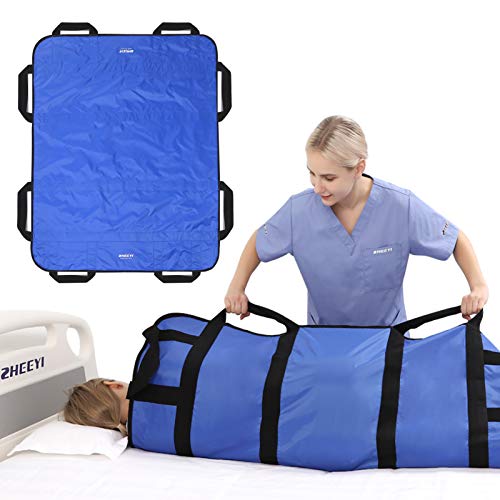
The ZHEEYI is the budget pick because it gives you the part many caregivers need most: a larger, easier-gliding surface for turning and moving someone without yanking on clothing or limbs. It is more transfer-sheet-like than the Improvia, which means it slides more easily across regular bed linens and can make boosting higher in bed noticeably less hard on the caregiver.
That larger 48 x 40 size is a real advantage. Families caring for adults who need more torso and hip coverage often find this easier to work with than smaller pads. The handles are sturdy, the fabric holds up well to washing, and the overall design is simple enough that it does not take much practice to understand. For the price, it does a very good job at the mechanical side of repositioning.
The tradeoff is comfort and moisture handling. This is nylon, and it feels more like a transfer tool than a plush bed pad. It can protect the sheet in a pinch, but it is not the best pick if absorbency is the main goal. Choose it when turning, boosting, and smoother movement matter more than underpad softness.
Why It Helps:
- The 48 x 40 size gives more working area for turning and boosting.
- Nylon fabric slides better than many softer underpad-style surfaces.
- The handles are sturdy enough for real home-care repositioning.
What To Keep In Mind:
- It is more of a transfer sheet than a comfort-first underpad.
- The slicker fabric feel will not suit every fully bedbound sleeper.
3 / 4 Type 48 x 40 reusable transfer-style bed pad Handles Reinforced edge handles for turning and lifting Surface Smooth durable construction for gentler sliding Care Washable and easy to pack for travel Tradeoff Less built around moisture management than the Improvia style48 x 40 Premium Positioning Bed Pad

The 48 x 40 Premium pad earns the premium spot because it feels built around movement quality first. It has the same general size advantage as the ZHEEYI, but it stands out more for the smooth way it supports turning, lifting, and repositioning across the bed. Caregivers who want a pad that glides cleanly and packs well for travel or assisted-living use will likely appreciate this design more than a bulkier underpad style.
It also has a nice practical versatility. Families use it at home, in facilities, and while traveling because the size is manageable, the handles are dependable, and the pad stores easily. The smooth construction helps reduce drag during turns, which matters when someone has back pain, frail skin, or gets anxious during bed moves.
What keeps it from the top spot is that it leans harder toward transfer help than toward moisture control. It is a strong, washable repositioning tool, but if absorbency and staying power on the bed are the first priorities, the Improvia is a better fit. For smoother repositioning and broader travel usefulness, this one makes a strong premium choice.
Why It Helps:
- The pad moves smoothly for turning and boosting without feeling flimsy.
- The size works well for many adult bodies while still staying manageable.
- It is easy to wash, store, and bring along to facilities or trips.
What To Keep In Mind:
- It is better at transfer-style movement than at acting like a full-time absorbent underpad.
- Larger transfers still may need two caregivers and clear coordination.
4 / 4 Type 45 x 36 waterproof positioning pad with 8 handles Capacity Supports up to about 350 lb Use Case Bed repositioning, sliding, and wheelchair use Surface Thicker two-layer build with some glide but more grab than slick nylon Tradeoff Can trap heat and moisture for some fully bedbound usersTINFAU Bed Positioning Pad
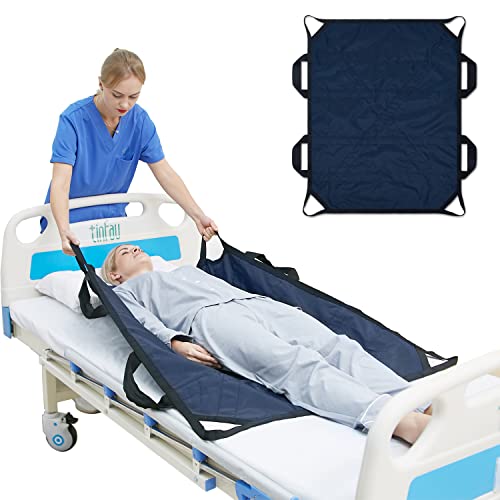
The TINFAU is the best daily-use pick because it sits in a useful middle ground between a slick slide sheet and a softer waterproof pad. It has enough surface movement to help with boosting and turning, but it does not feel as slippery or thin as some pure nylon transfer sheets. For some caregivers, that extra bit of grip makes daily bed care feel more controlled.
It also works well beyond the bed. Some people keep it in a wheelchair or use it to help turn themselves after back surgery, which says a lot about how practical the fabric and handle setup can be. The handles are sturdy, the build is durable, and the waterproofing is a real help when bed care and incontinence overlap.
Its main caution is breathability. That thicker waterproof build can hold heat and moisture more than some families want for someone who is fully bedbound around the clock. If the sleeper already runs hot or gets itchy with moisture buildup, that matters. For repeated daily repositioning where sturdiness comes first, though, it is a very useful pad.
Why It Helps:
- The thicker build gives a sturdier, more controlled feel for repeated repositioning.
- It can help with bed use and some wheelchair positioning tasks too.
- Waterproofing and durable handles make it a strong daily workhorse.
What To Keep In Mind:
- The less breathable build can bother people who are very heat- or moisture-sensitive.
- It is sturdy, but the smaller surface area gives less coverage than a 48 x 40 pad.
How to Choose Positioning Bed Pads
Start with the real job. If you mainly need to roll someone for cleanup, boost them higher in bed, or help them sit up, a positioning pad makes sense. If you mainly need lower friction for bigger bed moves, read how to use a sliding sheet or transfer mat before assuming a handle pad is the best tool. These products overlap, but they are not interchangeable.
Then look at size and handle layout. A positioning pad works best when it sits under the torso and hips where most of the weight and turning force actually live. Too small and you end up pulling awkwardly. Too large and it bunches or becomes hard to manage. Handle placement matters just as much because the cleanest grip is the one that lets you move the person without twisting your own body.
Material is the next big choice. Nylon-style pads slide more easily and help with boosting. Softer absorbent pads feel better for all-day bed use and moisture control. Thicker waterproof builds can be more comfortable than flimsy nylon but may trap more heat. That is why it helps to pair this decision with positioning basics to reduce pressure and shear rather than buying on handles alone.
It also helps to think through the whole bed setup. Pillows, wedges, bed height, and the direction of the turn change how useful the pad feels. A good pad is much easier to use when the bed is raised to a workable height, the helper knows which handles they are taking, and the next position is already planned before anyone starts pulling. That kind of simple setup prevents the stop-start tugging that creates extra strain for both the caregiver and the person in bed.
Finally, be honest about the care level. These pads reduce strain, but they do not turn one caregiver into a mechanical lift. If the person is very heavy, cannot assist at all, or starts slipping during the move, stop and rethink the transfer instead of yanking harder. If bed mobility is becoming more complex, also keep turning in bed and dangling safely in your workflow so the pad stays part of a safe sequence, not the whole plan.
Common Mistakes When Choosing Positioning Bed Pads
- Buying for absorbency alone when the real problem is turning and repositioning.
- Choosing the slickest possible surface when the person already feels insecure and slides too much.
- Using the pad like a hoist sling or trying to lift full body weight with one person.
- Ignoring moisture and heat buildup in a fully bedbound person.
- Pulling on the pad without a clear plan for where the person's shoulders, hips, and legs are going next.
The biggest mistake is confusing "easier to pull" with "safe to move." A good pad lowers effort, but it does not erase shear, bad body mechanics, or the need for another helper when the move is too big. The pad is part of the technique, not a substitute for it.
Frequently Asked Questions About Positioning Bed Pads
What is a positioning bed pad used for?
A positioning bed pad is used to help turn, boost, slide, or reposition someone in bed with less strain on the caregiver and less dragging on the person's skin.
Are positioning bed pads waterproof?
Many are, but not all of them handle moisture the same way. Some are better as absorbent underpads, while others are mainly repositioning sheets with limited spill protection.
Can one caregiver use a positioning pad alone?
Sometimes, for smaller moves and lighter people. Bigger bed moves, heavier adults, or any transfer where the person cannot help may still need two caregivers for safety.
Is a positioning bed pad the same as a slide sheet?
No. A slide sheet is usually built more for low-friction movement. A positioning bed pad may add handles, waterproofing, or absorbency, which changes how it behaves in bed.
How often should you wash a positioning bed pad?
Wash it whenever it becomes soiled and as often as the care plan requires. Reusable pads are meant for repeat laundering, but it still helps to follow the maker's washing guidance.
When is a positioning bed pad not enough?
It is not enough when the move still requires heavy lifting, the person cannot be guided safely during the turn, or the caregiver is straining too hard. At that point, the technique or equipment needs to change.
If bed mobility is getting harder overall, compare slide sheets and transfer mats for lower-friction moves, review repositioning in bed without lifting before the next hard boost, keep what to do if a transfer starts to fail nearby for rough moments, and look at bed rails and alternatives if the next problem after turning is getting safely to the edge of the bed.