As an affiliate, we may earn a commission from qualifying purchases. We get commissions for purchases made through links on this website from Amazon and other third parties.
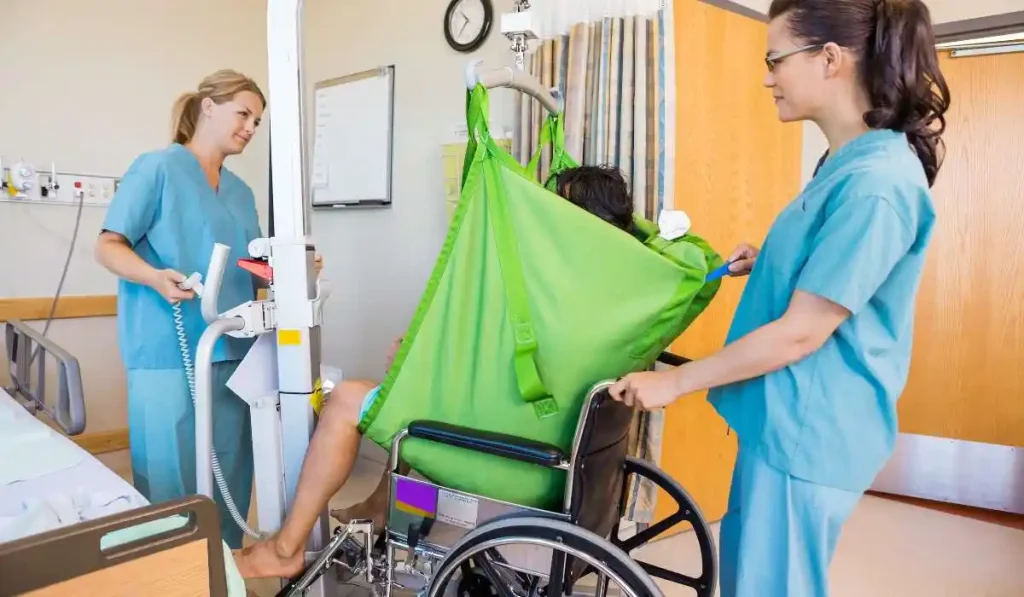
Patient lifts are for the point where a transfer has moved beyond “a little help” and into real lifting risk. If a caregiver is pulling someone up from under the arms, catching near falls, or trying to muscle through bed-to-chair moves alone, the problem is no longer comfort. It is safety. The right floor lift takes strain off both people and makes the transfer slower, steadier, and more predictable. If you want the full care picture first, start with the main mobility and transfers guide and then come back to the equipment decision.
This roundup focuses on Hoyer-type floor lifts for home use, plus one divided-leg sling that is worth treating like a main purchase. That is because a good lift frame can still feel awful if the sling is wrong for the body, the transfer goal, or hygiene access. Most families should also read the guide to passive Hoyer-type lifts, sling fit, and setup before buying, because doorway width, sling style, and caregiver technique matter just as much as weight capacity.
Quick Picks
- Best Overall: Vive Hydraulic Patient Lift for balanced home use, solid lift range, and a frame that covers most standard bed and chair transfers.
- Budget Pick: ProHeal Electric Lift for caregivers who want powered lifting, low-bed access, and fewer daily pumping demands.
- Premium Pick: EZ Assistive Divided Leg Sling for households that already own a lift but need a better sling for comfort and hygiene access.
- Best for Daily Use: ProHeal Hydraulic Patient Lift for steady manual transfers through a busy home layout.
- Best Alternative: Bestcare PL350CT Mobile Electric Floor Lift for foldable storage, car transfers, and homes that need a more compact electric setup.
Best Overall
Budget Pick
Premium Pick
Best for Daily Use
Best Alternative
Comparison Table
| Product | Best For | Key Strength | Main Tradeoff |
|---|---|---|---|
| Vive Hydraulic Patient Lift | Broad home-use bed, chair, and bath transfers | Good lift range with adjustable base width and solid manual feel | Heavy frame and not truly easy to transport |
| ProHeal Electric Lift | Frequent full-body transfers with less caregiver pumping | Powered lift, low-bed access, and emergency lowering | Battery and sling setup ask more planning |
| EZ Assistive Divided Leg Sling | Improving comfort and hygiene access on an existing lift | Washable four-point sling with size chart and easier toileting access | It is a sling only, and divided-leg style will not suit every body |
| ProHeal Hydraulic Patient Lift | Repeat manual transfers through doorways and mixed flooring | Strong frame, large casters, and simpler no-battery ownership | Manual pumping and carpet resistance still wear on caregivers |
| Bestcare PL350CT Mobile Electric Floor Lift | Car transfers and fold-away storage | Compact foldable frame with smooth seated transfers | Portable on paper, but still heavy to load and lower in height than some expect |
Quick Decision Guide
- Pick the Vive if you want one dependable manual floor lift that covers most home transfers without stepping into a heavier electric setup.
- Pick the ProHeal Electric if caregiver fatigue is the real problem and you need powered lifting for repeated bed, wheelchair, or recliner transfers.
- Pick the EZ Assistive sling if your current lift frame is serviceable but the sling is uncomfortable, hard to clean, or wrong for toileting access.
- Pick the ProHeal Hydraulic if you want a sturdier everyday manual lift that handles hardwood, rugs, and narrower home paths better than some bulkier frames.
- Pick the Bestcare PL350CT if you need a lift that can fold away and handle car transfers better than standard room-to-room floor lifts.
- Skip this category and look at sit-to-stand lifts for home use plus when powered sit-to-stand lifts make sense if the person can still bear weight and follow cues but needs strong standing help rather than a full suspended transfer.
Best Patient Lifts and Slings: Top Picks
1 / 5 Type Manual hydraulic full-body floor lift Capacity 400 lb Range 31 to 68 in lifting span Fit Base adjusts from 24.5 to 31.4 in for doorways about 28 in or wider Tradeoff Heavy frame and mixed floor-lift performance depending on sling setupVive Hydraulic Patient Lift
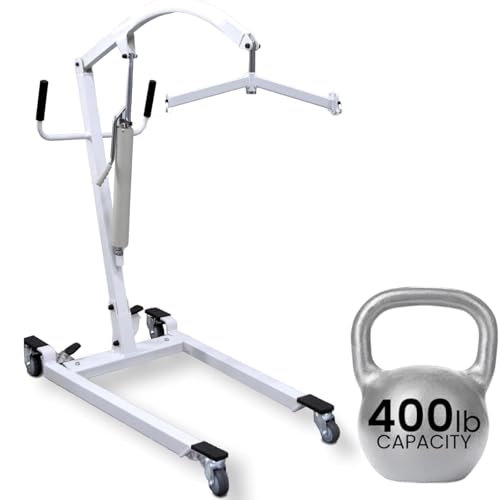
The Vive is the best overall pick because it covers the widest share of normal home-transfer problems without asking you to manage batteries, chargers, or a very complex frame. It gives a useful lift range, an adjustable base width, and a steel build that feels more like real medical equipment than flimsy home gear. If your main jobs are bed to wheelchair, floor to chair, or bath-area transfers, it is the kind of lift that can settle into a household routine without feeling overbuilt for every move.
Its strongest point is that it feels like a serious transfer tool. The hydraulic handle reduces how much raw pulling the caregiver has to do, and the base can widen enough to help with bed and chair positioning as long as the room has enough clearance. The frame also disassembles if you need to move or store it, but that is not the same as being truly light or travel friendly. This is a home-use floor lift first.
The main caution is that “portable” is doing a lot of work in the marketing. The unit is heavy, and the sling setup still takes practice, especially if you are thinking about floor lifts after a fall. Some caregivers also find hard floors much easier than carpet for rolling and turning. If you want one dependable manual lift for ordinary home transfers, though, this is the best-balanced choice here.
Why It Helps:
- The lift range and adjustable base cover a lot of standard bed, chair, and bath transfers.
- The steel frame feels stable and secure once it is positioned correctly.
- You get manual lifting help without the upkeep of a powered unit.
What To Keep In Mind:
- It is heavy enough that moving or storing it is still a real task.
- Sling positioning takes practice, and floor recovery may depend on the sling setup more than the frame alone.
2 / 5 Type Electric full-body floor lift with 6-point spreader Capacity 500 lb Access Fits under low beds and handles floor lifts Safety Emergency lowering, locking casters, foot-pedal base spread Tradeoff Battery and sling compatibility need more setup planningProHeal Electric Lift
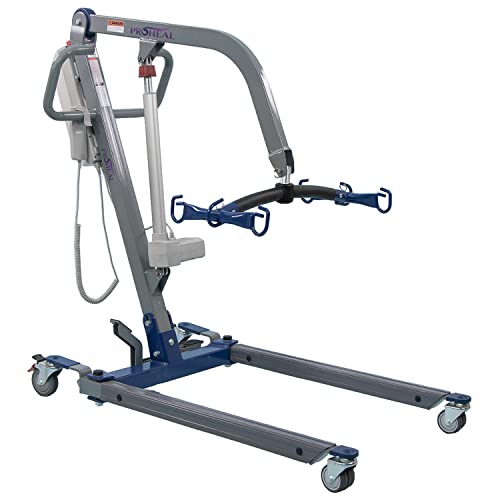
The ProHeal Electric is the budget pick because it gives you a real powered full-body lift without pushing you into a much more specialized or travel-focused system. For many homes, the real expense in these transfers is not money. It is caregiver fatigue. A button-operated lift takes a big chunk of that daily strain away, especially when the transfer happens several times a day and the caregiver is already tired, older, or dealing with their own back limits.
This model does several smart things for home use. It fits under lower beds, opens the base by foot pedal, uses a six-point spreader bar for sling flexibility, and includes manual emergency lowering if the power goes out. That mix matters more than flashy features. Caregivers who do repeated bed, recliner, wheelchair, and commode transfers usually benefit more from smooth powered lifting than from shaving a little weight off the frame.
Its tradeoffs are mostly about setup and ownership. You need to think through charging, backup plans, and exactly which sling hardware you are using. Some families also end up wishing they had clearer parts guidance or a backup battery ready sooner than expected. If you want an electric lift because frequent manual pumping is already too much, this is the strongest value play in the group.
Why It Helps:
- Powered lifting takes much of the strain out of repeated daily transfers.
- Low-bed access and floor-lift ability make it more flexible than many home units.
- Emergency lowering and foot-pedal base adjustment are genuinely useful safety features.
What To Keep In Mind:
- Sling attachments and battery planning need to be sorted out before the first urgent transfer.
- The frame is sturdy, but maneuvering the feet can still feel awkward in tight rooms.
3 / 5 Type Divided-leg sling, not a full lift Capacity 500 lb Fit Sized by height and weight with S, M, L chart Access Wide hygiene opening and washable fabric Tradeoff Must match the person's leg position and transfer goal carefullyEZ Assistive Divided Leg Sling
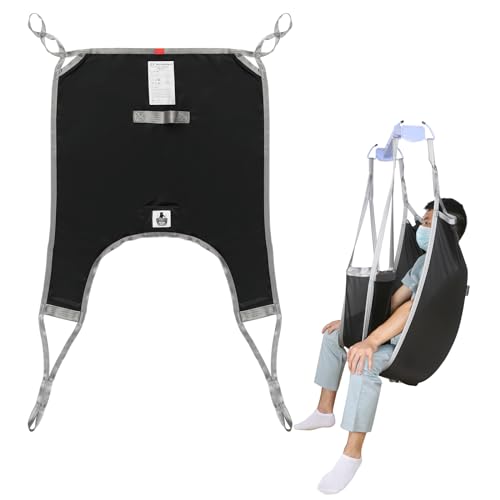
The EZ Assistive sling is the premium pick because the sling is often the part that determines whether a transfer feels secure, comfortable, and dignified. A decent lift frame paired with a bad sling can still create skin drag, leg discomfort, awkward toileting access, and a lot of fear during transfers. This divided-leg model is built to fix that specific problem, especially when hygiene access and easier cleaning matter just as much as the lift itself.
Its wide opening from the lower back to mid-thigh makes it more practical for toileting and commode use than bulkier full-body slings. The undersurface handle and leg-strap pocket are also smart caregiver details, because little positioning aids matter when you are trying to work around weak hips, pain, or limited space. The fabric is machine washable, and the weight-height size chart gives you a more usable starting point than guessing by body build alone.
The tradeoff is that this is not a universal answer. Divided-leg slings can be uncomfortable for people with stiff hips, legs that tend to pull tightly together, or pain when the legs are separated. The leg webbing must also be crossed correctly, and the lift hookup has to match the sling points. Buy this when you already understand that the lift frame is only half the transfer system.
Why It Helps:
- The hygiene opening makes toileting and cleaning easier than with many bulkier slings.
- Size guidance is clearer than the one-size-hope-for-the-best approach many families start with.
- Washable fabric and reinforced corners make it easier to keep in regular rotation.
What To Keep In Mind:
- It is a sling only, so it does not replace the need for a compatible lift.
- Divided-leg style can be uncomfortable for people with stiff or painful legs.
4 / 5 Type Manual hydraulic full-body lift Capacity 450 lb Mobility Large casters handle hardwood, rugs, and slight transitions Access Gets through narrower doorways better than expected Tradeoff Manual pumping and occasional missing chain hardware complaintsProHeal Hydraulic Patient Lift
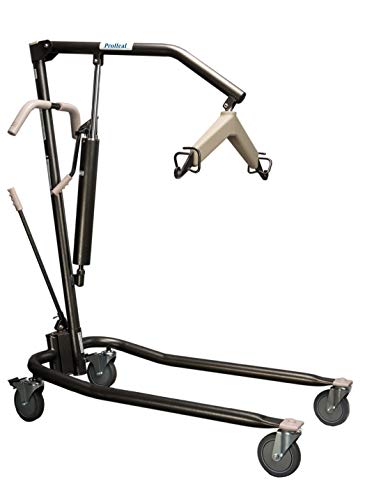
The ProHeal Hydraulic makes the most sense for homes that will use a floor lift often but do not want to manage another battery-powered device. It is a sturdy manual lift with large enough casters to cope better than expected with mixed flooring, small transitions, and narrower doorways. That matters in real houses, where the transfer path is rarely a wide-open hospital room.
What makes it the best daily-use manual pick is that it feels straightforward once assembled. There is no charging routine, no power pack to worry about overnight, and no major learning curve if the caregiver already understands floor-lift basics. Families using a lift to move someone from bed to chair, out to a sunny room, or through everyday house paths often care more about repeatable reliability than about saving a few pumps per transfer.
The main tradeoff is that manual still means manual. Carpet adds drag, repeated pumping adds fatigue, and some shipments have arrived with missing chains or hardware that needed follow-up. It is a strong workhorse for daily home use, but it still rewards caregivers who check the box contents carefully and practice the lift before an urgent situation hits.
Why It Helps:
- Large casters and a sturdy frame make it easier to move through a lived-in home.
- Manual hydraulic action keeps ownership simpler than a battery-based lift.
- The frame works well for repeated room-to-room transfers when the caregiver knows the routine.
What To Keep In Mind:
- Carpet and repeated pumping still take effort over the course of a long day.
- Verify the included chain and sling hardware before you need the lift in a hurry.
5 / 5 Type Foldable electric floor lift Capacity 350 lb Best Use Car transfers, wheelchair moves, and fold-away storage Controls Clip controller, foot-pedal base spread, emergency lowering Tradeoff Portable but still heavy and lower in real lift height than some expectBestcare PL350CT Mobile Electric Floor Lift
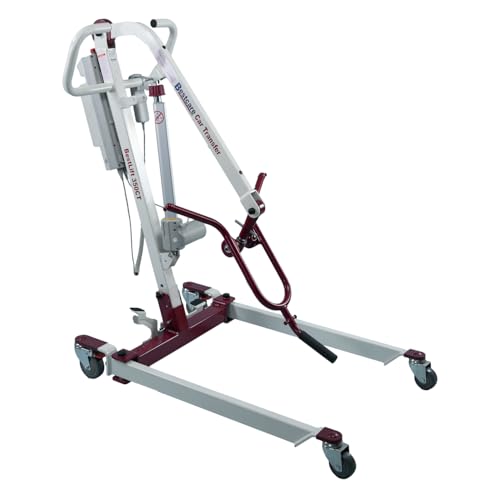
The Bestcare PL350CT is the best alternative because it solves a problem that regular home lifts often handle badly: storage and car transfers. It folds, fits more easily into a closet or trunk, and excels at moving someone between a wheelchair and a car seat with less swinging than many bigger floor lifts. If your daily transfer plan includes appointments, outings, or a lift that cannot live in the middle of the room all week, that matters a lot.
This is also one of the more flexible electric units for seated transfers. The clip controller is simple, the base spread works by foot pedal, and the emergency lowering knob gives you a fallback if power fails mid-transfer. Families who use it mainly for wheelchair, recliner, and car moves often find it much easier to live with than a bulkier medical-style frame.
The catch is that “foldable” still does not mean light. It is easier to stow than a standard floor lift, but many caregivers will still find it heavy to load into a trunk by themselves. Real lift height can also be lower than some expect, so measure your transfer goals carefully. Buy this for compact electric convenience, not because you think it turns into a featherweight travel tool.
Why It Helps:
- Folding storage and car-transfer strength make it stand out from typical room-only lifts.
- Seated transfers feel controlled, with less swinging than many standard frames.
- The control layout is simple enough for regular family use once set up.
What To Keep In Mind:
- It is still heavy enough that trunk loading can strain a single caregiver.
- Check the real lift height against your bed, wheelchair, and car-transfer needs before buying.
How to Choose Patient Lifts and Slings
Start by choosing the transfer category, not the brand. A passive floor lift is for someone who cannot stand or cannot safely help enough during the move. A sit-to-stand lift is for someone who can still bear weight and follow cues. Mixing those up leads to bad purchases and unsafe transfers. If you are still on the fence, read the Hoyer lift step-by-step guide and compare it with the sit-to-stand pages linked above before you spend money.
Then measure the home. Doorway width, bed clearance, recliner height, commode access, and floor surface all matter. A frame that looks compact online can still be frustrating if the base will not open around the furniture you already own. Hard floors usually roll better than carpet. Low beds ask more from the lift geometry. “Portable” often means the frame can be folded or disassembled, not that one tired caregiver will enjoy moving it around.
Next, treat the sling as part of the safety system, not an accessory. The sling style, hook pattern, fabric, and size all affect how supported the person feels once suspended. Divided-leg slings help with hygiene access and seated transfers, but they do not suit every body. Full-body slings can feel more supportive, especially when upper-body control is poor. If sling choice is the confusing part, start with transfer sling options for elderly adults and then match the sling to the exact lift bar and transfer task.
Finally, think about caregiver workload over time. Manual hydraulic lifts can be perfectly reasonable when transfers are occasional and the caregiver has enough strength and space to work. Electric lifts earn their keep fast when transfers happen many times a day or the caregiver is already close to burnout. If you go electric, battery habits matter too, so it is worth reviewing lift and battery care basics before the first week of use.
Common Mistakes When Choosing Patient Lifts and Slings
- Buying by weight capacity alone and ignoring doorway width, base spread, or bed clearance.
- Assuming any sling will work well on any lift bar without checking the hookup style.
- Treating “portable” as a promise that one caregiver can lift the frame into a car easily.
- Choosing a manual lift for heavy daily use when caregiver fatigue is already a problem.
- Skipping practice with emergency lowering, sling placement, and floor surface checks.
The biggest mistake is waiting to learn the lift during a crisis. The first transfer should not happen after a fall, during a rushed toileting trip, or when the person is already panicked. Set the lift up early, practice with an empty sling, then with a calm helper, and make sure everyone knows the lowering controls before the first urgent moment.
Frequently Asked Questions About Patient Lifts and Slings
What is the difference between a patient lift and a sit-to-stand lift?
A patient lift supports most or all of the person’s weight in a sling during the transfer. A sit-to-stand lift is for someone who can still bear weight through the legs and follow standing cues. They solve different problems.
Are manual hydraulic lifts hard to use at home?
They are manageable for many families, but they still take room, setup time, and some pumping effort. They tend to work best when transfers are planned, the caregiver has good technique, and the flooring rolls reasonably well.
How do I know if a sling will fit?
Start with the maker’s weight and height chart, then confirm the sling style matches the person’s body control and transfer goal. A good size chart helps, but comfort still depends on how the sling supports the trunk, thighs, and hygiene opening.
Can patient lifts be used after a fall?
Some can, but not every lift and sling setup works equally well from floor level. You need enough lift range, the right sling, and enough room to position the base safely. It is much better to practice before a real fall happens.
Is an electric patient lift worth it for home use?
It usually is when transfers happen several times a day or the caregiver is already straining with a manual pump. Electric lifting reduces effort, but it also adds battery care and a little more setup planning.
When should you stop trying to transfer without a lift?
Stop when the move regularly involves pulling under the arms, near falls, panic, or a caregiver doing most of the lifting. At that point, the transfer is already telling you the current method is no longer safe enough.
If you are building a safer full-transfer routine, pair this guide with slide sheets and transfer mats for bed moves that do not need a full lift, keep bed-to-chair transfer steps nearby for partial-assist situations, review what to do if a transfer starts to fail before the next rushed move, and compare car transfer aids if the hardest transfer in the week happens in the driveway instead of the bedroom.