As an affiliate, we may earn a commission from qualifying purchases. We get commissions for purchases made through links on this website from Amazon and other third parties.
A sit-to-stand lift can turn a risky transfer into a controlled one, but only when the person can still do part of the stand. That is the point many families miss. These lifts are not for a fully passive transfer, and they are not a shortcut around poor fit or rushed setup. If you want the full transfer picture first, start with the main mobility and transfers guide.
The right sit-to-stand lift reduces caregiver strain, helps the person stay involved, and makes moves between bed, chair, wheelchair, and toilet feel less chaotic. The wrong one is too wide for the room, too manual for the caregiver, or simply the wrong class of lift for somebody who cannot bear enough weight. Before you buy, it helps to read how sit-to-stand technique changes with and without devices so the lift matches the actual transfer problem.
Quick Picks
- Best Overall: BestCare SA182H Sit-to-Stand Manual Lift for the best mix of home size, knee support, and dependable manual transfer control.
- Budget Pick: Lumex LF1600 Stand Assist for households that want a proven stand-assist design without moving to a full electric frame.
- Premium Pick: Tuffcare Rhino Electric Sit-to-Stand Lift for frequent daily transfers where powered lift travel reduces caregiver strain.
- Best for Tight Spaces: Helivora Sit-to-Stand Lift with Transfer Belt for narrower home layouts and simple doorway-to-doorway use.
- Best High-Capacity Electric Option: MDMaxx STS 500 Compact Sit-to-Stand Lift for higher-capacity electric support in a compact home-care frame.
Best Overall
Budget Pick
Premium Pick
Best for Tight Spaces
Best High-Capacity Electric Option
Comparison Table
| Product | Best For | Key Strength | Main Tradeoff |
|---|---|---|---|
| BestCare SA182H Sit-to-Stand Manual Lift | Most homes doing repeated assisted standing transfers | Compact frame, 400 lb capacity, adjustable knee pad, and reliable hydraulic control | Manual pumping still takes caregiver effort |
| Lumex LF1600 Stand Assist | Value-minded households with an engaged person | Trusted stand-assist design, 400 lb support, and strong active-participation fit | Not the best choice when the person is fading toward full passive transfers |
| Tuffcare Rhino Electric Sit-to-Stand Lift | Frequent daily transfers where caregiver fatigue is rising | Powered lifting arm, low base, broad sling compatibility, and strong daily-use build | Larger machine feel and freight-style delivery setup |
| Helivora Sit-to-Stand Lift | Tight home layouts and straightforward room-to-room transfers | Narrow frame, included transfer belt, anti-slip footrest, and 400 lb support | Base adjustability is limited and caregiver help still matters |
| MDMaxx STS 500 Compact Sit-to-Stand Lift | Higher-capacity electric support in smaller home spaces | 500 lb capacity, compact base, electric lift motion, and adjustable knee support | Mixed setup quality signals mean close inspection after delivery matters |
Quick Decision Guide
- Pick the BestCare SA182H if you want the safest starting point for most home sit-to-stand transfers and you can manage a hydraulic pump.
- Pick the Lumex LF1600 if the person still participates well and you want a straightforward stand-assist frame from a known medical-aid brand.
- Pick the Tuffcare Rhino if transfers happen many times a day and caregiver back strain is becoming the bigger problem.
- Pick the Helivora if the home is tighter and you need a simpler stand-assist frame that can move through standard doorways.
- Pick the MDMaxx STS 500 if you need electric lift travel plus a higher capacity in a compact footprint.
- If the person can no longer do a real assisted stand, move up to full patient lifts and slings instead of forcing a sit-to-stand device into the wrong job.
- If the current problem is still lighter than that, compare portable standing aids or gait belts before buying a machine that may be more lift than the home really needs.
Best Sit-to-Stand Lifts for Home Use: Top Picks
1 / 5 Type Manual hydraulic sit-to-stand lift Capacity 400 lb Support Points Adjustable knee pad and detachable foot plate Frame Compact, transportable aluminum design Upgrade Path Optional electric upgrade Tradeoff Manual hydraulic pumping still adds caregiver effort on repeated transfersBestCare SA182H Sit-to-Stand Manual Lift

The BestCare SA182H is the strongest starting point for most homes because it covers the basic sit-to-stand job well without becoming too bulky or too stripped down. The frame is compact enough for tighter home use, the 400-pound capacity covers a wide range of users, and the adjustable knee pad plus detachable foot plate give it more setup flexibility than many simpler stand-assist units. For transfers between bed, wheelchair, recliner, and toilet, that balance matters more than flashy extras.
What makes this model practical is how clearly it understands the home setting. It is transportable, easier to maneuver than many full electric lifts, and built around the fact that home caregivers often need something smaller than larger medical equipment. The hydraulic action still requires effort, but it is predictable and controlled. That is important when the person can still help with the stand but needs secure support through the hardest part of the transfer.
Its real tradeoff is caregiver workload. Manual hydraulic lifting is fine for many homes, especially if transfers are limited, but it becomes more tiring when used many times a day. If the caregiver already has back or shoulder strain, a powered frame may be the smarter long-term answer. Still, for all-around home sit-to-stand use, this is the most balanced choice in the group.
Why It Helps:
- The frame stays compact enough for home use without giving up the key support points a sit-to-stand lift needs.
- Adjustable knee support makes it easier to fit different body sizes and transfer setups.
- Hydraulic control feels steady and dependable for routine assisted stands.
What To Keep In Mind:
- Repeated daily pumping adds real caregiver effort over time.
- This still requires a person who can do part of the stand and follow the transfer.
2 / 5 Type Manual stand-assist lift Capacity 400 lb Fit Range Built for people about 5 ft 1 in to 6 ft 6 in Comfort Cushioned knee pads, ergonomic bars, and padded seat Use Case Active-participation transfers with minimal assistance Tradeoff Less suitable once the person can no longer take part consistentlyLumex LF1600 Stand Assist

The Lumex LF1600 makes the most sense when the person using it is still engaged in the transfer and the family wants a simpler, proven stand-assist design. It is built for active participation, which is exactly what many home caregivers need before things have progressed to full passive lifting. The cushioned knee support, hand bars, and padded seat all help the person feel secure through the stand and pivot instead of feeling hauled around.
This is also one of the easier models to picture in a real family-care setting. It is strong enough for repeated chair, wheelchair, and toilet transfers, and caregivers often find that it reduces the constant strain of boosting, pulling, and catching someone mid-stand. For a senior who still has some leg strength but cannot rise safely alone, that can be a major difference in daily life.
The main limit is intent. This is not the lift to buy when the person is already near full dependence. If standing ability is fading fast or non-weight-bearing transfers are starting to appear, you are better off moving sooner to a full lift setup. But for the right stage of mobility loss, this is a very practical value option.
Why It Helps:
- It supports the kind of active-participation transfer many families manage at home before needing a full lift.
- The comfort touches help the person feel more secure during the stand.
- It reduces caregiver strain without forcing a jump into a larger powered machine.
What To Keep In Mind:
- It stops being the right choice once the person cannot help reliably with the stand.
- Good fit at the knees and hands still matters every time, not just on day one.
3 / 5 Type Electric sit-to-stand lift with transport sling Capacity 380 lb Power 24-volt battery with hand pendant and emergency cutoff Base Manual low base opens about 4.5 in to 32 in Compatibility Works with multiple standing and transport sling styles Tradeoff Larger machine feel and more involved delivery/setup than simpler home unitsTuffcare Rhino Electric Sit-to-Stand Lift

The Tuffcare Rhino is the premium daily-use option because it removes the part that wears caregivers down fastest: repeated manual lifting effort. When transfers happen many times a day, electric lift travel makes a real difference. It lowers physical strain, gives more controlled motion, and can make dressing, cleaning, and seated transfers less rushed. In a home where one caregiver does most of the heavy work, that change is often worth more than any extra accessory.
It is also built with a more medical-style design. The low base, folding non-slip footplate, and six-point arm give it more versatility than the simpler stand-assist models. That matters when body size, sling preference, or chair height are not all the same from one transfer to the next. The powered arm and emergency cutoff also give this model a more serious day-in, day-out feel than lightweight home-only frames.
The tradeoff is that it feels more like a machine. Delivery may be less simple, the frame is more substantial, and it only works when the person still qualifies for a sit-to-stand device rather than a full passive lift. If transfers are frequent and the caregiver needs real relief, though, this is one of the strongest home options in the category.
Why It Helps:
- Electric lift travel reduces caregiver fatigue on repeated daily transfers.
- The low base and broader sling compatibility make it more flexible across different setups.
- It is built for daily use, not just occasional help from chair to wheelchair.
What To Keep In Mind:
- The bigger machine feel can be harder to store and manage in smaller homes.
- This is still not the right lift when the person cannot bear enough weight to participate.
4 / 5 Type Sit-to-stand lift with transfer belt Capacity 400 lb Safety Anti-slip footrest, dual locking casters, safety straps, and widened anti-tip base Fit Adjustable knee pads and flipping PU seat pad Use Case Narrow frame meant to pass through most standard doorways Tradeoff Base flexibility is limited and caregiver assistance still has to do part of the workHelivora Sit-to-Stand Lift
The Helivora earns its place because many families do not need the most elaborate lift. They need one that can get through the bedroom door, line up near a toilet, and handle straightforward home transfers without feeling oversized. This model is built around that smaller-space use. The narrower frame, anti-slip footrest, and included transfer belt make it easier to bring into standard home rooms where bigger lifts quickly become frustrating.
It also covers the essentials well. The 400-pound capacity, adjustable knee pads, and padded seat support give it a reassuring feel for people who can still help with the stand but need a stable setup. The low center of gravity and anti-tip focus are useful here because home floors are rarely perfect. Carpet edges, tile changes, and small floor transitions can make a basic stand-assist feel less secure than expected.
Its limitation is flexibility. Some buyers discover that the base setup is not as adaptable as they hoped, which matters if the lift has to wrap around different chairs or awkward furniture. This is a good fit when the transfer path is consistent and the home is tighter. It is less ideal when every room setup is different and quick base adjustments matter.
Why It Helps:
- Narrower home-friendly sizing is useful in bedrooms, bathrooms, and tighter chair setups.
- The included transfer support pieces make it easier to get started without extra add-ons.
- Stability features are aimed at exactly the kind of stop-and-start home transfer most families do.
What To Keep In Mind:
- Limited base flexibility can become annoying around some chairs or furniture layouts.
- The person still needs enough leg and trunk participation for the lift to work as intended.
5 / 5 Type Compact electric sit-to-stand lift Capacity 500 lb Base About 4.7 in low base with foot-pedal opener Safety Handheld controller, emergency stop, locking casters, and adjustable padded knee brace Power 24V motor and rechargeable battery Tradeoff Mixed assembly and quality-control signals mean setup inspection matters more than usualMDMaxx STS 500 Compact Sit-to-Stand Lift
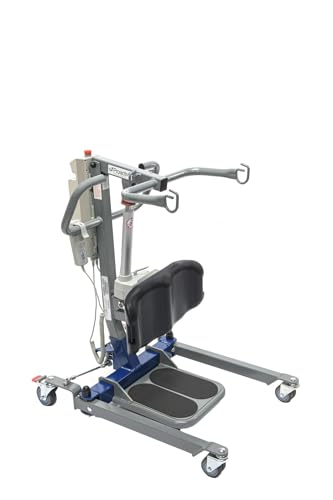
The MDMaxx STS 500 stands out because it offers a higher-capacity electric option without jumping to an oversized medical frame. A 500-pound rating, compact base, adjustable knee support, and powered lift motion make it appealing for households that need more strength but still care about home fit. If the person is larger, the caregiver needs electric assistance, and furniture clearance is still a concern, this model checks important boxes.
Its feature set is good on paper and useful in practice when the unit arrives cleanly assembled. The handheld control, emergency stop, quiet 24-volt motor, and foot-pedal base opener all make sense for repeated home transfers. The low base height is also important because many families run into trouble when a lift simply does not slide under the bed or chair they actually use every day.
What holds it back is confidence at delivery. Buyer experiences are more uneven than with the stronger picks above, so this is a product to inspect carefully during setup. If everything arrives right, it offers an impressive combination of capacity and compactness. But it does not inspire the same immediate trust as the best-established options in the roundup.
Why It Helps:
- High capacity and powered lift motion cover a harder home-transfer use case than many compact frames do.
- The low base and foot-pedal opening help it work around more beds and chairs.
- Electric control reduces strain for caregivers who cannot keep pumping a manual lift.
What To Keep In Mind:
- Assembly and delivery quality should be checked closely before relying on it for daily transfers.
- Higher capacity does not change the core rule: the person still needs to participate in the stand.
How to Choose a Sit-to-Stand Lift for Home Use
Start with the person's actual ability, not the caregiver's hope. A sit-to-stand lift only works when the person can bear some weight, hold position reasonably well, and follow the transfer enough to stay safe. If that is already slipping, go straight to patient lifts and slings instead of trying to stretch a stand-assist beyond its purpose.
Then look at the room, especially the base. A lift can be perfect on paper and still fail if it will not slide under the bed, wrap around the commode, or clear the recliner base. Knee support, footplate height, and doorway fit all matter more at home than they do in a wide therapy gym. For that reason, it helps to keep bed-to-chair transfer steps in mind while measuring the actual spaces where the lift will work.
Manual versus electric is the next big decision. A hydraulic lift can be an excellent home solution when transfers are limited and the caregiver can manage the pumping without strain. Electric lifts become more attractive when transfers happen several times a day, the person is heavier, or caregiver fatigue is already a real problem. If the home is not ready for a machine yet, portable standing aids may still be enough for lighter daily help.
Do not ignore the in-between stage. Many families jump from gait belt to lift too late, after too many unsafe boosts and near-falls. Others buy a machine too early for someone who still only needs guided standing practice. If you are still in that middle ground, how to choose and use a gait belt safely and what to do if a transfer starts to fail are both worth reading before the next move gets harder.
Finally, keep the transfer pattern realistic. Sit-to-stand lifts shine on predictable paths: bed to wheelchair, recliner to commode, chair to standing support, and back again. They are not the answer for a person who is fully non-weight-bearing, cannot stay upright once raised, or needs passive repositioning in bed. In those cases, a different class of device is safer.
Common Mistakes When Choosing Sit-to-Stand Lifts
- Buying a sit-to-stand lift for someone who can no longer participate in the standing phase.
- Choosing the highest capacity without checking whether the base fits under the actual bed, chair, or recliner.
- Focusing on lift power and forgetting knee pad height, footplate setup, and sling fit.
- Assuming a narrow frame will work everywhere even if the base does not open or adjust enough for the furniture.
- Waiting until every transfer feels like an emergency before moving from a gait belt to a more supportive device.
The biggest mistake is using the wrong class of equipment. A sit-to-stand lift is not a compromise between a gait belt and a full Hoyer lift in every case. It is a specific tool for a specific level of ability. When the person is partly involved and can still bear some weight, it can be excellent. When that ability is gone, the same device can become frustrating and unsafe very quickly.
Frequently Asked Questions About Sit-to-Stand Lifts
Who should use a sit-to-stand lift at home?
A sit-to-stand lift is best for someone who can still bear some weight, hold position long enough for the transfer, and follow basic instructions. It is meant for assisted standing transfers, not full passive lifting.
When is a full patient lift better than a sit-to-stand lift?
A full patient lift is better when the person cannot help with the stand, is fully non-weight-bearing, or cannot stay upright safely during the transfer. At that point, a sit-to-stand device is the wrong tool.
Are manual sit-to-stand lifts hard for caregivers to use?
They can be, especially if transfers happen often or the person is heavier. Manual hydraulic lifting is manageable for some homes, but electric lift travel reduces strain when the workload gets heavier.
Do sit-to-stand lifts fit through standard doorways?
Some do, but the doorway is only part of the story. The base also has to fit around furniture and under the surfaces involved in the transfer, so home measurements matter.
Can a sit-to-stand lift be used for toilet transfers?
Yes, many are used that way, as long as the base, footplate, and sling setup work in the bathroom space. The person still needs enough participation to stand through the move.
What matters most when choosing one for home use?
The most important things are the person's real standing ability, the caregiver's strength, base clearance under furniture, and whether transfers are frequent enough to justify electric lift travel.
Is a gait belt still useful if the home has a sit-to-stand lift?
Often yes. A gait belt can still help with shorter guided stands or lighter daily movement when the full lift is not needed. The key is knowing when each tool is appropriate.
If the next decision is whether a smaller tool could still work, compare portable standing aids and gait belts. If the person is already losing the ability to help with the stand, move to full patient lifts and slings before transfers become unsafe for everyone involved.