As an affiliate, we may earn a commission from qualifying purchases. We get commissions for purchases made through links on this website from Amazon and other third parties.
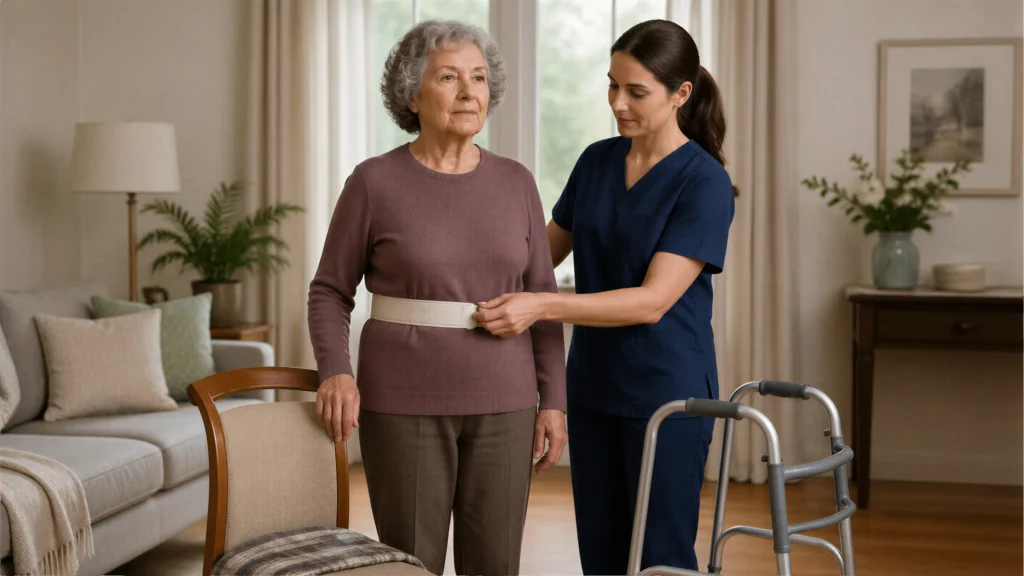
A gait belt is one of the simplest tools in home care, but it only helps when it matches the job. Used correctly, it gives the caregiver a safer grip during walking practice, bed-to-chair moves, and sit-to-stand help. Used badly, it becomes a false sense of security or, worse, a lifting strap for a transfer that already needs a stronger device. If you want the full transfer picture first, start with the main mobility and transfers guide.
This roundup focuses on padded gait belts with handles, because that is where most family caregivers need the most help. The good ones reduce shoulder grabbing, spread pressure better around the waist, and give the helper more than one place to control the move. They still do not replace training, though, so it is worth reading gait belt placement and comfort basics before you buy. The best gait belt is the one that stays snug, gives a clean grip, and matches the kind of transfer you do most.
Quick Picks
- Best Overall: NurtureCare Gait Belt with Leg Straps for the strongest all-around mix of secure buckle, multiple handles, and extra anti-ride-up support.
- Budget Pick: supregear Gait Belt for a wide, comfortable belt that works well for everyday walking support and routine transfers.
- Premium Pick: Vive Gait Belt for trusted-brand build quality, padded handles, and dependable daily caregiver use.
- Best for Daily Use: Seven-Handle Daily Gait Belt for quick on-off use around the house, especially when shoulder protection matters.
- Best Alternative: Seven-Handle Mesh Transfer Belt for families who want a washable, wide-backed belt and can live with a fussier plastic buckle.
Best Overall
Budget Pick
Premium Pick
Best for Daily Use
Best Alternative
Comparison Table
| Product | Best For | Key Strength | Main Tradeoff |
|---|---|---|---|
| NurtureCare Gait Belt with Leg Straps | Bed, chair, and wheelchair transfers where ride-up is a concern | Metal buckle plus detachable leg straps add real security | Leg straps add setup time and can feel awkward on some bodies |
| supregear Gait Belt | Lower-cost walking support and routine home transfers | Wide 5.7-inch padding feels comfortable and dries quickly | Must be worn snugly or it loses control during harder lifts |
| Vive Gait Belt | Frequent caregiver use and walking assistance | Padded handles and a sturdy metal buckle from a trusted brand | Nylon can feel slick, and buckle security depends on a very snug fit |
| Seven-Handle Daily Gait Belt | Fast daily use for standing and short household moves | Wide back panel and multiple handles reduce shoulder grabbing | Handle layout and fit can still shift if the belt is not tightened enough |
| Seven-Handle Mesh Transfer Belt | Washable all-purpose backup belt | Wide padded back with soft handles and good washability | Plastic buckle can be finicky and may slip if not latched firmly |
Quick Decision Guide
- Pick the NurtureCare if you want the most secure-feeling setup for repeated bed, chair, and wheelchair transfers.
- Pick the supregear if comfort, wider padding, and better value matter more than extra strap complexity.
- Pick the Vive if you want a caregiver-friendly belt from a better-known brand and you will use it often.
- Pick the Seven-Handle Daily if you want something easy to clip on for regular walking support, standing help, and quick household transfers.
- Pick the Seven-Handle Mesh if you want a washable backup belt and are willing to watch the buckle closely.
- Skip gait belts and move to full-body lifts and slings if the person cannot do their share of the stand or transfer anymore.
- If the real problem is needing one more handhold to rise from a couch or chair, compare portable standing aids before you assume a belt is the right answer.
Best Gait Belts: Top Picks
1 / 5 Type Padded gait belt with 7 handles and detachable leg straps Capacity Metal buckle rated up to 400 lb Support Leg straps help reduce belt ride-up during standing help Use Case Bed, chair, wheelchair, and walking assistance Tradeoff Leg straps take extra adjustment and can feel awkward on some peopleNurtureCare Gait Belt with Leg Straps

The NurtureCare belt is the best overall pick because it fixes the biggest weakness of many handle-style gait belts: they ride up when the caregiver tries to help someone stand. The detachable leg straps are what make the difference. They add another point of stability during bed transfers, wheelchair moves, and sit-to-stand assistance, which gives the helper better control and keeps the belt from climbing toward the ribs when the person is weak or sliding.
The rest of the design backs that up well. The metal buckle feels more trustworthy than light plastic buckles, the stitching is strong, and the seven handles give you real options instead of forcing one awkward grip. For homes doing several transfers a day, especially when one caregiver is handling most of the work, that extra control can make the difference between a calm assist and a messy tug.
It is not the quickest belt to deal with, though. The leg straps add steps, and people with smaller frames or certain body shapes may need extra time to get the fit right. Still, if you want the belt that does the most to stay put during harder transfers, this is the strongest all-around choice.
Why It Helps:
- Leg straps reduce one of the most frustrating problems in this category: belt ride-up during a stand.
- The metal buckle feels more secure than lighter plastic closures.
- Seven reinforced handles give the caregiver more than one useful grip angle.
What To Keep In Mind:
- The leg straps help, but they also make setup slower and fussier.
- This is still a gait belt, not a true lifting harness for full-body-weight transfers.
2 / 5 Type Wide padded gait belt with 7 handles Fit Adjusts roughly 27 to 50 in Comfort 5.7 in wide padding with mesh for breathability Care Easy-clean polyester and quick-dry fabric Tradeoff Needs a snug fit or it loses control during harder transferssupregear Gait Belt

The supregear belt is the budget pick because it covers the basics very well without feeling flimsy or too narrow. The extra width matters. A 5.7-inch padded back spreads pressure better than skinny web belts, which makes it more comfortable for longer walking sessions, stair help, and everyday home transfers where the belt stays on for a while. The mesh fabric also dries quickly, which is useful when a belt gets used often and needs regular cleaning.
This is a good choice for families doing routine assistance rather than heavy lifting. The seven handles are easy to find, the quick-release buckle is simple to manage, and the material feels strong enough for repeat daily use. It is especially useful when the person needs steadying while walking but still does most of the work on their own. In that role, it feels comfortable and caregiver-friendly.
Its main weakness is fit tension. Like many padded belts, it works best when worn snugly. If it is even a little loose, the caregiver loses the clean body control that makes a gait belt worth using in the first place. For everyday value and comfort, though, it is hard to beat.
Why It Helps:
- The wider padded back is more comfortable than thin web belts for repeated use.
- Mesh construction makes washing and quick drying easier.
- The handle layout works well for walking support and short household transfers.
What To Keep In Mind:
- A loose fit makes this belt much less useful during tougher transfers.
- The quick-release plastic buckle is convenient, but not as confidence-building as metal hardware.
3 / 5 Type Wide nylon gait belt with 7 padded handles Capacity Supports up to 300 lb Fit Adjusts to waists up to about 51 in Hardware Quick-release metal buckle with gripping teeth Tradeoff Nylon can feel slick and buckle security depends on a tight fitVive Gait Belt

The Vive belt earns the premium spot because it feels like a more polished daily caregiver tool than the generic handle belts that fill this category. The seven padded handles are comfortable in the hand, the belt is wide enough to spread force better than a narrow strap, and the overall build gives the impression of something meant for regular use rather than occasional emergency help.
This belt makes the most sense for a household doing frequent walking practice or routine chair and wheelchair transfers. Caregivers often end up grabbing from slightly different angles depending on the move, and the handle placement here works well for that. It is also the kind of belt therapists tend to accept quickly because the layout is familiar and the construction feels serious.
The caveat is that the nylon can be a little slick on certain clothing, and the metal buckle still depends on proper tension. If it is not snug enough, the security advantage fades. Even with that caveat, it is one of the most confidence-inspiring belts in the roundup and a strong premium everyday choice.
Why It Helps:
- The padded handles are comfortable for repeated daily caregiver use.
- The wide belt design spreads force better than a thin traditional gait strap.
- It feels like a durable, repeat-use belt rather than a disposable backup.
What To Keep In Mind:
- Slick clothing can make the belt shift more if it is not fitted tightly.
- The metal buckle is only as good as the caregiver's fit and latch check.
4 / 5 Type Wide transfer belt with 7 handles and metal buckle Support 4 in wider back panel to reduce pressure Use Case Daily standing help, walking support, car transfers, and rehab Safety Designed to reduce shoulder grabbing Tradeoff Some caregivers find the handle layout or fit less intuitive than expectedSeven-Handle Daily Gait Belt

The Seven-Handle Daily belt is the best daily-use pick because it is built around a simple home-care reality: many transfers are not textbook clean, and caregivers need quick access to a handle before the person starts to tip or fold. This belt gives plenty of grip points, a wide back panel, and a strong buckle that is easy to clip on without the learning curve of a more complicated strap system.
It is especially good for everyday standing help. If someone needs a belt for getting up from a chair, walking a short hall with a walker, getting in and out of the car, or recovering balance during a weak moment, this style works well. The wider back section is also helpful for people with thinner skin or those who bruise easily when family members grab wherever they can in a panic.
The tradeoff is that the fit still has to be dialed in, and not every caregiver will love how the handles are arranged. A few people find the belt slides more than expected if it is not tightened carefully. For fast, frequent, real-world use around the house, though, it is a strong daily belt.
Why It Helps:
- The wide back panel makes regular use more comfortable and less grabby.
- Multiple handles help caregivers catch and guide from different angles.
- It clips on fast, which matters when transfers happen several times a day.
What To Keep In Mind:
- More handles do not help if the belt itself is not fitted snugly enough.
- The handle layout is useful overall, but not every grip point will feel natural to every caregiver.
5 / 5 Type Washable gait belt with 7 handles and plastic buckle Fit Adjusts about 29 to 50 in Comfort 4.13 in padded back with sponge handles Care Washable nylon-mesh construction Tradeoff Plastic buckle can be harder to latch securely and may slip over timeSeven-Handle Mesh Transfer Belt
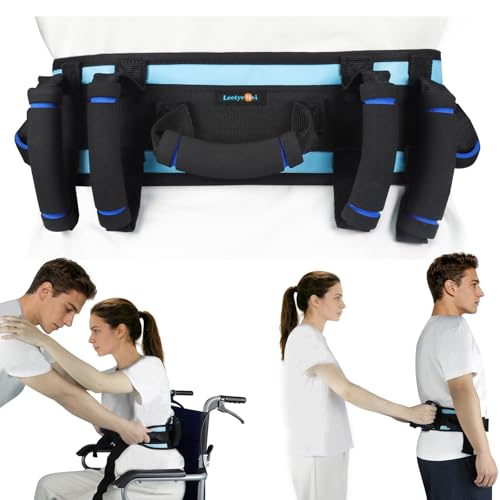
The Seven-Handle Mesh belt is the best alternative because it gives you many of the same practical benefits as the better belts above while leaning more toward easy washability and broad home use. The back pad is wide enough to feel supportive, the handles are soft in the hand, and the material is the kind you can clean without babying it. For some families, that matters more than a premium buckle.
It also works well as a backup belt. If you need one for occasional transfers, stair help, or helping someone rise from a low couch without relying on a bare wrist grip, it covers the basics well. The multiple handles are useful, and the belt is sturdy enough that many caregivers will feel a big improvement over old-school simple web belts.
Its weak point is the plastic buckle. Several caregivers report that it takes a firmer latch check than expected, and some find it slides or loosens over time. That keeps it from ranking higher. If you want a washable, helpful backup and you are willing to double-check the buckle every time, it is still a useful choice.
Why It Helps:
- The belt is washable and practical for repeated home-care use.
- Soft handles and a wider back panel make it more comfortable than a bare strap.
- It works well as a backup or secondary belt kept near the main transfer zone.
What To Keep In Mind:
- The buckle needs an extra deliberate check to make sure it is really locked.
- It is sturdy, but it does not feel as confidence-building as the best metal-buckle options.
How to Choose Gait Belts
Start with the job, not the product title. A gait belt is for partial-assist movement: steadying while walking, helping someone rise, or guiding a short transfer. It is not for hauling full body weight off the floor or doing a full suspended transfer. If the person cannot take part in the move, the safer answer is a stronger device, not a tougher belt.
Then decide whether you need a plain waist belt or something with more control points. Handle belts are usually the better choice for family caregivers because they give cleaner grip options and reduce the bad habit of pulling at clothing, elbows, or shoulders. If sit-to-stand help is the main challenge, read how gait belts work with sit-to-stand technique and devices before picking one style over another.
Fit matters more than advertised weight limits. The belt needs to sit snugly around the waist, not the ribs and not the hips. A belt that slides, twists, or rides up during the first test is already telling you it is the wrong fit or the wrong design for that body. Leg straps can help when ride-up is a constant problem, but they also add complexity, so only buy them if you really need that extra control.
Finally, be honest about what is actually failing in the transfer. If the person mostly needs a better grip point to rise from a chair, a portable standing aid may solve the problem more cleanly. If near falls are becoming full collapses, keep what to do if a transfer starts to fail in view and stop treating the belt as a rescue plan.
Common Mistakes When Choosing Gait Belts
- Using a gait belt like a lifting harness for someone who cannot help with the move.
- Wearing the belt too loose because it "feels kinder," then losing control during the transfer.
- Grabbing shoulders, wrists, or underarms even though the belt is already on.
- Choosing a complicated leg-strap model when the real need is simple walking support.
- Trusting the buckle without checking that it is fully latched and tightened every time.
The biggest mistake is thinking the belt itself makes the transfer safe. It does not. The belt only gives you a better place to hold. Technique, timing, the person's foot position, and knowing when to stop the move still matter more than the gear.
Frequently Asked Questions About Gait Belts
What is a gait belt used for?
A gait belt is used to give the caregiver a safer grip during walking support, sit-to-stand help, and short transfers. It helps guide and steady the person, but it does not replace their own effort.
Are gait belts safe for seniors?
Yes, when they are fitted correctly and used for partial-assist moves. Problems start when the belt is loose, positioned badly, or used for a person who cannot help enough with the transfer.
Do you need handles on a gait belt?
Not always, but many family caregivers do better with handles because they give cleaner grip points from different angles. That is especially helpful during chair, bed, and wheelchair transfers.
Are leg straps on a gait belt worth it?
They can be worth it when the belt keeps riding up during standing help or seated transfers. They are not necessary for every walking-assist situation, and they do add extra setup time.
When is a gait belt not enough?
A gait belt is not enough when the person cannot bear weight, cannot follow the movement, or is close to needing a full-body lift. At that point, a lift or different transfer setup is the safer answer.
Can a gait belt help prevent falls?
It can reduce some falls by giving the caregiver a better way to guide and steady the person. It does not make risky walking or unsafe transfers automatically safe, so good judgment still matters.
If walking and transfer safety are both getting harder, keep bed-to-chair transfer steps nearby for routine moves, compare portable standing aids when the problem is mostly getting up from a seat, review full-body lifts and slings when a belt no longer gives enough control, and use transfer-failure recovery tips before a near-fall becomes a true emergency.