As an affiliate, we may earn a commission from qualifying purchases. We get commissions for purchases made through links on this website from Amazon and other third parties.
Most doctors, rehab teams, and care facilities do not start with "add full bed rails" when someone becomes unsafe at bedside. They usually try to solve the exact bedside problem with a less restrictive setup first. That might mean lowering the bed, adding a floor mat, changing the mattress edge, using a short assist bar, improving nighttime toileting and lighting, or setting up a bed-exit alert with a real response plan.
That approach exists for a reason. Full bed rails can create entrapment, climbing, agitation, and restraint problems in the wrong person. If you want the detailed risk background first, read bed rails, entrapment risks, and alternatives and bed height and bed rail safety for transfers.
If bedside risk is only one piece of the home setup, the mobility and transfers master guide helps connect the wider transfer and room plan.
Short Answer
The short answer is that clinicians usually recommend matching the bedside setup to the reason the rail was being considered.
Common alternatives include:
- a low or floor-level bed when the main fear is falling out of bed
- a bedside floor mat when injury reduction is the goal
- a height-adjustable bed when the problem is getting in or out safely
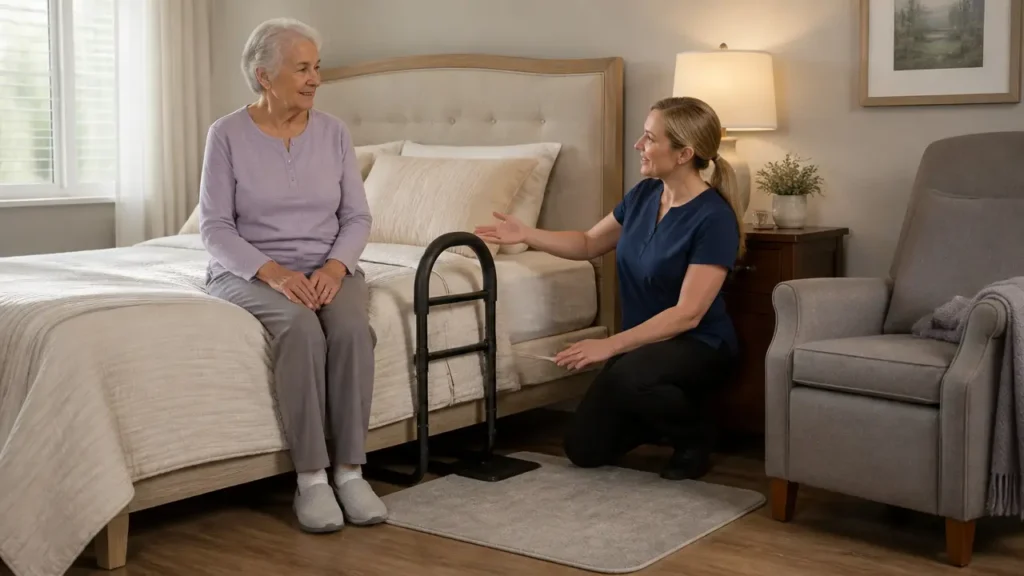
- a short assist bar, transfer bar, or transfer pole when the person needs a handhold
- a firmer-edge or contouring mattress when the person drifts or rolls
- better lighting, a bedside commode, and scheduled toileting when nighttime exits are the real issue
- bed-exit alerts or monitoring when supervision is the missing piece
- a repositioning and pressure-relief plan when restlessness is driven by pain, discomfort, or poor positioning
The key idea is simple: solve the right problem with the smallest effective support. Do not use a long rail as a catch-all answer when the real issue is toileting, transfers, confusion, or nighttime wandering.
When the Answer Changes
If the person rolls or slides in bed during sleep
This is when low beds and floor-level beds are commonly recommended. They do not try to block movement. They reduce injury risk if movement happens.
A floor mat often gets added too, especially when the person rolls or steps out of bed at night. But the mat has to be chosen and used carefully. A mat with curled or thick edges becomes its own trip hazard. In many care settings, mats are placed when the person is resting and then stowed when staff are helping the person stand or transfer.
If the person mainly needs a subtle cue to stay centered, some teams also look at mattress design. A firmer edge or gentle perimeter can reduce drifting without creating entrapment points. That works best when the person is not trying to climb and still has normal freedom to move.
If the person needs help sitting up or standing
This is when clinicians often move away from full rails and toward more targeted support.
Common recommendations are:
- a height-adjustable bed
- a short assist bar or transfer bar
- a transfer pole or floor-to-ceiling post
- better bed-to-chair setup on the open side
The goal is to provide one stable handhold at the point of movement instead of boxing the whole person in with a barrier. If bedside standing support is the issue, compare transfer poles and floor-to-ceiling posts, turn in bed and dangle safely, and bed-to-chair transfer step-by-step.
If the person is confused, restless, or living with dementia
This is the group where facilities are often most cautious about rails.
For confused or restless people, a rail may become something to climb over or fight against. That is why facilities often recommend:
- lower bed height
- closer observation
- bed-exit alerts or passive monitoring
- a consistent nighttime routine
- scheduled toileting
- familiar objects and calmer lighting
- a bedside commode if bathroom distance is part of the problem
They also look hard at unmet needs. A person may not be "trying to escape." They may need the toilet, be in pain, feel frightened, or be reacting to noise and confusion. That is why dementia-friendly transfer cues and routines and lighting and night transfer safety often do more good than a rail.
If the issue is falls during unsupervised bed exit
When bed exit itself is the problem, facilities often combine:
- a low bed
- a floor mat
- non-skid footwear
- better route lighting
- alarm or sensor-based alerting
- a clear plan for who responds
The most important point here is that an alarm is only an alert. It does not prevent a fall by itself. Someone still has to respond quickly. If the household or staff setup cannot respond, the alarm is not a complete answer.
If the person has a specific medical reason for rails
There are still cases where rails or padded rails remain in the plan, such as some seizure-related situations or very specific mobility-support situations. But those uses are supposed to come after assessment, not before it.
The practical home takeaway is this: "instead of bed rails" does not always mean "never use any rail-like support." It often means use a much smaller, more targeted support if support is truly needed.
Main Risks, Tradeoffs, and Red Flags
Low beds reduce injury height, but they do not fix transfers by themselves
A lower bed is often safer for rest. But if the bed is too low for standing up, transfers can get harder. That is why adjustable low beds are so useful. They can be lower for sleeping and higher for transfers or care tasks.
Floor mats help only when they are used at the right times
Floor mats can reduce injury severity from a fall. They also create a trip hazard if they are left in place while someone is trying to stand or walk with help.
Watch for:
- thick edges
- curled edges
- mats left in place during transfers
- poor nighttime visibility
Assist bars help mobility, but only in the right person
A short assist bar can be much safer than a full rail for someone who understands how to use it and only needs a handhold. But it is still not right for someone who climbs, pulls unpredictably, or wedges into equipment.
Alarms and sensors are not enough without a care plan
Facilities often use bed-exit alerts, but they treat them as one piece of a larger setup. They also look at:
- how often the person tries to get up
- why they are getting up
- who responds
- whether the bed is low enough
- whether the route is clear
If the answer to every alert is still a rushed unsafe transfer, the problem has not actually been solved.
The biggest red flags that rails are the wrong answer
Reassess fast if:
- the person tries to climb over the rail
- they wedge limbs, shoulders, or bedding around it
- they become more agitated with rails up
- the real issue is urgent toileting
- the room is dark or cluttered
- the person needs support getting out, not containment while in bed
Those are signs the bedside plan needs to be rebuilt around mobility, routine, and supervision instead of barriers.
What to Do Instead or Next
Start by asking one direct question: what exact problem was the bed rail supposed to solve?
Then match the next step to that problem.
If the problem is rolling or falling from bed
Start with:
- a low or floor-level bed
- a properly chosen floor mat
- a mattress with better edge support or contouring if appropriate
If the problem is getting up or transferring safely
Start with:
- a height-adjustable bed
- a short assist bar or transfer bar
- a transfer pole if standing support is the real need
- a better bedside transfer setup and PT or OT input
Related reads:
- bed height and bed rail safety for transfers
- turn in bed and dangle safely
- bed-to-chair transfer step-by-step
If the problem is nighttime rising
Start with:
- scheduled toileting
- a bedside commode if the bathroom trip is too long
- good night lighting
- a clear path and non-skid footwear
- a bed-exit alert with a real response plan
Related reads:
- lighting and night transfer safety
- mobility transfer care plan template
- what to do if a transfer starts to fail
If the problem is restlessness, pain, or bed discomfort
Look for:
- pain control issues
- poor positioning
- pressure discomfort
- hunger, thirst, or toileting needs
- environmental overstimulation
This is where positioning basics to reduce pressure and shear and pressure relief schedule ideas can matter more than any rail decision.
If you are not sure which problem is primary
That is exactly when facilities bring in PT, OT, nursing, or the prescribing clinician. Home care should do the same. The safest answer is often a combination:
- lower bed
- open transfer side
- short assist device if needed
- toileting plan
- lighting plan
- monitoring plan
That is usually much safer than defaulting to full rails out of fear.
Frequently Asked Questions
What is the most common alternative to bed rails?
A low or floor-level bed is one of the most common alternatives, often paired with a floor mat when fall injury reduction is the main goal.
Are floor mats always a good idea?
No. They help only when they fit the person and are stowed during assisted standing or transfers so they do not become a trip hazard.
Are bed alarms better than bed rails?
They solve a different problem. An alarm can warn that someone is getting up, but it does not physically prevent a fall and still needs a quick response.
What do facilities use when someone needs a handhold, not a barrier?
They often use a short assist bar, transfer bar, or transfer pole instead of a full-length rail.
Do low beds make it harder to stand up?
They can if they are too low for the transfer. That is why height-adjustable low beds are often preferred over fixed low setups.
What if the person has dementia and keeps trying to get up?
Facilities often focus on lower bed height, toileting routines, lighting, monitoring, and calmer routines rather than relying on rails as a barrier.
Should families just remove existing rails right away?
Not blindly. First identify why the rail was there, what risk it may now be creating, and what safer replacement plan is ready to take over.
When are rails still used?
They may still be used for very specific, documented mobility or medical reasons, but the decision should come after an individual assessment, not by default.
If you are deciding whether the current rail setup is already unsafe, read bed rails, entrapment risks, and alternatives next. If the real issue is bedside mobility, continue with bed height and bed rail safety for transfers, transfer poles and floor-to-ceiling posts, and lighting and night transfer safety.