As an affiliate, we may earn a commission from qualifying purchases. We get commissions for purchases made through links on this website from Amazon and other third parties.
Hemiparesis after stroke changes transfers in ways that are easy to underestimate. The problem is not just that one side is weaker. Stroke can also change tone, body awareness, timing, sensation, vision, judgment, and the person's ability to follow a sequence. That is why someone may look strong enough to stand and still become unsafe the moment the turn starts.
This is also why standard transfer advice often fails after stroke. A rushed pivot can scare the person and make the weak knee buckle. A helper who pulls on the affected arm can injure the shoulder. A walker can roll away if the person tries to pull on it to stand. The safer plan is usually simpler: set the room up carefully, protect the affected arm and leg, cue the move one step at a time, and follow the trained transfer side instead of guessing. For the broader stroke-mobility picture first, start with mobility after stroke and one-sided weakness strategies and assessing transfer readiness.
If stroke transfers are only one part of the home plan, the mobility and transfers master guide connects the wider room-setup and equipment picture.
Why This Condition Changes the Task
Hemiparesis does not affect transfers in just one way. It can change:
- strength on the affected side
- weight shifting
- knee control
- foot placement
- trunk alignment
- arm protection
- balance reactions
- visual scanning and body awareness
That means the person may have trouble with any part of the sequence:
- scooting to the edge
- placing the feet evenly
- leaning forward enough to stand
- keeping the weak knee from buckling
- turning toward the destination
- finding the armrest
- lowering with control
Stroke muscle changes matter too. Early after stroke, the affected arm is often loose and floppy. That arm can feel heavy and hard to control, and the shoulder is easier to injure. Later, muscle tightness may pull the arm into the chest and make it stiff or painful to move. Both patterns change how you handle the transfer.
The shoulder deserves special respect. Stroke best-practice material is very clear here: never pull on the affected arm, never grab under the armpits, and do not force the shoulder through movement just because the rest of the body needs to turn. A bad transfer can leave the person with shoulder pain long after the pivot is over.
Hemiparesis also makes the transfer more side-dependent than usual. Many people do best transferring toward the stronger, unaffected side because that side can lead the pivot. But that is not an absolute rule. Some people have neglect, tone, pain, or therapist-specific reasons for using a different setup. That is why the care plan matters more after stroke than it does in a routine mobility problem.
If the person is already struggling with general transfer choice, compare bed-to-chair transfer basics and sit-to-stand using a gait belt before you try to fix the problem by adding more force.
Safest Setup Before You Start
Check the care plan first
Before a stroke transfer, the first question is not "Can we do it the usual way?" It is "What method was taught for this person?"
Check for:
- the preferred transfer side
- whether one or two helpers are needed
- whether a gait belt is used
- whether an arm sling is used during transfers
- whether an AFO, brace, cane, or walker should be on
- whether a mechanical lift is now required
If you are unsure about any of those, stop and clarify. Stroke transfer plans are often very individual.
Gather and apply the prescribed equipment
Do not start the transfer and then decide halfway through that the sling, brace, or gait belt would have been useful.
Before you move:
- put on non-slip footwear
- apply the gait belt if the plan includes one
- put on the AFO or leg brace if prescribed
- use the arm sling only if it is part of the current transfer plan
- have the walking aid nearby, not in the way
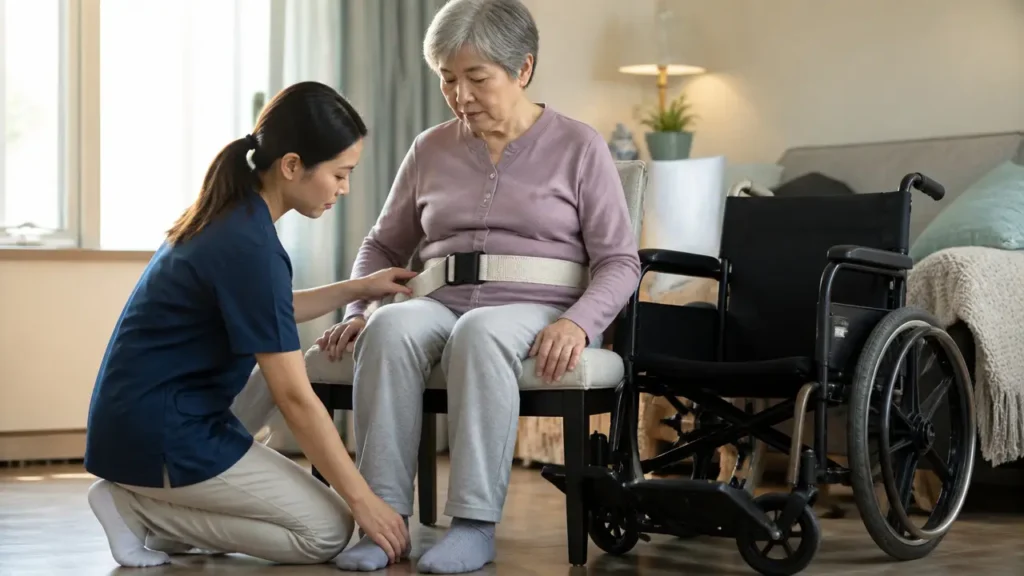
The affected arm should be supported before, during, and after the transfer. A sling can be appropriate for some people when the arm is very loose and floppy, but casual or prolonged sling use still needs therapist guidance. When the person is resting in bed or chair, the arm usually needs proper support on pillows, an arm trough, or another planned surface instead of dangling.
Set the surfaces up close and nearly level
Stroke transfer guidance repeatedly comes back to the same room setup:
- transfer surfaces close together
- wheelchair parallel or at a slight angle
- surfaces near equal height
- brakes on
- footrests and obstructing armrests out of the way
- clear path
If the bed is adjustable, it usually helps to lower or raise it so the transfer surface is just above knee or wheelchair-seat height. A badly matched height makes it harder for the person to get the feet under the body and makes the final sit less controlled.
Stand on the affected side without blocking the move
For many stroke transfers, the helper should position close to the person's affected side. That keeps you in the best place to:
- guard the side that is more likely to collapse
- support or brace the affected knee
- protect the affected arm
- steady trunk lean toward the weak side
This does not mean you should crowd the person or cut off the pivot path. Stay close enough to control the weak side, but leave room for the person to turn toward the destination.
Prepare the affected knee and arm before the stand
The affected knee often matters as much as the affected arm.
Before standing:
- bring the person's hips forward to the edge
- place both feet shoulder-width apart if possible
- keep heels on the floor under the knees
- support the affected forearm or arm as planned
- be ready to brace the affected knee with your leg if the care plan or real movement pattern calls for it
This is one place where stroke transfers differ from many other conditions. The helper is not just guiding at the waist. They may also need to control the weak knee and keep the shoulder safe at the same time.
Use simple communication
Give one-step directions in a calm order. Stroke survivors often do better with clear sequencing than with big-picture instructions.
Examples:
- "Scoot forward."
- "Feet under you."
- "Lean forward."
- "Push from the bed."
- "Stand."
- "Pause."
- "Turn slowly."
- "Reach back."
If neglect, visual field loss, or reduced body awareness is part of the picture, make sure the person can actually see the destination and knows where the chair or commode is before the move begins.
Technique Adjustments That Matter
Start with bed mobility and sitting setup, not with the pivot
Many stroke transfers fail before the stand because the person arrives at the edge of the bed crooked, anxious, or with the weak arm trapped.
To come from lying to sitting:
- bend the knees if able
- roll toward the side using the head, knees, and reaching pattern as taught
- help at the shoulder blade and hip, not by pulling the arm
- bring the legs over the edge
- push up with the bottom arm if that is available
- pause once sitting because dizziness is common
That pause matters. A person who is still trying to find midline while sitting is not ready for a quick stand-and-turn.
If bed movement is part of the problem, pair this article with repositioning in bed without lifting and turning in bed and dangling safely.
For sit-to-stand, cue push not pull
One of the most important stroke-transfer adjustments is this: do not let the person pull on the walker to stand. They should push from the bed, chair, or armrests if able.
A safer sit-to-stand sequence often looks like this:
- Hips come forward to the edge.
- Feet are placed under the knees.
- The person sits tall.
- They bend forward at the hips while looking ahead, not down at the floor.
- They push from the support surface.
- The helper weight-shifts with the legs to assist.
- Both pause once upright to check balance.
That forward bend is not just a posture cue. It brings the body weight over the feet and makes the stand more realistic.
Brace the affected knee only as needed
If the weak knee tends to buckle, the helper may need to brace it with their own leg. This is one reason stroke-transfer guidance often tells the caregiver to face the affected side. Done well, that position lets you guard the knee without twisting your back or chasing the collapse after it starts.
The important part is timing. The brace is there to prevent knee collapse during the rise and early pivot, not to pin the person in place or shove the knee backward aggressively. If the knee still keeps failing despite the brace and setup, the answer is not more force. It is a different transfer method or more help.
Usually pivot toward the stronger side when that is the plan
Many people with hemiparesis transfer best toward the stronger side. In a bed-to-wheelchair move, that often means placing the chair at about a 45-degree angle on the stronger side and turning slowly into it.
A controlled stroke pivot usually means:
- stand first
- pause for balance
- cue the person to reach toward the destination
- use small turning steps
- keep the helper on the affected side
- avoid a fast spin
Once the back of the legs meets the seat:
- have the person reach back for the armrest or surface
- bend forward slightly
- lower slowly
- shift the hips back into the seat
Some people will be taught to transfer toward the affected side for specific reasons. If that is the trained plan, follow it. The key is not which side sounds more logical in general. The key is which side fits this person's weakness, awareness, tone, and equipment plan.
Protect the affected arm through the whole move
This is the rule that cannot be optional:
- never pull the affected arm
- never lift under the armpits
- never let a loose, floppy arm dangle during the transfer
- never force a spastic arm through a quick range of motion
Instead:
- support the arm as recommended
- keep it in a natural and protected position
- move slowly if tone is high
- use pillows, hemi-trays, or arm support after the transfer
If the person has pain, a loose-feeling shoulder, or a visibly loose, floppy arm, the transfer should slow down, not speed up.
Use the affected side, but do not abandon safety
After stroke, it is easy for families to do everything on the strong side and let the weak side disappear from the task. That is not always helpful. Guided weight shifting, bilateral hand placement, and better trunk alignment can help the affected side stay involved when the person is ready.
But this is not the same as forcing normal movement. The weak side should participate safely, under the care plan, not through a rushed transfer that trades recovery for fear or pain.
Slow the last half of the transfer
The last half is where many stroke transfers go wrong:
- the person turns too fast
- the weak knee softens
- the person forgets to reach back
- the helper loses control of the weak arm
- the person drops into the chair off-center
So slow it down on purpose. A person with hemiparesis usually needs a more deliberate final descent than a person with simple weakness after illness or bed rest. The helper's job is to guide the weight shift and protect the weak side, not to rush the landing.
If bathroom transfers are the hardest version of this, continue with toilet transfers safely and grab bar placement for toilet and tub transfers once this article's basics are working.
Red Flags and Common Errors
The most common and damaging error is pulling on the affected arm. That includes:
- lifting by the weak hand
- grabbing under the shoulder
- using the arm to swing the person around
- letting the weak arm trail behind during the pivot
Another common error is letting the person pull on the walker to stand. Walkers are for support once standing, not for hauling the body up from sitting.
Other frequent mistakes include:
- setting the wheelchair on the wrong side
- forgetting the brace, sling, or gait belt
- skipping the pause after standing
- giving too many directions at once
- turning too fast
- lowering onto a seat without the person reaching back
- leaving the helper too far away from the affected side
- ignoring dizziness after moving from lying to sitting
Red flags that should stop the attempt or change the plan include:
- a clear change from the person's usual stroke baseline
- repeated affected-knee buckling
- new or worsening shoulder pain
- the person cannot follow even simple one-step cues
- strong leaning or pushing to one side
- severe fear that makes them stiffen or grab
- neglect or poor awareness that makes them miss the destination
- more help needed than usual
A sudden change in speech, face, strength, alertness, or vision is not a transfer-technique problem. Treat that as a stroke warning sign and seek urgent medical help.
Day-to-day, another red flag is inconsistency. If the transfer direction, cueing, or helper position changes every time, the person has to relearn the move on the fly. Stroke survivors usually do better with a repeatable routine.
When to Get Clinical Help
Get PT or OT help when:
- the transfer side is unclear
- the affected knee keeps buckling
- the affected arm is painful, loose and floppy, or hard to position
- muscle tightness is making the arm or leg difficult to move
- the person needs more help than before
- the family is no longer sure whether a one-person manual assist is still safe
- bathroom or car transfers are failing even when basic chair transfers are manageable
Therapists are especially useful when equipment questions are part of the problem:
- Does the person need an AFO?
- Is a sling helping or making things worse?
- Is the walker right?
- Is a sit-to-stand lift safer now?
- Should the transfer be one-person, two-person, or lift-based?
Move toward more support sooner when the transfer is repeatedly becoming a rescue. If the person cannot stay upright long enough to pivot safely, or the helper is doing most of the lifting, compare best sit-to-stand lifts for home use and powered sit-to-stand lifts instead of waiting for a full fall.
Also get clinical input when the real problem may be more than weakness:
- neglect
- visual field loss
- trouble planning the movement sequence
- severe fatigue
- medication-related dizziness
- worsening pain
Those issues change transfers even when raw leg strength looks better on paper.
Frequently Asked Questions
Should a person with hemiparesis always transfer toward the stronger side?
Often yes, but not always. Many people do best toward the stronger side, but the correct direction still depends on the care plan, room setup, neglect, tone, and therapist teaching.
Can I pull on the weak arm if that is the only way to get them up?
No. Do not pull on the affected arm or lift under the armpits. That can injure the shoulder and make recovery harder.
Why is the affected shoulder such a big concern during transfers?
After stroke, the shoulder can be less stable, especially when the arm is loose and floppy. Bad handling can cause pain, partial slipping at the shoulder, and loss of function.
Should the person push on the walker to stand?
No. If possible, they should push from the bed, chair, or armrests first. The walker is not the safest thing to pull on during the rise.
Does the weak knee always need to be braced?
Not always. Bracing is used when the knee tends to buckle and the trained method calls for it. If bracing is constantly needed and still not enough, the transfer plan may need to change.
What if the person is more stiff or more floppy than yesterday?
Treat that as important information. Stroke tone and function can vary. Slow down, protect the arm, and reassess before assuming the usual method is still safe.
When is a sit-to-stand lift better than manual help?
When the person cannot stay upright long enough to pivot safely, needs too much lifting help, or the helper can no longer control the weak side without strain.
Can stroke survivors use a transfer board?
Some can, especially when standing is not realistic but sitting balance and upper-body participation are good enough. That decision is usually best made with PT or OT input.
If you need the broader stroke mobility plan, continue with one-sided weakness strategies after stroke and assessing transfer readiness. If the next problem is toilet or bathroom setup, read toilet transfers safely and grab bar placement. If the person is no longer safe with a manual pivot, compare sit-to-stand lift options and powered sit-to-stand lift use.