As an affiliate, we may earn a commission from qualifying purchases. We get commissions for purchases made through links on this website from Amazon and other third parties.
If you are stuck between a 2-wheel walker and a 4-wheel walker, the real question is not which one looks better. It is which one the person can control safely every day. A 2-wheel walker is usually slower, steadier, and easier to trust when balance is shaky. A 4-wheel walker, usually called a rollator, moves more freely, covers longer distances with less effort, and often adds a seat, but it also asks more from the person.
That difference matters because many people choose by convenience and end up with the wrong tool. A walker that rolls too fast can raise fall risk. A walker that is too slow or too tiring can leave the person exhausted before they get through the day. If you are also comparing actual product picks, read the best walkers for seniors and the best rollators for seniors after this guide.
If you want the broader picture first, start with the mobility and transfers master guide. It helps when walker choice is only one part of a bigger safety or caregiving problem.
What Each Option Means
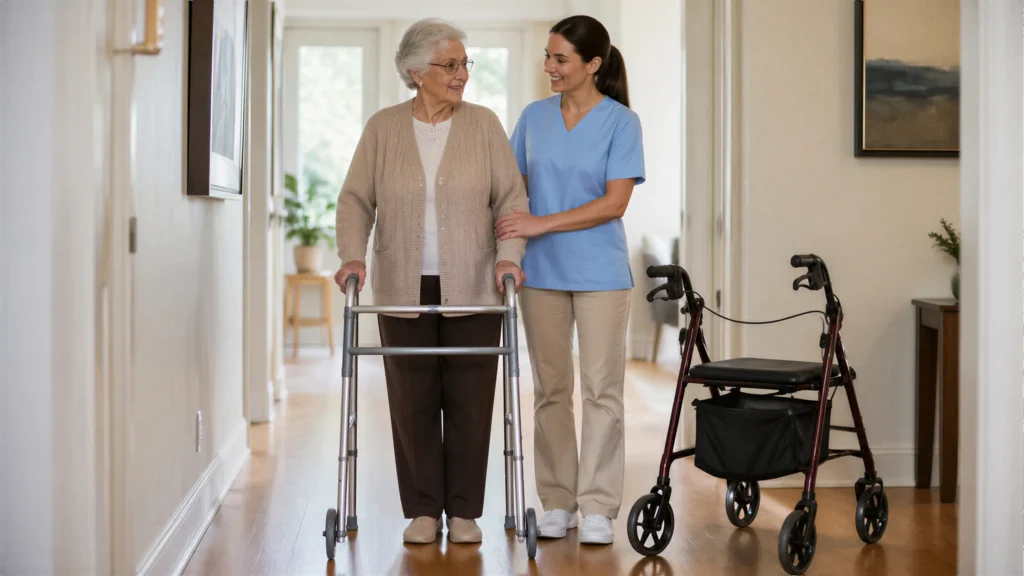
A 2-wheel walker has front wheels and back legs or glide caps. The front wheels help the frame move forward more smoothly than a standard no-wheel walker, but the back end still drags or glides enough to slow the walker down. That slower feel is the point. It gives the person more control and a more deliberate step pattern.
A 4-wheel walker or rollator has four wheels, hand brakes, and usually a seat with a storage pouch. It is designed to roll instead of drag. That makes it easier to move for people who tire quickly or do not want to keep lifting or nudging the frame forward. It also means the walker can move away from the person if braking, turning, or pacing are poor.
The choice is usually not about age. It is about balance, strength, attention, endurance, and where the walker will be used most. Many people who are early after surgery or still unsteady do better with the added control of a 2-wheel frame. Many people who still walk fairly well but need support plus rest breaks do better with a rollator.
If posture and handle height have been part of the problem, check proper walker height and posture before deciding that the whole walker category is wrong. A badly adjusted walker can make either option feel unsafe.
The Biggest Safety and Use Differences
The biggest difference is control versus flow. A 2-wheel walker slows the person down. For someone with weak balance, that is often a good thing. The rear legs give friction, the frame feels more planted, and the person is less likely to get pulled forward by the walker. It is often the safer pick when standing up, turning in tight spaces, or walking short household distances.
A 4-wheel walker asks the person to manage momentum. That matters on slopes, cracked sidewalks, thresholds, parking lots, and busy clinics. If the person rushes, forgets the brakes, or leans too far forward, a rollator can drift ahead. The tradeoff is that it takes less effort to push, which can be a huge relief for someone with arthritis, limited arm strength, or fatigue.
Stability is also different. A 2-wheel walker usually gives more support for weight bearing and slower transfers. A rollator usually gives less raw support but more mobility. That is why a rollator can feel wonderful for the right person and risky for the wrong one.
Speed matters too. A 2-wheel walker is slower by design. It is better for careful room-to-room walking, bathroom trips, and early recovery. A rollator is better for longer hallways, appointments, shopping, and outdoor walking where a smoother gait and a seat help more than maximum control does.
The seat changes the equation. For someone who tires quickly, the ability to stop and sit is not a minor feature. It may be the difference between going out and staying home. But a seat should not distract from the braking demands of a rollator. A person who cannot lock brakes reliably before sitting is not ready for the seat to be the main reason to buy one.
If tight turns and narrow doors are a daily problem, read training with a walker in tight spaces and indoor vs. outdoor walkers: tires, width, and turning. Many walker problems show up in bathrooms and bedroom corners long before they show up in a showroom.
Who Each Option Fits Best
A 2-wheel walker usually fits best when the person needs more support than speed. That often includes someone recovering from surgery, someone who still needs a clear stand-step-stop rhythm, or someone who gets unsafe when a device rolls too freely. It also fits people who do most of their walking indoors and only travel short distances at a time.
This category also makes sense when the person can benefit from a walker but still needs a stronger sense of where the frame is. The drag from the back legs can be tiring over long distances, but it also gives feedback. For many seniors, that feedback is part of what makes the walker feel trustworthy.
A 4-wheel walker fits best when the person can steer, brake, and pace themselves well enough to use a faster device safely. It is usually a better fit for someone who still walks regularly in the community, gets tired before they get unsteady, or needs a seat during longer outings. It can also help people who have enough balance but struggle to keep lifting or dragging a heavier-feeling frame.
The best way to think about it is this:
- Pick a 2-wheel walker when control is the main problem.
- Pick a 4-wheel walker when endurance and smoother movement are the main problem.
If the person is also deciding whether they need a rollator at all, rollator vs. standard walker: which is safer is the next useful comparison. If the main complaint is leaning forward and back pain rather than turning or speed, upright walkers for posture support may be worth a look too.
Setup and Home Considerations
The home often decides this choice more than the sidewalk does. A 2-wheel walker usually handles short indoor routes better because it is more controlled and often feels easier in small rooms. It is still important to check width, especially at bathroom doors and beside the bed, but the slower movement helps when space is tight.
A rollator usually needs more turning room. The frame is often wider, the seat adds bulk, and the person needs enough space to walk inside the frame instead of behind a dragging walker. In an open plan home, that may be fine. In a narrow older house, it can become frustrating fast.
Floor surface matters too. Small indoor wheels work well on smooth floors but less well on rough thresholds and uneven outdoor paths. Larger rollator wheels usually do better outside. That does not mean every person who walks outdoors needs a rollator. It means the walking environment has to match the device.
Transport is another practical issue. A 2-wheel walker is often lighter and simpler. A rollator may fold well, but it is usually heavier because of the wheels, brakes, and seat. If a spouse or adult child is loading the device into a trunk several times a week, that handling burden matters. For that problem, loading mobility devices into vans and cars can help you think through the routine before you buy.
Accessories should come last, not first. Bags, trays, and baskets are useful only after the main walker choice is right. If storage is driving the decision, compare walker and rollator accessories after you settle the base frame.
Finally, think about what happens when the person is too tired to finish the outing. A rollator seat helps some people. For others, the better answer is not a faster walker but backup seated mobility. If outings are already failing because of fatigue, lightweight transport chairs and wheelchairs for seniors may be part of the conversation.
Common Mistakes
The most common mistake is assuming four wheels are an upgrade. They are not. They are a different tool. More mobility is only better when the person can manage it.
Another mistake is judging the walker in an open store aisle instead of in the places that matter. Bathrooms, bedside paths, thresholds, and front door transitions are where people find out whether the walker really fits daily life.
People also underestimate fatigue. A 2-wheel walker may feel safer at first and still be the wrong choice if the person wears out halfway through every clinic visit. On the other hand, families sometimes jump to a rollator because the person wants to move faster, even when that extra speed makes turning and braking less safe.
Poor setup is another big problem. Handles set too low push the person into a bent posture. Handles set too high reduce leverage and control. Brakes that are never adjusted well can make a good rollator feel unsafe. None of those problems are solved by changing categories too early.
One more mistake is ignoring training. Walkers are simple, but they are not automatic. Safe turning, backing up, thresholds, and sit-to-stand practice still matter. If the person keeps freezing in doorways or getting tangled during turns, the answer may be practice and adjustment rather than a brand-new device.
Frequently Asked Questions
Is a 2-wheel walker safer than a 4-wheel walker?
Often yes. A 2-wheel walker usually gives more control and a slower pace, which helps many people who are unsteady. A 4-wheel walker can still be the safer choice for someone who handles brakes well and mainly struggles with fatigue.
Who should use a 4-wheel walker instead of a 2-wheel walker?
Usually someone who can manage the brakes, steer safely, and benefits from smoother movement plus a built-in seat. It is often a better fit for longer outings than for tightly controlled household walking.
Are 2-wheel walkers only for indoor use?
No. They can work outdoors on smoother surfaces. They are just slower and less forgiving on rough ground than a larger-wheel rollator.
Is a rollator better for arthritis?
Sometimes. If painful hands or arms make it hard to lift or drag a walker, a rollator can reduce effort. The person still needs enough hand control to use the brakes safely.
What if the walker feels too wide for the bathroom?
That usually means you need to check the frame width against the real doorway and turning space, not just the listed measurement. A narrower walker or different room setup may help more than switching blindly to another category.
Can a caregiver push someone sitting on a rollator seat?
That is not what a standard rollator is meant for. A rollator is a walking aid with a rest seat, not a transport chair. If seated transport is part of the plan, a transport chair is safer.
When is a wheelchair a better choice than either walker?
When fatigue, pain, or poor control makes walking unreliable for the outing. That does not mean the person must stop walking altogether. It means the trip may need a seated backup.
If the next question is whether a rollator is worth it, compare rollators for indoor and outdoor use next. If the bigger issue is equipment choice overall, best walkers for seniors is the practical follow-up.