
As an affiliate, we may earn a commission from qualifying purchases. We get commissions for purchases made through links on this website from Amazon and other third parties.
Most families shopping for a wheelchair for an older adult are not really choosing between five similar chairs. They are choosing between two different ways of living with mobility help. A transport chair is easier to lift, easier to fit in the car, and usually easier for a caregiver to manage. A manual wheelchair is heavier, but it gives the person larger rear wheels and a more complete setup for longer sitting and some ability to push the chair on their own. If you miss that category difference, it is easy to buy a chair that looks right online and feels wrong by the second outing.
That is why this list includes both transport chairs and one true manual wheelchair. For many seniors, the best answer is not the bulkiest chair or the lightest frame. It is the chair that matches who pushes it, who lifts it, how often it leaves the house, and whether the person still needs a little independence at the wheels. If comfort on longer outings is already a problem, pair this guide with wheelchair cushions for pressure relief instead of treating the seat and the chair as separate decisions.
If wheelchair choice is only one part of the daily route, the mobility and transfers master guide connects the wider transfer and equipment picture.
Quick Picks
- Best Overall: NOVA Lightweight Transport Chair for the best blend of braking control, transfer access, and everyday caregiver use.
- Budget Pick: Medline Ultra Lightweight Transport Wheelchair for families who need the easiest possible lift into the trunk.
- Premium Pick: Drive Medical Blue Streak Lightweight Wheelchair for buyers who want a fuller manual wheelchair rather than another travel-only transport chair.
- Best for Daily Use: Drive Expedition Folding Transport Wheelchair for frequent outings, rougher pavement, and better caregiver braking.
- Best Alternative: Medline Foldable Transport Wheelchair with Handbrakes for a roomier-feeling transport chair with 12-inch rear wheels.
Best Overall
Budget Pick
Premium Pick
Best for Daily Use
Best Alternative
Comparison Table
| Product | Best For | Key Strength | Main Tradeoff |
|---|---|---|---|
| NOVA Lightweight Transport Chair | Caregiver-controlled daily outings | Locking hand brakes, anti-tippers, flip-up arms, and rugged 12-inch wheels | Heavier than ultra-light chairs and not a chair most people will move on their own |
| Medline Ultra Lightweight Transport Wheelchair | Easiest trunk loading on a budget | About 15 lb with swing-away footrests and simple folding | Smaller 8-inch wheels and less confidence outdoors |
| Drive Medical Blue Streak Lightweight Wheelchair | People who need a true manual wheelchair setup | Larger rear wheels, desk arms, swing-away footrests, and sturdier daily seating | Much heavier to lift and not ideal for very small doorways |
| Drive Expedition Folding Transport Wheelchair | Frequent appointments and uneven pavement | 12-inch rear wheels, loop-lock hand brakes, and 19-lb frame | Still a transport chair, not a chair the person will usually move on their own |
| Medline Foldable Transport Wheelchair with Handbrakes | Families who want more wheel size without moving to a full wheelchair | Hand brakes, 12-inch rear wheels, and a 19-inch seat | Heavier than the ultra-light pick and not as feature-rich as the NOVA |
Quick Decision Guide
- Pick the NOVA if a caregiver does most of the pushing and wants the safest-feeling chair on ramps, uneven pavement, and daily appointments.
- Pick the Medline Ultra Lightweight if the real problem is getting the chair in and out of a car several times a week.
- Pick the Drive Blue Streak if the person needs a true manual wheelchair feel with larger rear wheels and not just a transport chair.
- Pick the Drive Expedition if you want transport-chair portability but better outdoor behavior than the smallest-wheel options.
- Pick the Medline with Handbrakes if you want a simpler midrange transport chair with bigger rear wheels and easy caregiver braking.
- If the person still walks short distances and only needs backup support sometimes, compare rollators for seniors, upright walkers, or 2-wheel vs. 4-wheel walkers before defaulting to a wheelchair.
- If the wheelchair is only one part of the transfer plan, review car transfer aids, threshold ramps, and transfer boards at the same time.
Best Wheelchairs for Seniors: Top Picks
1 / 5 Type Transport chair Weight About 27 lb without footrests Capacity 300 lb Control Locking hand brakes, anti-tippers, and 12 in rear wheels Tradeoff Safer and more full-featured, but not truly ultra-lightNOVA Lightweight Transport Chair

The NOVA takes the overall spot because it is the best match for how many seniors actually use a wheelchair now: not as a full-time chair they push on their own all day, but as a safer transport chair for outings, appointments, and longer days when walking is not reliable. The big advantage here is control. The 12-inch rugged rear wheels, patented locking hand brakes, anti-tippers, and adjustable seat belt make it feel more secure on inclines and uneven outdoor surfaces than the ultra-light stripped-down chairs that only behave well on smooth tile.
It is also thoughtfully designed around transfers. The flip-up removable desk arms make side entry easier, and the footrests are built to remove and lock back in place without a lot of fiddling. Those details matter when the caregiver is moving someone from bed to chair, chair to toilet, or car to chair multiple times a day. Compared with flimsier loaner-style transport chairs, this one feels more planted and confidence-inspiring.
The reason it is not the budget or lightest pick is simple: it is heavier. The listing puts the product weight at 27 pounds, and one reviewer makes the same point directly. That is still manageable for many caregivers, but it is not the chair you buy if trunk lifting is the only priority. You buy this one when you want the safest-feeling everyday transport chair in the group.
Why It Helps:
- The hand brakes, anti-tippers, and larger rear wheels make caregiver control much better on real surfaces.
- Flip-up desk arms and removable footrests make transfers easier than in bare-bones travel chairs.
- The overall build sounds more planted and less flimsy than many lighter competitors.
What To Keep In Mind:
- At roughly 27 pounds, it is not the easiest chair here to lift into a trunk.
- It is still a transport chair, so the person does not get the fuller experience of moving the chair on their own like they would in a manual wheelchair.
2 / 5 Type Transport chair Weight About 15 lb Capacity 300 lb Seat 19 x 16 in with desk-length arms Travel Compact fold with swing-away footrests and rear wheel locks Tradeoff Small 8 in wheels give up some outdoor confidenceMedline Ultra Lightweight Transport Wheelchair

The Medline Ultra Lightweight is the budget pick because it solves the lifting problem better than anything else in the roundup. At about 15 pounds, it lands in the zone where many spouses or adult children can realistically fold it and load it into a vehicle without dreading the chore. That makes a major difference in real use. A chair that is technically safer but too heavy to lift often gets left at home.
It also avoids feeling too stripped down. The seat is still a practical 19 inches wide by 16 inches deep, the desk-length arms help with table access, and the swing-away footrests simplify entry and exit. It is sturdy enough for normal transport use while still being manageable for a moderately strong caregiver to lift into a vehicle. For appointment runs, short errands, and travel where the chair spends as much time in the trunk as on the ground, that is exactly what most families need.
The tradeoff is wheel size and category limits. This chair has 8-inch rear wheels, which is fine indoors and on smoother routes but not as steady on cracks and rough pavement. It is also firmly a transport chair. If the rider needs more independent wheeling or longer hours in the chair, this is not the best long-run choice. But when the top priority is “make the whole trip easier,” it is the strongest value buy here.
Why It Helps:
- The 15-pound frame makes car loading much more realistic for many caregivers.
- It still includes a useful seat width, desk arms, and swing-away footrests instead of feeling bare.
- The folding setup is simple enough for frequent appointments and travel use.
What To Keep In Mind:
- Smaller rear wheels are not the best match for uneven sidewalks or rough outdoor routes.
- This is for caregiver-guided transport, not for moving the chair on their own.
3 / 5 Type Manual wheelchair Weight About 41.25 lb listed Seat 18 in seat with desk arms and swing-away footrests Use Larger rear wheels let the seated person push the chair on their own Tradeoff Heavier and harder to load than transport chairsDrive Medical Blue Streak Lightweight Wheelchair

The Blue Streak gets the premium spot because it represents a meaningful step up in wheelchair category, not because it is the most expensive-looking chair in the lineup. This is the only pick here that clearly acts like a true manual wheelchair. The larger rear wheels allow the person to push the chair on their own at least some of the time, while the desk arms and swing-away footrests still keep transfers and table access practical. If you know the rider needs more than a travel chair, this is the pivot point in the roundup.
That difference matters in daily life. A manual wheelchair can feel more complete for longer indoor use, facility use, or home routines where the rider still wants a little control over movement. It maneuvers well indoors and gives a more useful day-to-day setup than a travel-only chair when the rider will spend more hours seated instead of hopping in just for appointments.
The cost of that fuller setup is weight. The listing puts the chair over 40 pounds, and even positive reviewers point out that it is not truly light in the transport-chair sense. One also notes that it will not fit through every standard doorway. So this is the right buy when the person needs more wheelchair and less travel chair. If the caregiver is the one lifting it into a compact car all the time, there are easier options.
Why It Helps:
- The larger rear wheels make this the best option here for people who still want to push the chair on their own some of the time.
- Desk arms and swing-away footrests help it stay usable for transfers and table access.
- It feels more like a real daily wheelchair than a stripped-down travel chair.
What To Keep In Mind:
- The higher weight changes everything for storage, trunk loading, and stairs.
- Some homes may find the chair bulky in standard doorways or tight bathrooms.
4 / 5 Type Transport chair Weight About 19 lb Capacity Supports everyday caregiver transport Control 12 in rear wheels, curb assist, and loop-lock brakes Tradeoff Still transport-only and benefits from a better cushion for longer sitsDrive Expedition Folding Transport Wheelchair
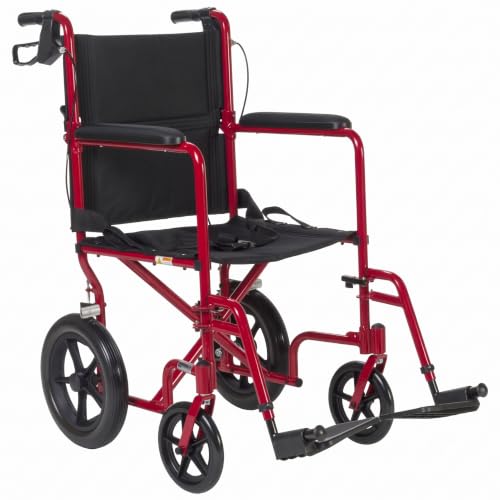
The Drive Expedition is the best for daily use because it hits the practical middle ground so well. At roughly 19 pounds, it is still quite portable, but it behaves far better outdoors than the smallest-wheel transport chairs. The 12-inch rear wheels roll more cleanly over expansion joints and rougher surfaces, the curb-assist feature helps when you have to pop up over small obstacles, and the companion hand brakes make stops and slopes more predictable. Those are daily-use features, not brochure features.
That is exactly why it works so well for appointments and more demanding push routes. The larger rear wheels handle cracks and rougher surfaces better than the smaller-wheel travel chairs that get hung up more easily. For caregivers who regularly deal with parking lots, brick walkways, big clinics, or airport corridors, that difference shows up immediately. The frame is still light enough to fold and lift without turning every outing into a strength test.
The catch is that it is still a transport chair. The person is not getting a full manual chair setup they can manage on their own, and longer sitting may still call for a better seat cushion. In other words, it is the best everyday transport chair in this group, not a replacement for a manual wheelchair. If the caregiver pushes often and the route is not always smooth, it is a very strong choice.
Why It Helps:
- The 12-inch wheels and loop-lock brakes make it easier to control on real outdoor routes.
- At around 19 pounds, it is portable without feeling flimsy.
- The chair is a better fit than ultra-light models for families who leave the house often.
What To Keep In Mind:
- It is still not the right chair for someone who needs to push their own chair.
- The seat may need help from a better cushion on longer appointment days.
5 / 5 Type Transport chair Weight About 23.5 lb Capacity 300 lb Seat 19 x 16 in with full-length cushioned arms Mobility 12 in rear wheels and hand brakes Tradeoff Heavier than ultra-light chairs and less refined than the NOVAMedline Foldable Transport Wheelchair with Handbrakes

The Medline with handbrakes is the best alternative because it gives you the features many families end up wanting after a bare-bones chair disappoints them. The 12-inch rear wheels improve maneuverability, the hand brakes give the caregiver more control during transfers and on ramps, and the 19-inch-wide seat with full-length cushioned arms makes it feel less stripped down. That is a practical combination for homes that want something sturdier than the lightest chair but do not want to jump all the way to a full manual wheelchair.
It also folds easily, needs no assembly, and uses swing-away detachable footrests that help with entry and exit. The whole package makes sense for families who have already learned that a heavier loaner wheelchair can be too much to manage day after day.
Why does it stay in the alternative spot instead of climbing higher? Mainly weight and hierarchy. At 23.5 pounds, it is meaningfully heavier than the Medline Ultra Lightweight, and the NOVA does more in terms of safety-focused detail. But if you want larger wheels and hand brakes without paying for the most feature-heavy chair in the list, this is a very solid middle choice.
Why It Helps:
- The 12-inch rear wheels and hand brakes make caregiver pushing safer and easier.
- The wider-feeling seat and full-length arms give it a more supportive everyday feel.
- It is still compact enough to fold into a vehicle for appointments and errands.
What To Keep In Mind:
- It is not especially light compared with the most trunk-friendly transport chairs.
- The overall setup is good, but the NOVA still feels more complete for higher-frequency use.
How to Choose Wheelchairs for Seniors
First decide who does the work: the person, the caregiver, or both. If the rider truly needs to push the chair on their own sometimes, a manual wheelchair with larger rear wheels matters. If a caregiver will push almost all the time, a transport chair is often easier to live with because it folds smaller and weighs less. That sounds obvious, but it is the one decision that changes everything else.
Then look at lift weight versus push quality. Ultra-light transport chairs are wonderful when they need to go in and out of a trunk constantly. They are less wonderful when the route includes sidewalk cracks, ramps, or uneven pavement. Bigger rear wheels and hand brakes usually improve the pushing experience, but they also add weight. The right chair is often the one the caregiver can still manage on a tired day, not the one with the longest feature list.
Fit matters too. Seat width, seat depth, armrest style, and footrest behavior all affect comfort and transfers. A chair can technically fit someone and still be annoying every single day if the arms block a side transfer or the footrests are awkward. If you already know seated comfort is an issue, choose the chair and cushion together by also reviewing wheelchair cushions for pressure relief.
Finally, buy the chair as part of the route, not in isolation. The same person who needs a wheelchair often also needs help getting through door thresholds, into a car, or from bed to chair. That is why it helps to look at threshold ramps, car transfer aids, transfer poles, and slide sheets at the same time. The best chair still fails if the environment around it is working against you.
Common Mistakes When Choosing Wheelchairs for Seniors
- Buying a transport chair when the person really needs a true manual wheelchair.
- Buying a manual wheelchair when no one can safely lift it into the car.
- Choosing the lightest frame without thinking about brakes, wheel size, or outdoor control.
- Ignoring armrest style and footrest behavior even though those parts affect transfers every day.
- Waiting too long to add a better cushion when sitting tolerance is already poor.
The biggest mistake is focusing on the chair only when the harder problem may be the transfer. If the person still struggles to stand, pivot, or clear the doorway, the wheelchair alone will not solve much. That is when it makes sense to step back and compare gait belts, portable standing aids, sit-to-stand lifts, or full-body lifts depending on what kind of help the transfer really needs.
Frequently Asked Questions About Wheelchairs for Seniors
Should a senior get a transport chair or a manual wheelchair?
Get a transport chair if a caregiver does most of the pushing and trunk loading matters. Get a manual wheelchair if the person needs larger rear wheels and may push the chair on their own at least some of the time.
Can seniors push a wheelchair on their own?
Some can, especially with a true manual wheelchair that has larger rear wheels. Many cannot do it for long, which is why transport chairs are so common for family use.
What seat width is best for a senior wheelchair?
The right width is the one that fits the person without squeezing them and without leaving too much extra room that makes positioning sloppy. Seat width should be checked with clothing layers and transfer needs in mind.
Are hand brakes important on a transport chair?
Yes, especially if the caregiver pushes on ramps, rough pavement, parking lots, or uneven clinic entrances. Hand brakes make stopping and parking safer and more controlled.
Is the lightest wheelchair always the best choice?
No. The lightest chair may be the easiest to lift, but it often gives up outdoor stability, wheel size, or braking confidence. The best chair is the one that fits both the rider and the caregiver’s workload.
Do seniors need a separate wheelchair cushion?
Often yes, especially for longer sitting, bony pressure points, or thin sling seats. A better cushion can improve comfort, positioning, and skin protection more than many families expect.
If the chair is mostly for travel and appointments, compare lightweight transport chairs next. If longer sitting is the real problem, go straight to wheelchair cushions for pressure relief. For the rest of the route, the most useful companions are usually threshold ramps, transfer boards, bed rails and alternatives, and positioning bed pads.