
As an affiliate, we may earn a commission from qualifying purchases. We get commissions for purchases made through links on this website from Amazon and other third parties.
A lightweight transport chair solves one very specific problem: you need a chair that is easy to load, easy to push, and realistic for short outings with a caregiver. It is not the same thing as a wheelchair the seated person can push on their own. It is the chair you pull out for appointments, airports, restaurants, dialysis, family events, and the days when walking part of the way is possible but the whole outing is not. If you want the full picture first, start with the main mobility and transfers guide.
The hard part is that "lightweight" can mean two different things. Sometimes it means the caregiver can actually lift the chair into the trunk without hurting their back. Other times it means the chair gets pushed around by cracks, tips more easily during sit-downs, or feels less planted outdoors. This guide focuses on five strong choices and the tradeoffs that really matter: lifting weight, seat fit, wheel size, brakes, and how annoying the footrests become when you are loading and unloading all week.
Quick Picks
- Best Overall: Medline Ultra Lightweight Transport Chair for the best mix of true liftable weight, easy folding, and everyday appointment use.
- Budget Pick: ProBasics Transport Wheelchair for value-minded buyers who still want a sturdy, compact chair that travels well.
- Premium Pick: Drive TR39 Lightweight Folding Transport Chair for narrow indoor spaces and shoppers who want a more compact steel-frame feel.
- Best for Daily Use: Drive Expedition Transport Chair for caregivers who push over cracks, rough pavement, or travel-heavy routes more often.
- Best Alternative: NOVA Lightweight Transport Chair for quick folding, solid comfort, and easy car-trunk use without much setup.
Best Overall
Budget Pick
Premium Pick
Best for Daily Use
Best Alternative
Comparison Table
| Product | Best For | Key Strength | Main Tradeoff |
|---|---|---|---|
| Medline Ultra Lightweight Transport Chair | Frequent car loading and clinic trips | Around 15 lb with easy folding and swing-away footrests | Extra-light frame needs careful seated entry and exit |
| ProBasics Transport Wheelchair | Compact travel chair on a budget | Folds flat, fits trunks well, and supports up to 300 lb | Light frame still tips more easily if someone drops into the seat |
| Drive TR39 Lightweight Folding Transport Chair | Tight indoor spaces and smaller riders | Very compact folded width and easy turning in narrow halls | Narrow fit and weaker performance on thresholds or grass |
| Drive Expedition Transport Chair | Rougher pavement, travel, and daily pushing | 12-inch rear wheels and hand brakes improve control outdoors | Slightly heavier and still not ideal for very long hauls without a cushion |
| NOVA Lightweight Transport Chair | Fast folding and simple everyday transport | Comfortable seat, compact fold-down back, and easy trunk loading | Footrests and brake behavior can need small workarounds |
Quick Decision Guide
- Pick the Medline if the caregiver's top priority is getting the lightest practical chair in and out of the trunk.
- Pick the ProBasics if you want a compact chair with strong value and you mainly use it for appointments, errands, and shorter outings.
- Pick the Drive TR39 if narrow hallways and tight indoor turns matter more than rough-ground performance.
- Pick the Drive Expedition if the caregiver pushes over cracked sidewalks, curbs, airport floors, or older city streets more than smooth clinic tile.
- Pick the NOVA if you want a chair that folds fast, feels comfortable out of the box, and stays easy to manage for an older spouse or family member.
- If you are not sure whether a transport chair is the right category, read manual wheelchair vs. transport chair before you buy.
- If the chair has to fit into a small car or share space with a walker, also review how to load mobility devices into vans and cars before making the final call.
Best Lightweight Transport Chairs: Top Picks
1 / 5 Weight About 15 lb frame Capacity 300 lb Seat 19 in wide x 16 in deep with desk-length arms Mobility 8 in rear wheels and swivel fronts with swing-away footrests Tradeoff Very light frame needs careful supervised sitting and bolt checksMedline Ultra Lightweight Transport Chair

The Medline is the best overall pick because it gets the core transport-chair job exactly right: it is light enough that many family caregivers can actually use it without dreading the trunk. That matters more than flashy extras. A transport chair that is technically nice but too heavy to lift ends up staying home. This one folds easily, lifts easily, and still feels useful for the normal loop of appointments, parking lots, waiting rooms, and short public outings.
It also does the small practical things well. The swing-away footrests make entry and exit easier, the desk-length arms help with table access, and the 19-inch seat feels roomy enough for many average adults without making the whole chair bulky. The chair is especially good for families where one older spouse is pushing another and every extra pound matters.
The tradeoff is that very low weight always costs something. When someone sits down hard or drops into the chair, the frame can feel less forgiving than a heavier model. That does not make it unsafe when used correctly, but it does mean this is a supervised transport chair, not a rough-use daily wheelchair. For real-world appointment use, it is still the most practical all-around choice.
Why It Helps:
- The low carry weight makes trunk loading realistic for many caregivers with limited strength.
- It folds quickly and the footrests swing away cleanly for car transport.
- The seat size and easy push feel work well for ordinary errands and medical visits.
What To Keep In Mind:
- Very lightweight chairs need the caregiver to steady them during seating and standing.
- It is great for transport, but it is not the best fit for rough daily abuse.
2 / 5 Weight About 20 lb Capacity 300 lb Seat 19 in seat with full-length padded arms and seat belt Travel Back-release hinge folds flat with removable swing-away footrests Tradeoff Light frame still needs cautious entry and does not love potholes or hard curb impactsProBasics Transport Wheelchair

The ProBasics is the budget pick because it gives you a strong everyday transport chair without feeling cheap or oversized. It folds flat, fits into cars well, and keeps the features most families actually use: padded full-length arms, swing-away footrests, rear wheel brakes, and solid wheels that do not need tire maintenance. That is a very workable mix for appointments, short shopping trips, and any outing where a caregiver is doing the pushing.
It is also more compact than many full wheelchairs, which helps in standard doorways and smaller homes. Some people even make light use of it around the house by foot-paddling on smooth floors, though it is still meant to be caregiver-guided. For travel, it behaves the way most people hope a lightweight chair will behave: fold, load, go.
Its weakness is the same one you see in many chairs built around low weight. It can tip more easily if someone sits hard, and it is not the right chair for rough city terrain, potholes, or careless handling. As a compact budget transport chair, though, it performs very well.
Why It Helps:
- It folds flat and fits trunks well without feeling flimsy in normal use.
- Full-length arms and a seat belt make it feel more complete than bare-bones travel chairs.
- The overall size works well for doorways, errands, and caregiver-guided travel.
What To Keep In Mind:
- Lightweight does not mean carefree; entry and exit still need control.
- It is built for transport, not for repeated outdoor abuse over broken surfaces.
3 / 5 Weight Light folding steel-frame transport chair Capacity 250 lb Fit 19 in seat height with very compact 21.5 in open width Travel Back folds flat and footrests swing away Tradeoff Narrower real fit and weaker performance over thresholds or grassDrive TR39 Lightweight Folding Transport Chair

The Drive TR39 earns the premium spot because it is built for people who care more about compact indoor maneuvering than about raw weight savings alone. It folds flat, turns easily in tight spaces, and fits through narrow halls and standard doorways better than many roomier chairs. If your main problems are clinic hallways, apartment corners, and small indoor layouts, that compact footprint matters.
It is also simple to get ready for use. The chair comes mostly assembled, the footrests go on quickly, and the padded nylon seat is easy to clean. For smaller adults or anyone who needs a chair mostly for short indoor movement and car transport, it can feel more controlled and less bulky than larger, wider models.
The caution is fit. Even though the listing language sounds roomy, real-world use shows that this chair runs snugger than some buyers expect. It is also not the best option for thresholds, grass, or rough outdoor pushing. Buy this one for narrow spaces, smaller riders, and compact storage, not for all-terrain errands.
Why It Helps:
- The compact folded and open footprint works well in narrow indoor layouts.
- It is easy to unfold, clean, and get ready for quick transport use.
- The chair feels more controlled in tight turns than bulkier travel chairs.
What To Keep In Mind:
- The usable fit is narrower than many shoppers expect from the headline size.
- It struggles more with thresholds, grass, and rough outdoor surfaces.
4 / 5 Weight About 19 lb Capacity 300 lb Mobility 12 in rear wheels with curb assist for rougher surfaces Safety Companion hand brakes with loop locks Travel Folds quickly with removable footrests Tradeoff A bit heavier and still wants a cushion for long sittingDrive Expedition Transport Chair

The Drive Expedition is the best daily-use pick because it handles the parts of real life that break lighter transport chairs: sidewalk cracks, brick joints, curb edges, airport transitions, and old uneven pavement. The 12-inch rear wheels are the big upgrade here. They roll more smoothly than standard 8-inch transport-chair wheels, and the hand brakes give the caregiver more control on slopes, ramps, and stops.
That makes this chair especially good for families who leave the house often. Travel, vacation use, larger medical campuses, and daily clinic routines all feel easier when the pusher is not fighting every seam in the ground. It still folds quickly, still fits in cars, and still weighs far less than a full wheelchair, but it behaves more confidently once you get outside.
The tradeoff is that it is not the absolute lightest trunk chair, and the ride still benefits from a cushion on longer days. It is the right chair when pushing performance matters as much as lifting weight. If the caregiver is regularly outside with the chair, the larger rear wheels are worth it.
Why It Helps:
- The 12-inch rear wheels roll better over cracks, rough pavement, and older sidewalks.
- Hand brakes make stops and slopes much easier for the caregiver to control.
- It still folds and travels well enough for regular car and plane use.
What To Keep In Mind:
- It gives up a little ultra-light convenience compared with the very lightest chairs.
- A cushion helps if the rider will sit in it for long stretches.
5 / 5 Weight About 19 lb Capacity 300 lb Seat 19 in seat with full-length padded arms and adjustable belt Travel Quick-release fold-down back and easy-remove footrests Tradeoff Footrests and brake setup may need small adjustments or workaroundsNOVA Lightweight Transport Chair
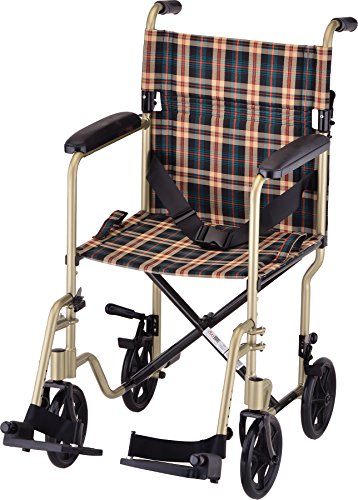
The NOVA is the best alternative because it gives a very usable middle ground between comfort and portability. It folds fast, feels sturdy, and is easy for many caregivers to lift into a trunk without much drama. For errands, appointments, and general "keep it in the car" use, it does what a transport chair should do without much fuss.
It is also one of the more comfortable chairs in this group right out of the box. Several families find it works well without adding a cushion immediately, and the footrests are easy to remove with a simple push-button setup. That makes it a strong fit for older spouses or adult children who need something they can manage quickly by themselves.
The reason it stays in the alternative spot is that a few small annoyances show up over time. The footrests can swing around while loading, some people end up tweaking the brakes, and narrow tires still do not love soft carpet. None of that ruins the chair, but it does keep it just below the top picks.
Why It Helps:
- It folds down quickly and fits easily into most trunks.
- The seat comfort is better than many families expect from a lightweight transport chair.
- It is simple enough for an older spouse or solo caregiver to manage.
What To Keep In Mind:
- The footrests may need a simple strap or bungee solution when loading the chair.
- Brake feel and carpet performance are good enough, not outstanding.
How to Choose Lightweight Transport Chairs
Start with the category question. A transport chair is for caregiver-guided mobility, not for the seated person to push on their own. If the person needs to move independently for longer stretches, stop here and compare wheelchairs for seniors, manual vs. transport before buying the lightest option by default.
Then think about who lifts the chair, not just who rides in it. An extra four or five pounds may not sound like much on paper, but it matters when the chair goes in and out of a trunk three times a week. The right answer for one household is often the chair the caregiver can still lift on a tired day, not the one with the best feature list.
Seat fit still matters even in a transport chair. Check seat width, usable width between the arms, footrest behavior, and how the person gets in and out. It also helps to review how to measure wheelchair fit before buying, because a snug chair that barely fits can turn a good outing into a long uncomfortable one.
Finally, match the wheels and brakes to the real route. Small 8-inch wheels are fine for smooth clinics and indoor use. Larger rear wheels and hand brakes do better outdoors, on cracked pavement, and on travel days. If the chair will ride in cars constantly, keep car-loading and mobility-device transport basics in mind too.
Common Mistakes When Choosing Lightweight Transport Chairs
- Buying by empty weight alone and ignoring how the chair behaves once someone sits in it.
- Assuming every 19-inch chair fits the same once the arms, back, and seat depth are factored in.
- Forgetting to think about trunk loading, footrest storage, and who really handles the chair every day.
- Expecting tiny wheels to handle grass, potholes, and rough pavement like a larger wheelchair.
- Skipping a seat cushion plan when the rider will sit for more than quick appointment transfers.
The biggest mistake is buying the chair that looks best on a spec sheet instead of the one that matches the outing. A super-light chair is wonderful until the caregiver cannot control it over a curb seam. A more stable chair is great until the caregiver cannot lift it into the car. The right pick is the one that fits your route, your rider, and your trunk.
Frequently Asked Questions About Lightweight Transport Chairs
What is the difference between a transport chair and a wheelchair?
A transport chair is meant to be pushed by a caregiver and usually has smaller rear wheels. A manual wheelchair is built more so the seated person can push it on their own and use it longer independently.
How light should a transport chair be?
Light enough that the real caregiver can lift it safely into the vehicle without strain. For some homes that means around 15 pounds. For others, a slightly heavier chair with better wheels is still the smarter choice.
Are lightweight transport chairs safe?
Yes, when they are used for their intended job and the caregiver controls seating and standing carefully. The lightest chairs can feel less forgiving if someone drops hard into the seat.
Do I need larger wheels on a transport chair?
You do if the chair will often cross rough pavement, curb seams, cobblestones, or longer outdoor routes. For smooth indoor use, smaller wheels are usually fine.
Can a transport chair fit in a small car trunk?
Many can, especially models with fold-down backs and removable footrests. It is still worth measuring both the trunk and the folded chair if space is tight.
Should you add a cushion to a transport chair?
Often yes, especially if the person will sit in the chair for longer appointments, travel days, or multiple stops. The lighter the chair, the more noticeable the thin seat can become over time.
If transport-chair use is growing into a bigger mobility plan, compare wheelchair cushions for pressure relief for longer sitting comfort, review what to expect when flying with a wheelchair before travel days, keep car transfer aids in mind for getting in and out of the seat itself, and look at threshold ramps for doorways if the hardest part of the trip starts right at home.