As an affiliate, we may earn a commission from qualifying purchases. We get commissions for purchases made through links on this website from Amazon and other third parties.
A recliner can feel comfortable and still be a bad chair for transfers. The problem is usually not the recline itself. It is the deep-seat trap: the person slides back into a soft, low, or oversized seat, loses foot contact, and cannot scoot forward or stand without a risky struggle.
That is why recliner safety is really about fit, not just comfort. The safest chair is the one that supports the body well enough to sit, reposition, and stand without sinking, twisting, or getting stuck. If you want the broader seating and transfer picture first, start with the mobility and transfers master guide. If you are comparing powered chairs too, pair this with lift chair recliners: safety, fit, and features.
Why This Matters
A deep-seat trap can lead to:
- repeated failed stand attempts
- sliding forward or sideways in the chair
- pulling on a walker too early
- back and hip pain from poor posture
- long periods stuck in one position
This shows up most often when the chair is:
- too deep front to back
- too low
- too soft in the seat cushion
- too wide for the person's body
- hard to control with the current remote or lever setup
The risk goes up more when the person already has:
- weak legs
- poor balance
- one-sided weakness
- confusion or poor judgment
- swelling or stiffness that makes repositioning harder
Key Factors That Change the Decision
Seat depth and softness
This is the center of the problem. If the person has to slide far back to reach the backrest, they may lose the ability to bring their feet under them to stand again. Soft foam makes that worse because it lets the pelvis sink and the knees drift higher than the hips.
Seat height
Low seats make the first stand harder. If the chair is low and deep, the person may need a lot of arm strength or a helper just to get out.
Chair width
Wider is not always safer. A chair that is too wide often lets the person list to one side, lean, or sit with poor support.
How the chair is used
A recliner that is fine for an afternoon rest may be a bad choice when someone spends most of the day there or starts sleeping in it at night. Long chair time raises the risks of stiffness, slumping, pressure, and getting stuck.
If pressure or skin protection is already a concern, compare positioning basics to reduce pressure and shear and pressure relief schedule ideas.
How to Use, Choose, or Set It Up Safely
Check whether the person can sit all the way back and still stand well
A simple fit check is:
- sit fully back in the chair
- place both feet flat
- see whether the knees and hips stay in a workable position
- practice scooting forward and standing
If the person can sit comfortably but cannot get out without a struggle, the chair is not a good fit.
Favor firm support over plush depth
For many older adults, the safest recliner has:
- a firmer seat
- enough back support to avoid slumping
- a depth that does not swallow the thighs
- armrests that are easy to push from
Soft oversized recliners are often the worst choice for people who are weak or unsteady, even when they feel cozy at first.
Create a real transfer zone around the chair
The area around the recliner should be treated like transfer space, not lounge space. Keep:
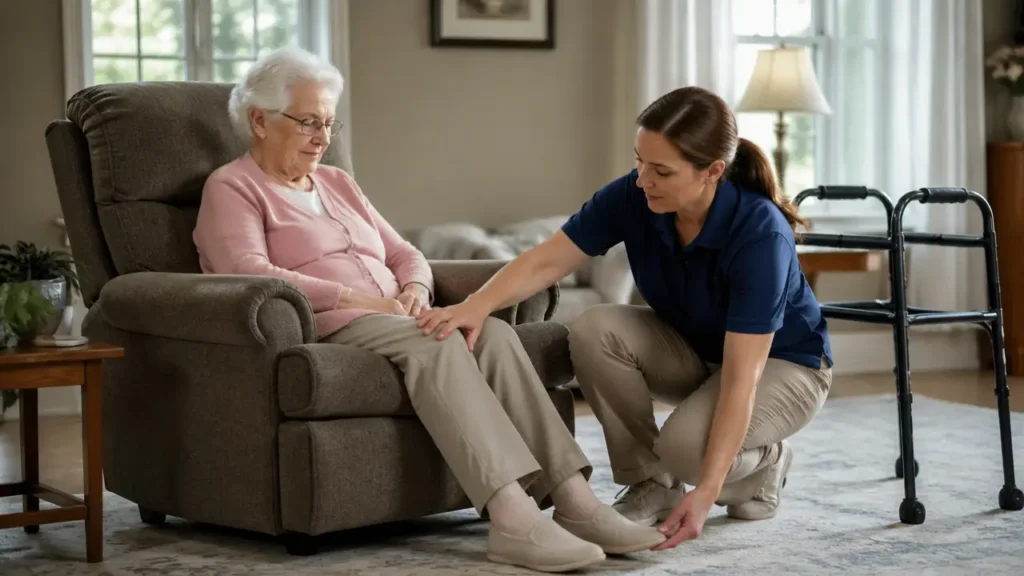
- the walker or cane in a predictable front position
- cords out of the path
- side tables far enough away for clear standing
- loose throws and footstools out of the way
If the walker ends up off to the side, the person may twist as they stand and lose balance before the transfer even starts.
Use small repositioning habits before the person gets stuck
It is easier to prevent a deep-seat trap than to fix one after the person has slid down. Helpful habits include:
- changing position regularly
- standing briefly when safe to do so
- scooting forward before the seat gets too compressed
- avoiding long hours in one reclined angle
Be cautious about overnight sleeping in a recliner
Some people nap safely in a recliner. But using it as the main overnight sleep surface can lead to:
- neck strain
- poor lower-body position
- more time stuck in one posture
- missed pressure and skin problems
If someone is sleeping in the recliner every night, that is usually a sign that bed setup, pain control, breathing, or transfer fear needs to be reassessed.
Common Mistakes and Red Flags
Common mistakes:
- buying for softness instead of transfer function
- choosing a chair without testing sit-to-stand
- assuming a wider chair is always more comfortable
- leaving the walker too far away
- letting the person sleep there nightly without a plan
Red flags:
- the person says they feel "stuck" in the chair
- feet do not plant well when fully back in the seat
- they slide down and need frequent pulling up
- they lean hard to one side
- standing starts with grabbing the walker instead of pushing from the chair
If the problem is already happening daily, the chair may need replacement, not another cushion or workaround.
When to Get More Help
Get more help when:
- the person cannot reposition themselves safely
- near-falls are happening during sit-to-stand
- the chair is becoming the main sleep surface
- pain, pressure, or swelling worsen while seated
- cognition is making the recliner controls unsafe
PT or OT can often tell quickly whether the chair fit, transfer sequence, or overall seating plan is the real issue. If the standing problem is bigger than the chair itself, compare sit-to-stand practice drills and bed-to-chair transfers step by step.
Frequently Asked Questions
What is a deep-seat trap?
It is when a person sinks or slides so far back into a recliner that they cannot scoot forward or stand safely.
Are recliners always bad for older adults?
No. The problem is poor fit and poor use, not the existence of a recliner itself.
Is a softer recliner safer because it feels comfortable?
Not usually. Very soft seats often make standing and repositioning harder.
How do I know a recliner is too deep?
If the person must slide far back to get support and then cannot bring their feet under them to stand, it is too deep for safe use.
Can a cushion fix a deep-seat trap?
Sometimes a small fit adjustment helps, but a badly matched chair usually stays a badly matched chair.
Is sleeping in a recliner okay?
Short naps may be fine for some people, but routine overnight sleeping in a recliner often creates new positioning and safety problems.
What is the safest place for the walker when someone uses a recliner?
Directly in the planned transfer zone, not off to the side where the person has to twist to reach it.
If the issue is powered seating rather than a standard recliner, continue with lift chair recliners: safety, fit, and features, mobility transfer care plan template, and positioning basics to reduce pressure and shear. If the real problem is standing weakness, compare sit-to-stand practice drills and bed-to-chair transfer safety.