As an affiliate, we may earn a commission from qualifying purchases. We get commissions for purchases made through links on this website from Amazon and other third parties.
Peripheral neuropathy changes transfers because the feet stop giving clear information. A person may be able to stand, but not reliably feel where the foot is planted, whether the heel is slipping, or whether the toes are catching. That turns a simple stand-pivot into guesswork.
The goal is to add back feedback in safer ways. That usually means stronger visual cues, better hand contact, slower sequencing, and guarding that controls the trunk instead of yanking on the arms. If you need the wider home-safety picture first, start with the mobility and transfers master guide. If numb feet and weak balance are already causing near-falls, pair this article with neuropathy transfer modifications and the transfer safety checklist.
Why This Condition Changes the Task
Peripheral neuropathy often reduces light touch, pressure sense, and position sense in the feet and lower legs. Some people also have burning pain, foot drop, or delayed balance reactions. In real life, that means:
- the person may not notice a poor foot position before standing
- the first step may be too short, too late, or off target
- toes may drag during turns or threshold crossings
- balance corrections happen more slowly
- blisters or skin injury can build up without much warning
This is why transfers fail most often at the same moments:
- moving from sit to stand
- taking the first step after standing
- turning toward the bed, toilet, or chair
- backing up until the legs touch the seat
- transferring in dim light or on slick floors
If neuropathy overlaps with foot drop solutions and shoe modifications, stroke-related one-sided weakness, or Parkinson's freezing during transfers, the plan usually needs another layer of support.
Safest Setup Before You Start
The environment should supply the feedback the feet no longer provide.
Make the feet easier to see
Good lighting matters more when sensation is poor. The person should be able to see:
- both feet before standing
- the floor surface under the transfer path
- any threshold, rug edge, or doorway lip
- the final chair, bed edge, or toilet position
For night transfers, add nighttime visibility habits or high-contrast mobility markers instead of relying on memory in the dark.
Use footwear that improves contact, not confusion
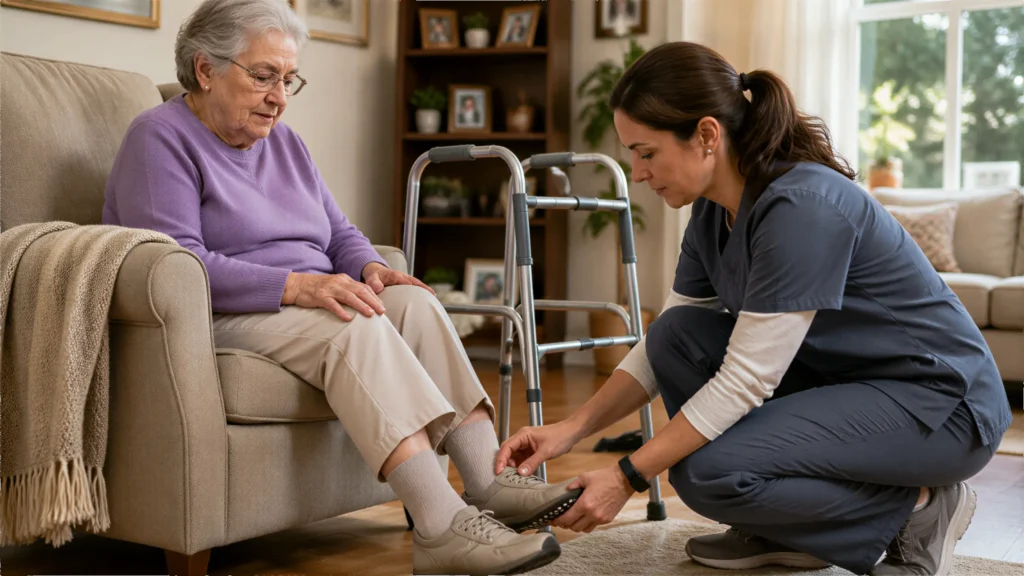
Neuropathy and socks are a bad mix. Bare feet, floppy slippers, and smooth indoor soles reduce grip and also make it harder to judge the floor.
Safer transfer footwear should have:
- a closed heel
- a sole with dependable traction
- enough room for toes and any swelling
- enough structure to keep the foot from sliding inside the shoe
If the person already uses orthotics, compare non-slip shoes for seniors and orthotic insole choices so the shoe and insole are working together instead of fighting each other.
Build a foot-check habit
Neuropathy can hide damage until it is already a problem. Before or after repeated transfers, look for:
- redness
- blisters
- swelling
- cuts
- drainage
- objects inside the shoe
If diabetes is part of the picture, daily foot checks are even more important because wounds can go unnoticed and worsen quickly.
Put hands where they can help
Good hand contact often saves a transfer that feet alone cannot control. Set up:
- a firm chair with armrests when possible
- grab bars or another stable surface near the destination
- the walker or cane already in reach
- a clear path without cords, clutter, or wet patches
If the person is using a walking aid that still feels awkward, compare proper walker height and posture or how to size and fit a cane correctly.
Technique Adjustments That Matter
The transfer usually gets safer when you trade speed for better cues.
Use touch as a cue, not a pull
With neuropathy, gentle touch can tell the person where to move next. Useful cue points include:
- a hand at the gait belt or pelvis to guide trunk direction
- a cue at the shoulder blade to slow a turn
- a tap to the front of the thigh to remind the person to bring the foot under them
- a cue to the back of the legs so they know they have reached the seat
What you do not want is pulling by the arms, wrists, or under the shoulders. That does not improve foot placement and can injure both people.
Guard at the trunk and weak side
If you are helping, stay close enough to control the person's weight and balance. In practice, that usually means:
- guarding from the weaker or less reliable side
- keeping one hand near the gait belt or trunk
- staying close enough to block a sideways drift
- moving with the person instead of reaching from behind
If the person starts to buckle, guide them back down to the nearest stable surface. Do not try to hold a full body weight upright with your arms.
Add a pause before the first step
Many neuropathy transfers improve with one extra beat:
- feet placed flat and visible
- nose and chest move forward
- stand fully
- pause
- then step
That pause gives the person time to feel hand support, check balance, and organize the first step instead of launching too early.
Turn with small steps
Do not ask numb feet to do a fast planted pivot. A safer sequence is:
- stand tall first
- keep the device close
- take several small steps
- turn the whole body
- back up until the legs touch the chair
If the turn itself is the repeated failure point, compare pivot vs. sliding transfer before forcing another shaky stand-turn-sit pattern.
Use stronger floor feedback when possible
Neuropathy does not always mean the person feels nothing. Sometimes they do better with clearer pressure cues. Helpful options can include:
- firmer supportive shoes instead of soft slippers
- a stable floor surface instead of thick carpet edges
- a walker grip and height setup that keeps the trunk from collapsing forward
- cueing to "press through both feet" before stepping
Red Flags and Common Errors
The most common mistake is treating neuropathy like a minor walking issue. It affects transfers, skin safety, and reaction time too.
Common errors include:
- transferring in socks or barefoot
- rushing because the person "has done this before"
- pulling on the arms instead of guarding at the trunk
- using dim lighting at night
- ignoring toe drag or repeated step misses
- skipping foot checks because the person does not report pain
- letting the walker sit too far ahead
Stop and change the plan if you see:
- repeated near-falls at the same stage of the transfer
- new foot wounds or unexplained swelling
- a sudden change in one-sided strength
- dizziness that does not settle with a pause
- new confusion, agitation, or inability to follow cues
When to Get Clinical Help
Bring in PT, OT, a foot specialist, nursing, or the prescriber when:
- falls or near-falls are increasing
- the person has new foot drop or worsening toe drag
- shoe or orthotic changes are not enough
- transfers are causing skin injury
- standing causes repeated dizziness or blacking out
- a once-manageable transfer now needs much more physical help
Clinical help matters most when the person may need a different device, a brace, a more supportive seat, or a different transfer method altogether.
Frequently Asked Questions
Do touch cues mean pushing on the person?
No. Good touch cues are light, clear contact that helps the person organize the movement. They should guide, not shove.
Where should I guard someone with neuropathy?
Usually at the trunk or gait belt, and closest to the weaker or less reliable side. Guarding at the arms does not control balance well.
Is it safer to transfer barefoot so the person can feel the floor?
Usually no. Supportive, non-slip shoes are usually safer than barefoot transfers because they improve traction and protect the skin.
Why does the person miss the chair even when they seem strong enough to stand?
Because the problem may be foot position awareness, timing, or turning control, not raw leg strength.
Can a cane fix this problem?
Sometimes, but only if the person has enough balance and coordination to use it well. Many people with neuropathy do better with a walker or more hand support.
When should I worry about the feet even if the person says they feel fine?
Any time there is redness, swelling, drainage, a blister, or a change in walking pattern. Neuropathy can hide injuries that would normally hurt.
What if the person transfers worse at night?
That is common. Poor lighting removes one of the main backup cues they use when foot sensation is reduced.
If foot position is the biggest issue, continue with proper walker height and posture, foot drop solutions, and posture, step length, and base of support quick wins. If the floor setup is the weak point, review non-slip surfaces for ramps and thresholds and public restroom and tight space transfers.