As an affiliate, we may earn a commission from qualifying purchases. We get commissions for purchases made through links on this website from Amazon and other third parties.
A knee walker can make recovery much easier than crutches, but only when it fits the real setup at home. The wrong one feels too wide in the bathroom, too harsh over thresholds, or too heavy to lift into the car after a doctor visit. If you want the full picture first, start with the main mobility and transfers guide.
For many seniors, the biggest question is not “Which scooter has the most features?” It is “Which one lets me move safely without wearing out my arms, losing balance on the good leg, or needing help every few minutes?” That is why this roundup stays focused on steering control, brake feel, knee comfort, and how each scooter behaves in real home recovery. If the plan calls for strict non-weight-bearing movement, it also helps to review transfers with a non-weight-bearing leg before you choose.
Quick Picks
- Best Overall: KneeRover Economy Steerable Knee Scooter for the best balance of stability, lighter weight, and everyday home use.
- Best for Heavier Users: Drive Medical 796 Knee Walker for the highest weight capacity and the most confidence-building frame.
- Premium Pick: BodyMed Knee Walker for the most polished mix of comfort, basket storage, and daily usability.
- Budget Pick: BlessReach Knee Scooter for a lower-cost scooter that still feels sturdy and useful around the house.
Best Overall
Best for Heavier Users
Premium Pick
Budget Pick
Comparison Table
| Product | Best For | Key Strength | Main Tradeoff |
|---|---|---|---|
| KneeRover Economy Steerable Knee Scooter | Most seniors who want a balanced everyday option | Lighter frame, stable feel, adjustable fit, and easier car loading | Rough outdoor surfaces feel harsher and the knee pad is only average for long use |
| Drive Medical 796 Knee Walker | People who want a stronger frame and higher weight capacity | 350 lb capacity, roomy basket, and very steady home-use feel | Needs more turning space and may need brake adjustment after setup |
| BodyMed Knee Walker | Daily recovery where comfort and storage matter | Contoured knee pad, dual brakes, collapsible frame, and useful basket | Heavier than lighter models and still awkward in very tight spaces |
| BlessReach Knee Scooter | Budget-minded home recovery | Solid feel, good turning control, and included storage bag | Heavier than it looks and not especially compact for transport |
Quick Decision Guide
- Pick the KneeRover Economy if you want the safest all-around starting point for home recovery, short trips out, and easier loading into the car.
- Pick the Drive Medical 796 if the person is bigger, needs more frame confidence, or will use the basket constantly for carrying daily items.
- Pick the BodyMed if you want the most polished daily-use setup, especially for longer days at home where knee comfort and easy storage matter.
- Pick the BlessReach if you want to spend less but still get a scooter that feels steady, practical, and easy to live with.
- Skip a knee walker and compare lightweight transport chairs if the person cannot safely balance on the good leg or gets exhausted after a few rooms.
- If getting in and out of the car is the real bottleneck, compare car transfer aids like swivel cushions and support bars before you blame the scooter.
Best Knee Walkers for Seniors: Top Picks
1 / 4 Type Steerable knee scooter with quick-release handlebar Weight 20.3 lb Capacity 300 lb Wheels Four 7.5 in rubber wheels with rear brakes and locking handbrake Fit Adjustable for people about 4 ft 9 in to 6 ft 4 in Tradeoff Smaller wheels and a basic knee pad feel harsher on rough ground and longer outingsKneeRover Economy Steerable Knee Scooter
The KneeRover Economy is the best overall pick because it gets the fundamentals right without becoming hard to live with. It is lighter than some of the other scooters here, which matters more than people expect once the scooter has to be lifted into a trunk, moved out of a doorway, or turned around in a bedroom. The frame still feels stable, the handlebar and knee platform adjust across a wide height range, and the overall setup works for either leg. For most seniors recovering from a foot or ankle injury, that balanced design is more useful than chasing the biggest frame or the cheapest price.
It also behaves well in the places that matter most: hallways, kitchens, living rooms, and the walk from the house to the car. The rear brake and locking handbrake give you real control, and the scooter does not feel overly tippy when turning at normal indoor speed. It is also a strong fit for caregivers because it is easier to reposition and store than bulkier steel models. If the scooter has to come to follow-up visits or rehab appointments, the quick-release handlebar setup keeps transport simpler.
Its limits show up when recovery stretches on for weeks and daily mileage grows. The knee pad is serviceable rather than plush, and rough parking lots, gravel, or uneven pavement send more vibration through the smaller wheels. Tight turns also still take planning. You can make it work in a smaller home, but there will be moments where you do a multi-point turn or lift the front slightly to reset your angle.
Why It Helps:
- The lighter frame is easier to load, reposition, and store than heavier recovery scooters.
- The fit range is broad enough for many households to adjust it to the person instead of settling for a bad posture.
- Brake control and overall balance feel dependable for everyday indoor recovery.
What To Keep In Mind:
- Small rough surfaces feel bigger on this scooter than they do on heavier models with larger wheels.
- The knee pad is fine for normal use, but longer recovery windows may leave you wanting more cushion.
2 / 4 Type Steel-frame steerable knee walker with basket Capacity 350 lb Wheels 8 in casters with hand brake Storage Removable front basket Fit Handle height about 31 to 40 in and knee pad height about 16.5 to 20.5 in Tradeoff Wide turning radius and brake feel can take extra setup and spaceDrive Medical 796 Knee Walker
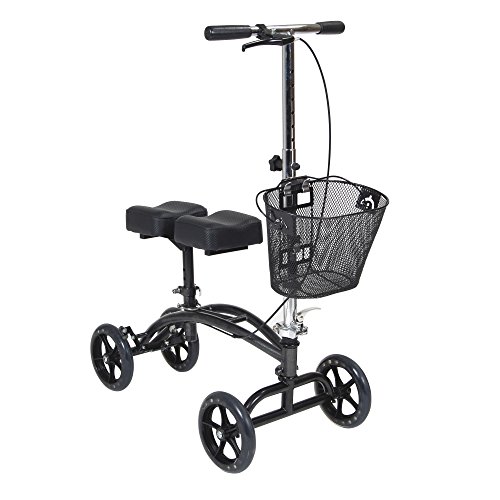
The Drive Medical 796 is the pick for heavier users because it feels like the strongest frame in the group. The 350-pound capacity is the headline feature, but the bigger story is how planted the scooter feels when you first lean onto it. The steel frame, dual-padded platform, and 8-inch casters make it feel more like a sturdy recovery tool than a stripped-down budget scooter. For a senior who feels nervous about wobble, that extra confidence matters.
This is also one of the easiest scooters here to live with during a long day at home. The basket sounds like a small thing until you actually need to carry a phone, water bottle, remote, paperwork, or a wrapped medication tray without tying up one hand. The height range is generous, and the scooter rolls well on smooth outdoor surfaces such as sidewalks and parking lots. When the recovery plan lasts six to eight weeks or more, that practical usefulness adds up quickly.
The tradeoff is bulk. This scooter needs more room to turn, especially in tighter bathrooms, narrow bedrooms, or cluttered family homes. It can also take a little tuning to get the brake feel where you want it, which is common on recovery scooters but still worth knowing ahead of time. If your top concern is frame confidence and carrying capacity, those tradeoffs are usually worth it.
Why It Helps:
- The higher weight capacity and stronger frame make it the most confidence-building option in the group.
- The basket is genuinely useful for daily recovery instead of feeling like filler.
- The dual-padded platform and taller fit range make longer sessions more manageable.
What To Keep In Mind:
- You need more turning room with this scooter than with lighter, smaller-framed options.
- Expect to check the brake setup and overall fit carefully during the first days of use.
3 / 4 Type Collapsible steerable knee walker with basket Weight About 27 lb Brakes Dual rear hand brakes Storage Detachable metal basket Fit Adjustable knee platform and handle height with room for taller users Tradeoff Heavier than lighter scooters and still needs extra room in tight indoor layoutsBodyMed Knee Walker

The BodyMed earns the premium slot because it feels the most polished in daily use. It has the strongest comfort story in the lineup, with a more forgiving knee platform, an easy-to-reach brake setup, and a basket that is actually useful instead of flimsy. The frame also collapses more neatly for transport, which helps if the scooter has to go in and out of the car often for follow-ups, errands, or therapy.
This scooter makes the most sense for a senior who is going to spend a lot of hours on it each day. It rolls smoothly on common home surfaces, the adjustment range works well for taller people, and the basket plus comfortable pad make it easier to stay independent while moving between rooms. Small practical details matter during recovery. Being able to bring toiletries to the bathroom, carry lunch from the kitchen, or stand at a sink more comfortably turns a frustrating day into a manageable one.
It is still not magic in a very tight house. Like the Drive, it can need three-point turns in some layouts, and the heavier frame is less pleasant to lift than the KneeRover. Over time, it can also need a quick re-tightening of the main adjustment points. If you want the most refined daily-use feel and are willing to accept a little more weight, it is the strongest premium choice here.
Why It Helps:
- The knee platform is more comfortable than the thinner, more basic pads on lighter scooters.
- The collapsible frame and basket make daily errands and appointments easier to manage.
- It has enough height range and overall sturdiness for taller or more active people.
What To Keep In Mind:
- The heavier frame is not as easy to lift into a car trunk as the lighter best-overall pick.
- Tight home layouts can still force multi-point turns and careful positioning.
4 / 4 Type Dual-tube knee scooter with storage bag Weight About 22 lb Wheels 8 in wheels with locking handbrake Storage Detachable canvas bag Use Case Low-cost home recovery after foot or ankle surgery Tradeoff Heavier than it looks, less compact for transport, and may need occasional retighteningBlessReach Knee Scooter
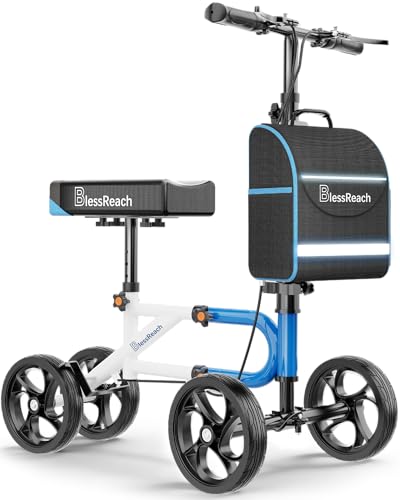
The BlessReach is the budget pick because it keeps the essentials in place without feeling flimsy. The dual-tube frame gives it a solid feel, the 8-inch wheels roll better than tiny indoor-only wheels, and the included bag is surprisingly practical for carrying daily items around the house. For a senior recovering at home after foot surgery or an ankle fracture, that is enough to make it a real crutch alternative instead of a cheap compromise.
This scooter also gets some important basics right. It turns cleanly, the locking handbrake adds control, and the overall feel is more stable than many budget shoppers expect. For shorter indoor trips, doctor appointments, or getting from the living room to the kitchen without exhausting the arms, it does the job well. If the goal is straightforward home recovery at the lowest reasonable cost, it is easy to justify.
Its tradeoffs are the usual budget-model ones. It is heavier than it first appears, and it does not pack down especially small when you need to move it by car. Some people will also need to re-tighten the knee platform or steering area after regular use. None of that ruins it, but it does keep it behind the more polished options above.
Why It Helps:
- The frame feels sturdier than many low-cost scooters in this category.
- The included bag makes everyday carrying tasks easier without extra add-ons.
- Steering and brake control are good enough for practical home recovery use.
What To Keep In Mind:
- This is not the easiest budget scooter to lift, stash, or travel with repeatedly.
- Expect a more basic finish and the occasional tightening check over a longer recovery.
How to Choose a Knee Walker
Start with the person, not the product. A knee walker works best when the person can balance safely on the good leg, keep both hands on the handlebar, and think clearly enough to brake before trouble starts. If that is not realistic because of weakness, dizziness, confusion, or poor single-leg balance, a seated option may be safer. That is where lightweight transport chairs can make more sense than forcing a knee scooter into the job.
Next, look at the route inside the house. Bedroom to bathroom matters more than driveway speed. If the home has narrow doors, sharp corners, or raised lips at every room transition, a scooter that feels fine in the living room can become annoying very fast. Before you buy, check the roughest doorway, the bathroom approach, and the tightest turn near the bed. If raised lips or door saddles are already a problem, threshold ramps for doorways may help more than swapping scooters.
Then think honestly about transport. Many seniors do not need a scooter that lives in the car all day, but most do need one that can make it to follow-up appointments, imaging visits, or rehab. That is where total weight, handlebar fold-down, and how awkward the frame feels in a trunk matter. If the scooter will travel often, read how to load mobility devices into vans and cars before you choose the bulkiest frame on the page.
Also pay attention to the moments before and after the scooter itself. Standing up from a soft chair on one good leg can be harder than using the scooter once you are already moving. If the person struggles most with the rise from sitting, portable standing aids can help make the transfer cleaner before the scooter comes into play.
Finally, choose braking and knee comfort over flashy extras. A basket is useful. A bag is useful. But stable braking, proper handle height, and a knee platform that does not punish you after ten minutes matter more. Recovery tools should reduce work, not create new problems.
Common Mistakes When Buying a Knee Walker
- Buying the lowest-priced model without checking whether it fits the actual home layout.
- Assuming every knee walker is easy to load into a car just because one part folds down.
- Ignoring knee-pad comfort even when the recovery window will last for several weeks.
- Choosing a scooter for someone who cannot safely balance on the good leg or react quickly enough to brake.
- Forgetting about nighttime routes to the bathroom, chair-to-stand setup, and other short transfers that happen before the scooter even starts moving.
The biggest mistake is using a knee walker to solve a balance problem it cannot solve. A scooter is excellent when one leg must stay off the floor and the other leg is strong enough to do the work. It is not a fix for sudden collapse, dizziness, or a transfer that is already failing. If the person is starting to buckle or tip during the move onto the scooter, keep what to do if a transfer starts to fail in mind and reset the situation instead of forcing it.
Frequently Asked Questions About Knee Walkers
Are knee walkers safer than crutches for seniors?
They often are, especially when arm strength, shoulder pain, or poor crutch coordination make crutches exhausting. A knee walker gives a more stable base, but it still requires good balance on the standing leg and enough attention to steer and brake safely.
Can a senior use a knee walker outside?
Yes, but outside use depends on the wheels and the surface. Smooth sidewalks and parking lots are much easier than gravel, grass, broken pavement, or steep slopes. Even the better scooters here are still happiest on smoother ground.
Will a knee walker fit through a bathroom door?
Sometimes yes, sometimes no. The real problem is often not the doorway itself but the turn into it. Measure the narrowest route and think about turning space, not just straight width.
Is a knee walker hard to load into a car?
Some are. Lighter scooters with quick-release or collapsible parts are easier to manage. Heavier steel models can feel awkward if the caregiver is also helping with transfers and medical gear.
When is a transport chair better than a knee walker?
A transport chair is usually better when the person cannot safely balance on one leg, gets tired very quickly, or needs someone else to do the moving. Knee walkers are best when the person can propel and steer independently.
Do knee walkers work well for longer recoveries?
Yes, as long as the knee pad, braking, and home fit are good enough for daily use. During a long recovery, small annoyances like a harsh pad, awkward turning, or difficult car loading become much bigger problems.
Do seniors still need help getting on and off a knee walker?
Sometimes. The hardest part can be the transition from bed, chair, or toilet to the scooter. If standing up cleanly is already difficult, look at the full transfer setup and not just the scooter itself.
If recovery also includes nighttime bathroom trips, compare bed rails and safer alternatives for bed exit support. If the bigger issue is getting a stable grip during short assisted moves, read the gait belt guide before you decide the scooter alone is enough.