As an affiliate, we may earn a commission from qualifying purchases. We get commissions for purchases made through links on this website from Amazon and other third parties.
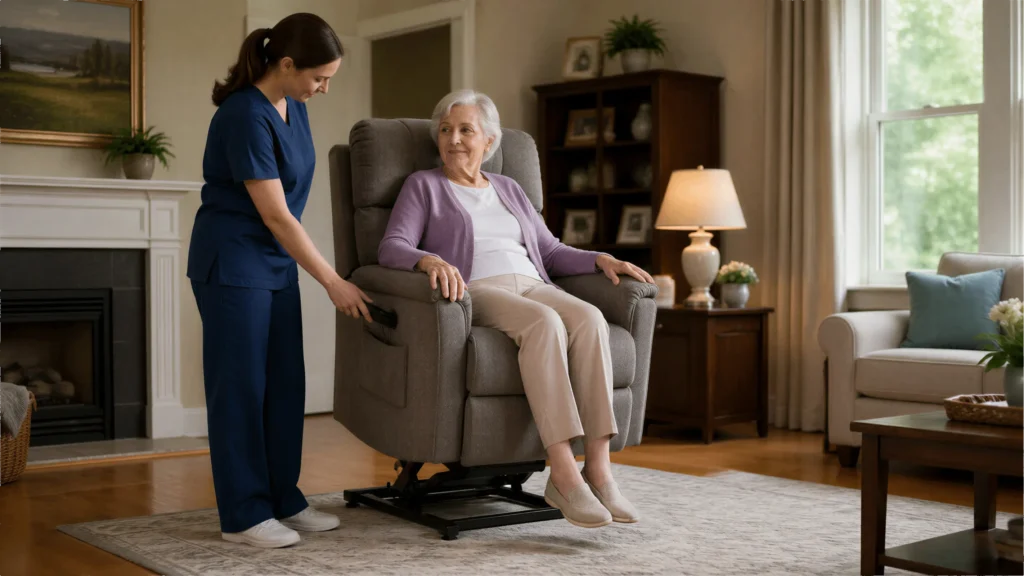
A lift chair can take a lot of strain out of one hard moment in the day: getting back to your feet without rocking, pulling, or waiting for someone to haul you up. The right chair does that job without feeling medical or awkward in the living room. The wrong one can leave you stuck in a seat that is too deep, too slippery, or too high to use safely. If you are still sorting out the bigger picture, start with the main mobility and transfers guide and then come back to the chair once you know what level of help the person really needs.
For most families, the real buying questions are not massage modes or cup holders. They are fit, lift angle, how the chair behaves on your floor, and whether the person can still use their legs enough to finish the stand. This roundup focuses on four lift chairs that cover the most common home needs, from a balanced all-around pick to wider daily-use seating. If you want a deeper look at seat depth, arm height, and lift mechanics first, read this guide to lift chair recliner safety, fit, and features.
Quick Picks
- Best Overall: MCombo Power Lift Recliner 7529 for balanced fit, smooth lift help, and the best all-around mix of comfort and practical features.
- Budget Pick: MCombo Power Lift Recliner 7040 for easy-clean faux leather, solid standing help, and a stronger value play for daily home use.
- Premium Pick: Best Choice Power Lift Chair for quiet motion, easy-clean upholstery, and a sturdier living-room feel.
- Best for Daily Use: CANMOV Large Power Lift Recliner for a wider seat, deeper back support, and a roomier place to spend long afternoons.
Best Overall
Budget Pick
Premium Pick
Best for Daily Use
Comparison Table
| Product | Best For | Key Strength | Main Tradeoff |
|---|---|---|---|
| MCombo Power Lift Recliner 7529 | Balanced daily use for average-height adults | Smooth lift with a well-sized seat and extended footrest | Heavy base and only mild massage payoff |
| MCombo Power Lift Recliner 7040 | Budget-conscious buyers who still want real lift help | 350 lb capacity, easy cleanup, and simple setup | Faux leather can feel slick and the remote is basic |
| Best Choice Power Lift Chair | Easy-clean living room seating with quiet motion | Anti-tipping base, simple side control, and smooth recline | Seat height and control style will not suit everyone |
| CANMOV Large Power Lift Recliner | Wider daily seating and bigger-frame comfort | Deep seat, taller back, and roomy feel | Long-term comfort and massage quality are less convincing |
Quick Decision Guide
- Pick the MCombo 7529 if you want the safest all-around middle ground for standing help, reclining, and everyday comfort.
- Pick the MCombo 7040 if spills, wipe-clean upholstery, and value matter as much as the lift itself.
- Pick the Best Choice if you want a chair that feels a little cleaner and more furniture-like in a shared living space.
- Pick the CANMOV if the person wants a wider, roomier chair and spends a lot of the day sitting in the same spot.
- Skip this whole category and look at transfer poles and floor-to-ceiling posts if the person mostly needs a stable grab point beside a favorite chair, not a powered lift.
- Move up to sit-to-stand lifts for home use or patient lifts and sling systems if the person cannot push through their legs, cannot follow simple standing cues, or needs hands-on lifting from a caregiver.
Best Lift Chairs for Seniors: Top Picks
1 / 4 Focus Balanced lift chair for everyday standing help Fit Recommended for roughly 5 ft 1 in to 5 ft 9 in Comfort 140-degree recline with 4.7 in extended footrest Extras USB ports, cup holders, heat, vibration Tradeoff Heavy base and subtle massage feelMCombo Power Lift Recliner 7529

The MCombo 7529 is the easiest chair in this group to recommend when you want one model that gets most things right. Its lift action is straightforward, the seat proportions make sense for many average-height adults, and the extended footrest does more than just look good on a features list. It gives the legs a little more room so the chair feels less cramped when someone reclines for reading, resting, or recovery after surgery.
What makes this chair stand out is how balanced it feels. The controls are simple, assembly is manageable without tools, and the built-in extras do not get in the way of the core job, which is helping someone rise with less strain on the back and knees. Families recovering from shoulder, heart, or general mobility setbacks often do well with this style because the chair supports both the standing phase and the resting phase without needing a lot of fiddling.
The main caution is that the massage function is more of a light vibration bonus than a serious therapy feature. The base is also heavy, so this is not the kind of chair you will want to drag from room to room once it is assembled. Still, if you want the strongest mix of fit, standing help, and day-to-day livability, this is the one to start with.
Why It Helps:
- The extended footrest gives better leg support than many compact lift chairs.
- The medium-size fit makes more sense than oversized chairs for many average-height adults.
- The lift and recline functions are simple enough for daily use without a big learning curve.
What To Keep In Mind:
- The base is heavy, so placement matters before you lock the chair into a room.
- The massage feature is pleasant, but it should not be the reason you buy this model.
2 / 4 Focus Budget-friendly lift recliner with wipe-clean upholstery Fit Recommended for roughly 5 ft 1 in to 5 ft 9 in Support 350 lb capacity with TUV-certified actuator Comfort 140-degree recline, heat, vibration, cup holders Tradeoff Slick faux leather and basic wired remoteMCombo Power Lift Recliner 7040

The MCombo 7040 is the budget pick because it keeps the main things that matter and skips the fancy feel that usually drives the price up. It still gives a full lift function, a 140-degree recline, lumbar heat, vibration, dual cup holders, and USB charging. On paper that sounds crowded, but in practice it feels like a straightforward home chair for someone who needs help standing and wants a seat that is easy to wipe down after meals, spills, or daily use.
This chair makes the most sense when the person still has enough leg strength to finish the stand once the seat tips forward. It has enough lift to help after hip surgery or during a low-energy stretch, and the back support is solid enough that some families end up using it for naps or overnight dozing during recovery. The faux leather is easy to maintain, and the chair goes together without much drama once the heavy base is out of the box.
Its weak spots are practical, not hidden. The motion is smooth but a little slow, the remote feels basic, and the faux leather can feel slippery during the highest part of the rise if the person is weak or the chair is sitting on slick hardwood. A rug or grippy surface under the chair helps a lot. If you want a lower-cost lift chair that still feels dependable, this is the value choice.
Why It Helps:
- The lift function is strong enough to make standing easier without feeling abrupt.
- Faux leather is easier to keep clean than fabric in busy family rooms.
- The 350 lb capacity gives it more headroom than many chairs in this price tier.
What To Keep In Mind:
- Slick flooring can make the chair feel less planted during stand-up.
- The wired control and single-motor setup feel basic next to more refined chairs.
3 / 4 Focus Easy-clean lift recliner for shared living spaces Support Anti-tipping base with 330 lb capacity Comfort Three positions, lumbar heat, vibration, cup holders Controls Side-button lift and recline operation Tradeoff Seat height and flush controls can be awkward for some peopleBest Choice Power Lift Chair

The Best Choice lift chair earns the premium spot because it feels the most like a regular living-room recliner that also happens to lift. The faux leather wipes clean fast, the motion is smooth and fairly quiet, and the anti-tipping base adds some welcome reassurance when someone is using the chair as their main daytime seat. If you want a lift chair that blends into the room better and does not immediately read as medical equipment, this one has the cleanest fit.
It also works well for homes where the chair will be used for more than one purpose. Some families need a comfortable sitting chair first and standing help second. Others want a forward-tilt position that helps with meals, rest, or getting up after back surgery. This model handles those everyday tasks well, and its side-mounted control means the person is not always hunting for a remote in a pocket or under a blanket.
The tradeoff is fit. The seat can feel high or a little long for shorter adults, and the feet may hang if the body proportions are not a match. The flush side buttons are also less friendly for shaky hands than large raised controls would be. This one makes the most sense when easy cleanup, quiet operation, and a less clinical look matter more than maximum custom adjustability.
Why It Helps:
- The anti-tipping base gives the chair a steadier feel during entry, exit, and recline.
- Faux leather cleanup is simple in homes where the chair gets used all day.
- The side control keeps lift and recline functions in one predictable place.
What To Keep In Mind:
- Shorter adults may find the seat a little high or the footrest a touch long.
- Flush side buttons are harder to work if hand tremor or weak grip is a daily issue.
4 / 4 Focus Roomier lift chair for longer daytime sitting Fit 25.6 in backrest and 20.9 in seat depth Range Lift plus 110-150 degree recline Extras USB charging, cup holders, heat, massage Tradeoff Mixed long-term comfort and durability feedbackCANMOV Large Power Lift Recliner

The CANMOV is the chair to look at first for someone who wants room. It has a wider feel, a deeper seat, and a taller back than the smaller chairs in this roundup, so it makes more sense for people who hate feeling boxed in by tight arms and short seat pans. If the chair is going to become the main place for television, reading, afternoon rest, or post-surgery downtime, that extra space can matter as much as the lift itself.
The lift and recline functions cover a useful range, and the side-button control is easy to understand. For bigger bodies or anyone who wants a more cushioned, lounge-like feel, the chair is inviting in a way many compact lift recliners are not. It is also easy to assemble, which matters because these chairs are large and nobody wants a half-day project once the boxes arrive.
This is also the model with the most mixed long-term feedback. Some people love the softness and roomy feel, while others notice the massage hardware through the seat, more motor noise than expected, or comfort changes over time. That is why it works best for roomy daily sitting, not because it is the most refined chair here. Buy it for the size and shape, and treat the massage and heat as extras.
Why It Helps:
- The deeper seat and taller back suit people who want a roomier chair for long afternoons.
- The wider frame feels less cramped for larger bodies or anyone who dislikes narrow arms.
- The lift motion still gives useful standing help without a complex control setup.
What To Keep In Mind:
- Long-term comfort and durability are not as convincing as the roomy first impression.
- The massage system is noisier and less refined than the chair's size suggests.
How to Choose Lift Chairs for Seniors
Start with fit, not features. Seat height, seat depth, arm height, and footrest length matter far more than heat and massage. If the seat is too deep, the person slides back and has trouble getting their feet under them before standing. If it is too high, the legs dangle and the chair stops feeling secure. If it is too low, the whole point of buying lift help gets undercut because the knees still have to work too hard at the start of the stand.
Next, think about how the chair behaves at the exact moment of rising. A lift chair should tip the person forward enough to make standing easier without dumping them into a rushed or slippery takeoff. This is where flooring matters. Faux leather on hardwood can feel more slippery than fabric on a rug, and deeper recliners can create the same kind of sink-in problem covered in this guide to recliner deep-seat traps and safety. A chair that looks plush in the store can be frustrating if the person has to scoot, brace, and push three extra times before getting upright.
Then look at real-life use, not showroom use. Does the person eat in the chair? Nap in it? Keep a blanket over the lap? Have weak hands or tremor? A side-mounted control can be easier for some people, but a separate remote may be better when vision or hand control is limited. Fabric may feel warmer and less slick. Faux leather may be easier after spills or incontinence. Cup holders and USB ports are nice, but they should never break a tie between two chairs that fit differently.
Finally, be honest about the level of help needed. A lift chair is still a partial-assist tool. It helps someone who can follow the motion, keep their feet planted, and finish the stand with at least some leg drive. It is not the right answer for someone who is close to a full lift, keeps sliding out of chairs, or needs the caregiver to do most of the work. That is when you move to stronger transfer equipment instead of expecting a recliner to solve a care-level problem.
Common Mistakes When Choosing Lift Chairs for Seniors
- Buying the chair with the most comfort extras instead of the chair with the right seat fit.
- Assuming a wider or deeper chair is always safer when it may make standing harder.
- Ignoring floor surface, wall clearance, and the path around the chair before setup day.
- Treating the lift function like a full transfer device when the person still needs to help.
- Choosing controls that the person cannot see, feel, or manage with weak hands.
The most common mistake is buying for the family member who is looking at the chair, not the one who has to rise from it every day. A chair that looks roomy and cozy to a caregiver can feel too deep, too slippery, or too high to the person using it. The second mistake is waiting too long to admit the chair is not enough. If every stand still turns into a hard pull, a near fall, or a two-person event, the next step is not another recliner. It is a higher-support transfer plan.
Frequently Asked Questions About Lift Chairs for Seniors
Are lift chairs safe for seniors?
Lift chairs are safe when the seat fits the person, the chair sits on a stable surface, and the person can still participate in the stand. Problems usually show up when the chair is too deep, too slick, or used for someone who needs more help than a recliner can provide.
What size lift chair should a senior buy?
Buy the size that keeps the feet flat, the knees bent comfortably, and the back supported without forcing the person to scoot far backward. Bigger is not always better. A chair that is too wide or too deep can make standing harder.
Can a lift chair replace a bed?
Not usually. Some people nap in them or use them during short-term recovery, but a lift chair is still a chair. If someone is regularly sleeping in it because bed transfers are too hard, the bed setup may need to change too.
Do lift chairs work well on hardwood floors?
They can, but some chairs feel steadier on a rug or grippy surface, especially during the standing phase. Hardwood is not automatically unsafe, but it is worth paying attention to how planted the chair feels when it tips forward.
Are massage and heat worth it on a lift chair?
They are nice extras, but they should stay extras. The main buying decision should be about fit, standing help, and how the chair feels in daily use. Many chairs have basic vibration and mild heat rather than true therapy-level features.
When is a lift chair not enough anymore?
A lift chair is not enough when the person cannot keep their feet planted, cannot follow the standing motion, or still needs the caregiver to do most of the lifting. That is when it is safer to move to a sit-to-stand lift, transfer pole, or full patient lift setup.
If seat-to-stand problems are only part of the picture, compare bed rails and bedside alternatives for nighttime support, look at car transfer aids if getting into vehicles is just as hard, review wheelchair cushions for pressure relief if long sitting is creating discomfort, and keep bed-to-chair transfer steps handy for the moments when a recliner is not the transfer that matters most.