As an affiliate, we may earn a commission from qualifying purchases. We get commissions for purchases made through links on this website from Amazon and other third parties.
Spinal precautions change simple transfers into alignment tasks. The goal is to keep the trunk moving as one unit so the healing or unstable spine is not bent, twisted, or loaded in the wrong direction. That is why the first few days and weeks after a spine injury or surgery often feel slower than expected. The movement itself is smaller, more deliberate, and less forgiving.
For many people, the hardest part is getting in and out of bed. That is where log rolling matters most. If you want the bigger home-transfer picture first, start with the mobility and transfers master guide. If your next step after bed is the chair or toilet, keep bed-to-chair transfer steps nearby too.
Why This Matters
Spinal precautions are meant to reduce extra stress on the spine and lower the risk of worsening pain, hardware strain, or neurologic problems.
In day-to-day life, the risky moments are often:
- sitting up in bed by twisting
- reaching or bending from low chairs
- dropping onto a toilet that is too low
- pulling on heavy doors or stuck items
- getting tired and forgetting the no-twist rule
Many spine programs use some form of the BLT reminder:
- no bending
- no lifting beyond the surgeon's limit
- no twisting
Those restrictions are often paired with limits on prolonged sitting and with log rolling for bed mobility. The exact limits depend on the diagnosis and the surgeon, so the medical team's instructions always outrank general rules.
Key Factors That Change the Decision
Why the precautions were ordered
Recent fusion surgery, suspected unstable injury, or other spine-specific problems may all use spinal precautions, but not in exactly the same way. Someone with general low back pain does not automatically need a strict log-roll plan. Someone with a fresh spine surgery or unstable injury often does.
What the current restrictions actually are
The practical questions matter:
- How much can the person lift right now?
- Are pushing and pulling limited too?
- Is a brace required?
- How long can sitting last before a break is needed?
Many programs use limits like no more than 5 to 10 pounds early on, but the treating team sets the final number.
Whether the furniture supports neutral posture
Deep couches, low toilets, and soft recliners make it harder to keep a neutral spine. That is why setup matters so much. Raised toilet seats, grab bars, shower chairs, and firmer chairs often reduce the need for painful bending and twisting.
Whether the home is ready
Throw rugs, cords, poor lighting, and hard-to-reach daily items matter even more under spinal precautions. The safer the room, the less often the person has to improvise.
How to Use, Choose, or Set It Up Safely
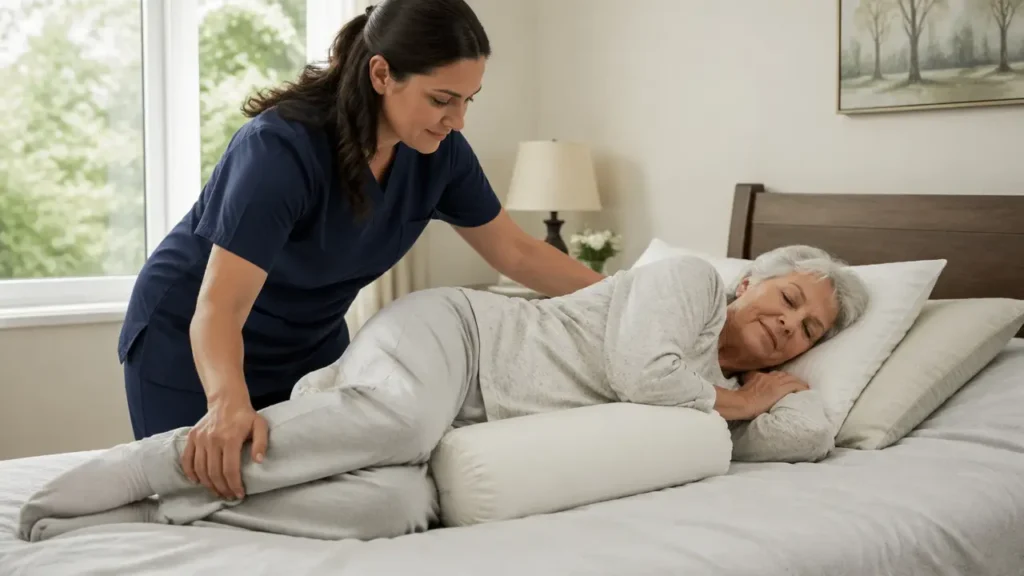
Use the log roll to get out of bed
A common getting-out-of-bed sequence looks like this:
- bend both knees while lying on the back
- roll shoulders and hips together onto the side
- keep the trunk in one line as the legs come off the bed
- push up with the arms into sitting
- sit for a moment before standing
The key is that the shoulders, hips, and knees move together instead of twisting into separate pieces.
Use the reverse pattern to get back into bed
Getting into bed usually means:
- sit near the upper third of the bed
- lower to the side using the arms
- bring the legs onto the bed as the upper body lowers
- roll as one unit onto the back if needed
A pillow between the knees can help keep the trunk and legs more aligned. Some people also feel better with a pillow under the knees once on the back.
Protect the spine during the rest of the day
Spinal precautions do not stop at the bed. Safer daily habits include:
- move the feet instead of twisting the trunk
- keep daily items within easy reach
- use a reacher, sock aid, or long shoehorn if reaching the feet is hard
- take rest breaks instead of pushing through fatigue
- avoid deep or overstuffed chairs
If bathroom setup is part of the problem, compare grab bar placement for toilet and tub transfers, toilet transfer setup, and tub or shower transfers with a bench or board.
Adjust the home so the precautions are realistic
A safer home setup often includes:
- clear floors with rugs removed
- a nightlight for nighttime bed exits
- a raised toilet seat if the toilet is too low
- a shower chair or tub bench if standing shower transfers are shaky
- help with chores that require bending, lifting, or carrying
These are not shortcuts. They are part of how spinal precautions work in real life.
Common Mistakes and Red Flags
Common mistakes:
- jackknifing straight up from lying on the back
- letting shoulders and hips move separately during the roll
- twisting to reach clothes or supplies
- sitting in low, soft furniture
- lifting groceries, laundry, or pets too early
- staying seated so long that the next stand becomes harder and more painful
Red flags:
- new or worsening numbness or weakness
- sharp pain that is much worse than the usual pattern
- dizziness or near-falls during the first stand from bed
- inability to keep a neutral trunk during basic transfers
- confusion about brace use or movement restrictions
Those are good reasons to stop guessing and get the care team involved again.
When to Get More Help
Get PT, OT, or surgical follow-up help when:
- log rolling is still not working at home
- the bathroom or bed setup is fighting the precautions
- chair and toilet height are causing repeated pain spikes
- the helper cannot assist without twisting or lifting
- the person is repeatedly breaking precautions because the house is set up poorly
If bed exits are still the main problem, pair this article with bed height and bed rail safety for transfers and turn in bed and dangle safely.
Frequently Asked Questions
What is a log roll?
It is a way of moving from lying to side-lying and then to sitting while keeping the trunk aligned as one unit.
Do all people with back pain need spinal precautions?
No. Spinal precautions are usually tied to a specific injury, surgery, or medical order, not to every kind of back pain.
How much can I lift under spinal precautions?
That depends on the treating team. Early restrictions are often very low, so follow the exact weight limit you were given.
Why are low couches and deep chairs a problem?
They force more bending and make standing back up harder while keeping the spine neutral.
Can a raised toilet seat help?
Yes. It can reduce how much hip and trunk flexion is needed and often makes toilet transfers safer.
Should I use a pillow between my knees when log rolling?
Many people find it helpful because it keeps the legs aligned and may make the roll feel smoother.
When should I call the therapist or surgeon again?
When transfers are getting harder, pain is changing sharply, or you cannot follow the precautions safely at home.
If the next question is bathroom setup, continue with grab bar placement and toilet transfer technique. If the real bottleneck is bed mobility, keep turn in bed and dangle safely and bed height and rail safety together.