As an affiliate, we may earn a commission from qualifying purchases. We get commissions for purchases made through links on this website from Amazon and other third parties.
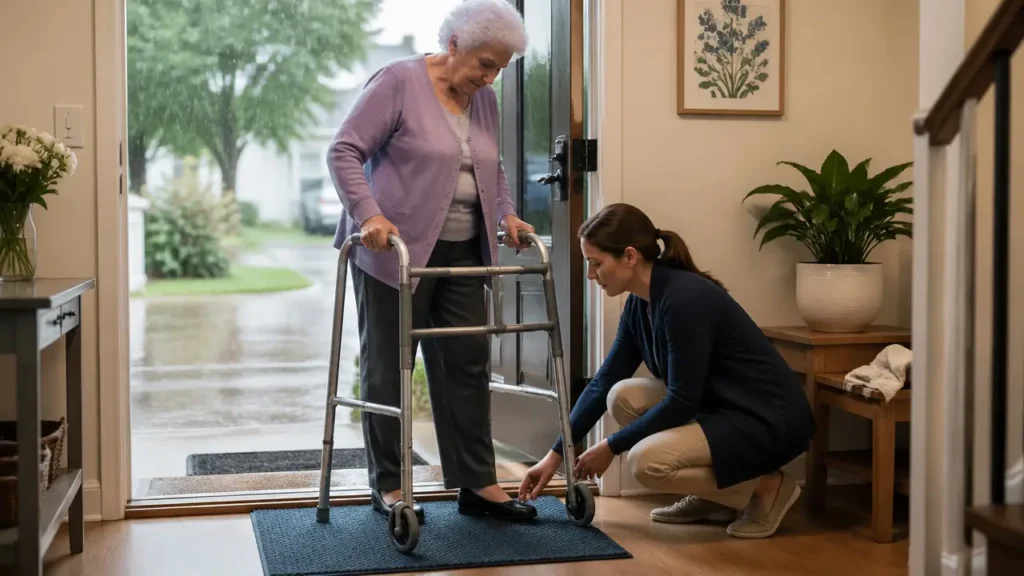
Rain changes the safety of a transfer before the person even reaches the chair, toilet, or doorway. Wet shoes, slick tile, damp ramp surfaces, and puddles tracked in from outside all reduce grip at the same time. That is why a good rain plan is not just "put a towel down." Towels can help with cleanup, but they often bunch, slide, and stay wet too long to be trusted as the main walking surface.
The safer approach is a simple system: control where water lands, give feet and wheels better traction, and stage towels or mats so they help instead of creating a new trip hazard. If you want the broader mobility picture first, start with the mobility and transfers master guide. If the slippery area is a threshold or ramp, pair this article with non-slip surfaces for ramps and thresholds and portable ramp types.
Why This Matters
Wet floors create more than obvious slips. They also cause:
- walker tips to skid
- canes to land less securely
- rollator braking mistakes
- wheelchair push rims and tires to get slick
- caregivers to lose footing while assisting
The risk rises even more when rain overlaps with:
- low lighting
- rushed bathroom trips
- poor shoe grip
- thresholds or small level changes
- fatigue after being out
In many homes, the most dangerous sequence is the same one every time: come in wet, step onto tile or laminate, turn while carrying something, and transfer before the floor is dry.
Key Factors That Change the Decision
Where the water is showing up
A bathroom drip zone, a front entry, a garage threshold, and a porch ramp are not the same problem. Figure out whether the slick area is:
- right outside the shower
- at the entry door
- on the path to the bathroom
- on a ramp or threshold
- under a chair or mobility device parking spot
What is being used to move
Different devices respond differently to wet surfaces:
- walkers and canes need dependable foot traction
- rollators need both traction and controlled braking
- wheelchairs need stable tire grip and a dry hand area
- scooters need enough surface friction without puddling at the base
If the device already feels hard to control on dry ground, rain will expose the problem faster. Compare proper walker height and posture and quad cane vs single-point cane if the current setup already feels marginal.
Whether the fix is temporary or routine
A single storm-day solution can be simple. A daily wet-season problem needs a repeatable setup with:
- absorbent mats that stay put
- a towel station for quick drying
- shoe and mobility-device staging
- a rule for drying floors before transfers happen
How to Use, Choose, or Set It Up Safely
Use towels for drying, not as the main walking surface
A towel has one useful job here: blotting up water. It is much less reliable as a floor surface because it can:
- slide on smooth flooring
- bunch underfoot
- stay damp
- create curled edges that catch toes or wheels
If a towel is used, use it to dry the floor quickly, then move it out of the transfer path. For the actual standing or stepping area, a low-profile non-slip mat is usually safer.
Build a dry path
The easiest way to reduce slips is to decide where wet shoes and wet wheels go first. A practical rain routine often includes:
- stop at the entry
- blot shoes or wheels
- move onto a stable non-slip mat
- dry any visible wet spots
- then continue to the transfer area
This matters even more for public restroom and tight space transfers or nighttime visibility and lighting issues where reaction time is already reduced.
Keep one dry transfer zone
Choose one stable spot where transfers happen and protect it. That may mean:
- a rubber-backed mat outside the shower or door
- a towel hook or basket within reach for quick blotting
- a small stool or chair for shoe changes
- keeping clutter, coats, and bags off the floor
The goal is not to cover the whole room in fabric. It is to create one predictable dry landing zone.
Think about footwear and hand surfaces
Traction is not just under the floor. Wet hands and wet shoes matter too. Check:
- shoe tread condition
- whether slippers stay secure when damp
- whether cane grips or walker handles get slick
- whether wheelchair push surfaces need drying before control is good again
If shoes are part of the issue, compare non-slip shoes for seniors. If the path itself is the issue, compare ramps and thresholds overview and negotiating curbs and ramps with a walker or rollator.
Use a towel strategy that people will actually follow
The best towel strategy is boring and repeatable:
- keep two towels nearby instead of one
- use one for shoes or wheels, one for floor blotting
- replace soaked towels quickly
- hang them where they dry instead of leaving them on the floor
This keeps the towel as a tool, not a hazard.
Common Mistakes and Red Flags
Common mistakes:
- leaving towels flat on smooth floors as a permanent fix
- layering multiple mats that slide against each other
- waiting until after the transfer to mop up water
- trusting wet slippers or worn shoe soles
- rushing because the person just came in from rain
Red flags:
- the towel bunches underfoot
- the mat edges curl or drift
- wheels bring in enough water that puddles re-form right away
- the caregiver has to brace hard to keep from slipping
- the same wet zone is causing repeated near-falls
If the problem keeps happening at a doorway lip or porch, the real fix may be a threshold ramp or better ramp surface and drainage planning, not more towels.
When to Get More Help
Get more help when:
- the same wet area keeps causing slips or near-slips
- the person cannot safely manage entry during rain without hands-on help
- the floor material itself stays slick even after drying
- a ramp, porch, or threshold needs drainage or traction changes
PT, OT, an accessibility contractor, or an equipment supplier may need to look at the full path, not just the transfer spot.
Frequently Asked Questions
Is a towel or a mat safer on a wet floor?
A low-profile non-slip mat is usually safer for standing or stepping. A towel is better used for blotting up water, then removed from the path.
Why are towels risky on smooth floors?
They can slide, bunch, and stay wet, which makes footing less predictable.
Should I leave a towel outside the shower all the time?
Not if it stays damp or shifts. A stable mat is usually better for the standing zone.
What is the best rain-entry setup?
A simple dry path works best: stop, blot shoes or wheels, step onto a stable mat, dry visible puddles, then transfer.
Do wet shoes matter that much if the floor is dry?
Yes. Wet soles can still reduce traction during the first few steps and the transfer turn.
What if the person uses a walker or rollator?
Dry the floor before the device enters the transfer zone and make sure the person is not stepping onto a loose towel or slick mat edge.
When do I need more than a towel strategy?
When the same wet threshold, ramp, or entry keeps causing problems and needs a surface or drainage fix.
If the wet area is on a ramp or threshold, continue with non-slip surfaces for ramps and thresholds, ramp care and anti-slip renewal, and ramps: choosing slope, side guards, and surface. If bathroom transfers are the bigger issue, compare public restroom and tight space transfers and grab bar placement for toilet and tub transfers.