As an affiliate, we may earn a commission from qualifying purchases. We get commissions for purchases made through links on this website from Amazon and other third parties.
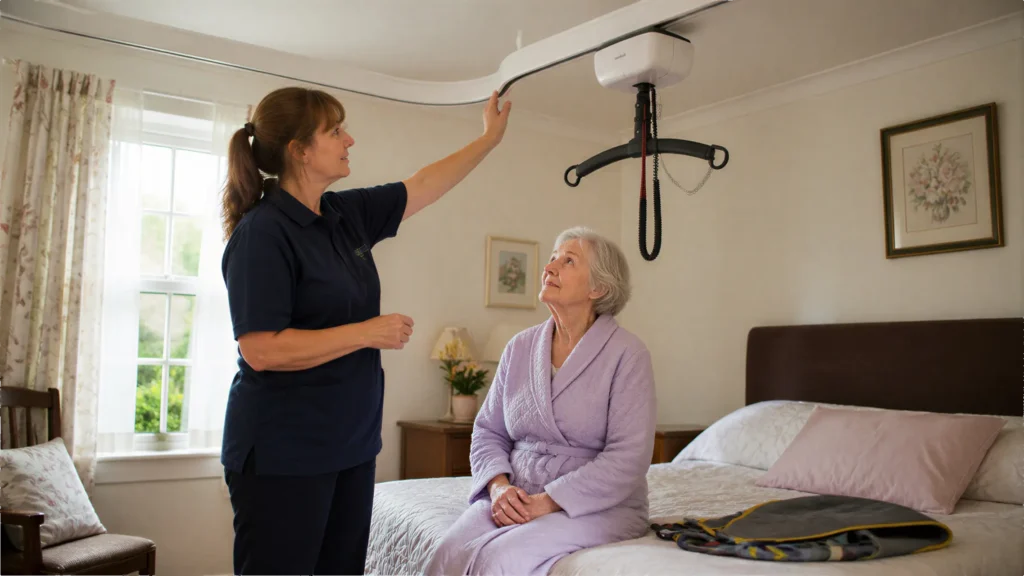
A ceiling track lift can change home caregiving in a big way. Instead of a caregiver lifting, pulling, or trying to steer a mobile floor lift through tight spaces, the person is supported in a sling from an overhead track. The transfer can feel smoother, calmer, and less physically punishing.
But a ceiling lift is not just a product. It is part equipment, part home modification, and part care plan. The track has to reach the right places. The ceiling or wall structure has to support the load. The sling has to fit the person. The caregiver has to know what to do if the lift stops, the battery runs low, or the person becomes uncomfortable mid-transfer.
If you are still deciding whether any lift is needed, start with the mobility transfers master guide. If you are comparing lift categories, review patient lifts and slings before committing to a ceiling system.
Quick Answer
A ceiling track lift makes sense when manual transfers are no longer safe and the home can support a planned overhead route. The key checks are transfer path, ceiling or wall structure, sling fit, weight capacity, battery and emergency lowering, and whether the lift reaches the daily problem areas.
Why This Matters
Manual lifting is one of the fastest ways caregivers get hurt. Even good body mechanics cannot make heavy, repeated transfers safe when the person cannot bear weight or cannot help reliably. A ceiling lift can reduce that load by letting the equipment carry the person's weight.
Ceiling systems can also help the person being transferred. Movement is more predictable. The caregiver is not straining, rushing, or repositioning a bulky lift base. In a small bedroom or bathroom, overhead support may work where a floor lift cannot fit.
The tradeoff is planning. A ceiling lift only works along the route the track covers. If the track goes from bed to wheelchair but not to the toilet, the bathroom problem remains. If the track stops at a doorway, the caregiver may still need a difficult transfer at the threshold.
That is why the best question is not "Should we buy a ceiling lift?" It is "Which transfers are unsafe now, and what exact path does the lift need to cover?"
Key Factors That Change the Decision
The first factor is the person's transfer level. Ceiling lifts are usually considered when the person cannot be moved safely by manual assistance. That may include someone who cannot bear weight, has severe weakness, needs full-body support, or requires transfers many times a day.
The second factor is the home layout. A fixed ceiling track can serve a bed, chair, commode, tub, or bathroom if the route is designed for it. Some systems use straight track. Others use curves, turntables, or X-Y layouts that give more room coverage. The more rooms and turns involved, the more planning the installation needs.
The third factor is structure. A ceiling lift cannot simply be screwed into a weak ceiling. The installer has to know what is above the ceiling, where the joists or supports are, and whether reinforcement is needed. For stationary or ceiling-mounted systems, structural advice is often part of a safe plan. Drop ceilings and decorative surfaces are not the same as structural support.
The fourth factor is space under and around furniture. A ceiling lift removes the bulky floor base, but the person still needs clear landing zones. The wheelchair, bed, toilet, shower chair, or recliner must be positioned so the sling can lower the person safely. If the person also uses a wheelchair, the wheelchair sizing guide can help avoid a chair that blocks the transfer path.
The fifth factor is caregiver capacity. A ceiling lift may allow one trained caregiver to do transfers that previously required two people, but that depends on the person's behavior, body size, medical needs, sling type, and home setup. If transfers are unpredictable, the plan may still require a second helper.
Fixed Ceiling Lift, Portable Ceiling Lift, or Floor Lift
A fixed ceiling lift uses a mounted track. It is ready when you need it and does not take up floor space. This can be a strong choice for frequent transfers in one room or between connected rooms. It is often the most convenient day to day, but it usually costs more and needs installation.
A portable ceiling lift may use a freestanding gantry or removable track. It can be useful when you rent, travel, move between homes, or do not want a permanent installation. The tradeoff is setup time, storage, and the physical effort of moving the frame or motor.
A floor lift, often called a Hoyer-type lift, rolls on a base. It usually costs less upfront and does not require ceiling work. It can move between rooms, but it needs wide, clear floor space and enough clearance under furniture. In tight bedrooms and bathrooms, the base can be the problem. The Hoyer lift step-by-step guide can help you compare the practical routine.
A sit-to-stand lift is different. It is for someone who can bear some weight and participate in standing. It is not a full-body lift. If the person can still help with standing but needs more support than a gait belt, compare sit-to-stand lift setup.
How to Choose and Set It Up Safely
Start with a transfer map. List every transfer that happens in a normal day: bed to wheelchair, wheelchair to toilet, toilet to shower, wheelchair to recliner, chair to bed, and any floor recovery concerns. Mark which transfers are unsafe, painful, or require too much caregiver strength.
Then decide which transfers the lift must cover. A single bed-to-chair route may need only a straight track. Bed-to-bathroom coverage may require a doorway solution, track continuation, or a different bathroom layout. If the person needs shower or toilet transfers, involve an occupational therapist before choosing the route.
Ask for a home assessment. A good assessment should include the person's height, weight, posture, skin risk, cognition, transfer ability, sling needs, room measurements, ceiling structure, doorway conditions, furniture layout, and power or charging needs.
Choose the sling carefully. Sling fit affects comfort, skin safety, positioning, toileting access, and whether the person feels secure. A sling that is too small can pinch. A sling that is too large can let the person slide or sit poorly. Bariatric needs, contractures, pain, and pressure injury risk all change the choice. If sling choice is the main concern, compare transfer sling options.
Practice with the person before relying on the lift alone. Explain each step, move slowly, and watch their face and body position. A lift may be mechanically safe but emotionally scary at first. Predictable cues help.
Keep the battery and emergency plan simple. Know how to charge the lift, what warning lights mean, how to use emergency stop, and how to lower the person if power fails. If you have multiple caregivers, everyone needs the same training. For routine equipment upkeep, read lift battery care.
Common Mistakes and Red Flags
The first mistake is buying the lift before mapping the transfers. A lift that does not reach the toilet, shower, or best chair may solve only part of the problem.
The second mistake is skipping structural review. Ceiling strength is not a guess. A safe installation depends on the support above the track and the weight the system must carry.
The third mistake is using the wrong sling. The sling is what touches and supports the person. Poor fit can cause pain, sliding, poor posture, or skin pressure.
The fourth mistake is forgetting maintenance. Lifts, tracks, batteries, straps, clips, and slings wear over time. Inspect before use, follow the service schedule, and stop using anything that looks damaged.
The fifth mistake is assuming a lift replaces caregiver judgment. The caregiver still has to position the wheelchair, lock brakes, protect skin, guide the person's body, watch tubing, and respond if the person becomes scared or ill.
Stop and get help if the person slides in the sling, the lift jerks, the track makes unusual sounds, the battery warning appears, the sling attachment looks wrong, or the person has pain, breathing trouble, or panic during the transfer.
When to Get More Help
Get professional help before installing a fixed track. This is not a handyman-only job. You may need an accessibility dealer, installer, occupational therapist, physical therapist, and sometimes a structural professional.
Ask for clinical help if the person's mobility is changing quickly, their weight has changed, they have pressure injuries, they resist transfers, or they need toileting and bathing help that feels unsafe. The lift setup should match the care needs, not just the room shape.
Also get help if caregivers disagree about the method. Mixed techniques lead to mistakes. Everyone should know the same sling, same route, same verbal cues, and same emergency steps.
Frequently Asked Questions
What is a ceiling track lift?
A ceiling track lift is a motorized or manual lifting system that moves along an overhead track. The person is supported in a sling and moved between surfaces such as a bed, wheelchair, toilet, or chair.
Is a ceiling lift better than a floor lift?
It depends on the home and transfer needs. A ceiling lift saves floor space and can make frequent transfers smoother. A floor lift costs less upfront and can move between rooms, but it needs more clear floor space.
Can a ceiling lift go from bedroom to bathroom?
Sometimes. The track route, doorway, ceiling structure, and bathroom layout all matter. A professional assessment is needed before assuming a track can pass between rooms.
Does a ceiling lift need special installation?
Yes. Fixed ceiling lifts need safe structural support and proper mounting. The installer may need to inspect joists, reinforcement, track layout, and load capacity before installation.
What should caregivers check before each lift transfer?
Check the sling, clips, track, battery, brakes on the destination chair, the person's position, and the path below the lift. Do not use damaged equipment or a sling that does not fit.
Before choosing a ceiling system, compare it with the full care routine. If the person already needs full support, review passive lift setup and sling fit before deciding on track layout. Higher-weight or wider-body transfers may also need bariatric transfer equipment instead of a standard lift plan. For a simpler daily move, map the lift route against the actual bed-to-chair transfer steps the caregiver repeats most often.