As an affiliate, we may earn a commission from qualifying purchases. We get commissions for purchases made through links on this website from Amazon and other third parties.
Getting in and out of a car can become one of the hardest parts of leaving home. The person may walk well enough inside the house, then freeze at the car door because the seat is too low, the step is too high, or the turn into the seat feels unsafe.
Sedans and SUVs create different transfer problems. A sedan usually asks the person to lower down farther. An SUV may ask them to step up, lift a weak leg, or manage a higher seat edge. Neither is automatically safer. The safer choice is the one that lets the person sit, turn, and bring both legs in without rushing, twisting, or losing balance.
If the bigger issue is overall transfer safety, start with the mobility transfers master guide. If the person mainly needs a handle, swivel cushion, or car bar, compare car transfer aids before buying anything.
Quick Answer
For most limited-mobility car transfers, the safest pattern is to back up to the seat, sit sideways first, then turn the legs into the vehicle. Sedans usually create a low-seat problem. SUVs usually create a step-up problem. The better choice is the vehicle that lets the person sit, turn, and stand again without pulling on the door, rushing, or needing to be lifted.
What Each Option Means
A sedan transfer usually means moving into a lower seat. The person backs up to the seat, reaches for stable support, sits sideways, then turns their legs into the car. The lower seat can help shorter adults because their feet stay closer to the ground, but it can be hard for someone with weak legs, painful knees, hip stiffness, or trouble standing from low chairs.
An SUV transfer usually means moving into a higher seat. The seat may be closer to chair height for some people, which can make standing up easier. But if the SUV is too tall, the person may have to step up before sitting. That step-up moment is where falls can happen, especially if they try to pull on the door, grab the roof, or lift one leg while the other leg is not steady.
The real decision is not "sedan or SUV." It is seat height, door opening, floor height, hand support, legroom, and how much help the person needs. A low sedan with wide doors may be safer than a tall SUV. A compact SUV with a chair-height seat may be easier than a deep sedan. You have to test the actual vehicle.
The Safest Basic Car Transfer
The safest car transfer usually starts before anyone moves. Park on flat ground. Give yourself more time than you think you need. Move bags, canes, walkers, oxygen tubing, and loose floor mats out of the way. Open the door fully if the space allows.
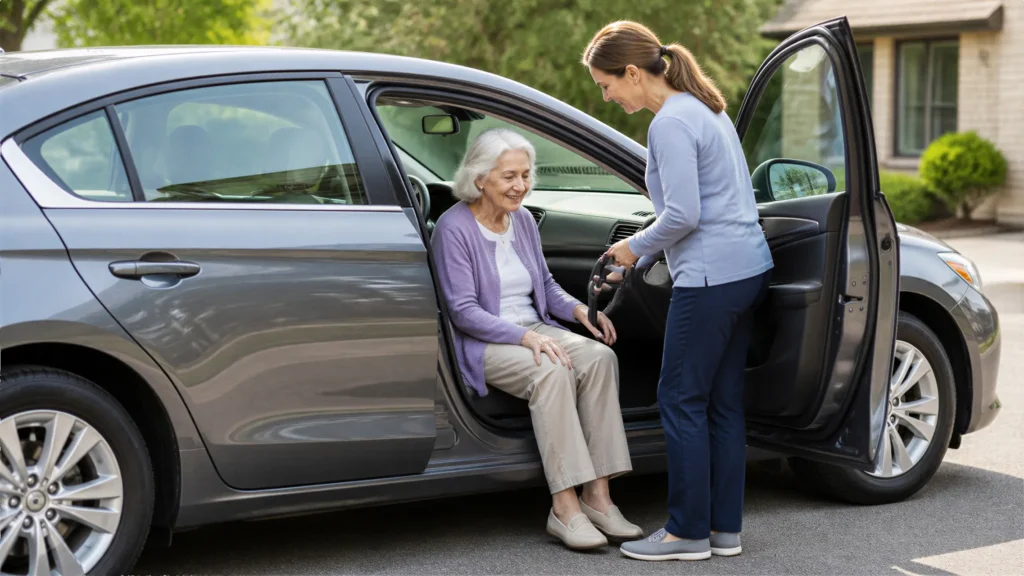
Ask the person to turn so the back of their legs touches the seat. They should not step into the car first. Stepping sideways on one leg takes strength, balance, and timing. A safer pattern is: back up, feel the seat, sit down sideways, then bring the legs in one at a time.
The caregiver should explain the plan before touching them. A sudden pull can throw the person off balance. Use short cues like "back up until you feel the seat," "reach back," "sit first," and "now turn your legs." If the person has trouble following directions, use fewer words and give one cue at a time.
For many people, the hard part is the turn after sitting. A swivel cushion can reduce twisting, but it must fit the seat and should not slide. If the person needs more than light help, review pivot versus sliding transfers so you know when a simple turn is no longer enough.
Sedan Transfers: Main Safety Points
Sedans are often easier to approach because the floor is low. The person does not have to climb. That helps when balance is poor or when a walker must be parked close to the door.
The problem is the low seat. A person who struggles to stand from a sofa, toilet, or low dining chair may also struggle to rise from a sedan. The lower they sit, the more leg strength they need to stand again. Painful knees, hip arthritis, weakness after illness, and fatigue can all make this harder.
Door shape matters too. Some sedans have wide front doors and good legroom. Others have sloped rooflines that force the person to duck, twist, and drop into the seat at the same time. That is too much for many older adults. If the person bumps their head, grabs the door hard, or falls backward into the seat, the car may not fit their current mobility level.
Sedans often work best for people who can still stand from a normal chair, follow simple cues, and turn while seated. They may also work well for shorter adults who feel unsafe climbing into a taller vehicle.
SUV Transfers: Main Safety Points
SUVs can feel easier because the seat is higher. For many people, a seat near normal chair height is easier than a low sedan seat. They do not have to drop down as far, and standing up may take less effort.
The risk is the climb. If the SUV seat is higher than the person's hips, they may try to step up while holding the door. Car doors move. They are not safe grab bars. Running boards can help some people, but they can also create a narrow, slippery step that is hard to see.
SUVs also vary a lot. A small crossover may have a gentle step-in height and wide doors. A taller SUV may be too high, especially for someone with foot drop, weak hip flexors, Parkinson's freezing, shortness of breath, or poor depth perception. If the person uses a walker, also check whether there is enough room to park the walker, turn, and sit without blocking the caregiver.
SUVs often fit people who can step safely, need a higher seat to stand, and have enough leg control to bring both feet into the vehicle. They are less ideal when the person cannot lift one foot well or becomes dizzy when stepping up.
Who Each Option Fits Best
Choose the vehicle by watching the transfer, not by guessing from the body type or age of the person.
A sedan may fit better if the person is shorter, dislikes climbing, can stand from a low seat, and needs the walker close to the door before sitting. It may also be better if the driveway or parking areas are uneven and a high step would add risk.
An SUV may fit better if the sedan seat is too low, the person needs a chair-height surface, and they can step up without pulling on the door. A small SUV or crossover often works better than a tall SUV because it gives some height without turning the transfer into a climb.
If the person uses a wheelchair, the question changes. You may need enough space to position the wheelchair close, lock the brakes, remove or swing away footrests, and use a transfer board or stand-pivot method. For chair-to-car moves, read manual wheelchair and transport chair differences and transfer board basics before deciding the vehicle is the only problem.
Setup and Home Considerations
Practice in a quiet place before you rely on the transfer for an appointment. A rushed medical visit is not the time to discover that the person cannot rise from the passenger seat.
Check the parking surface first. Gravel, wet pavement, slopes, ice, curbs, and tight parking spaces all change the transfer. If the person uses a walker, the walker needs a stable place to sit while the person turns. If the caregiver has to stand between the person and the car, leave enough room for both bodies.
Move the front passenger seat back before the transfer. Recline it slightly only if it helps the person clear the roofline. Too much recline can make standing harder. Keep the seat belt out of the way until the person is fully seated.
For people with stiff hips or knees, a plastic bag or slippery clothing can make turning easier, but it can also increase sliding risk. A purpose-made swivel cushion is usually safer than an improvised slippery surface because it is designed to stay in place. Still, any cushion that raises the seat, shifts under the person, or changes seat belt fit should be tested carefully.
If night transfers are common, add light. A small flashlight, garage light, or parking near a bright entrance can help the person see the seat edge and floor. For more help with low-light movement, use the night transfer safety guide.
Common Mistakes
The first mistake is letting the person step into the car before sitting. That move may have worked for decades, but it becomes risky when balance changes. Sit first, then turn.
The second mistake is using the car door as a grab bar. The door can swing, bend, or move just enough to upset balance. If the person needs a handhold, use a stable aid that fits the vehicle latch or a caregiver hand placement that has been practiced.
The third mistake is rushing. Many falls happen because everyone is late, traffic is stressful, or the person feels watched in a parking lot. Build in extra time. A slow transfer is not a failure. It is often the safer transfer.
The fourth mistake is ignoring fatigue. A person may transfer well at home, then struggle after a long appointment. Plan the return transfer too. If walking from the parking lot drains them, a wheelchair at the entrance may make the car transfer safer at the end of the trip.
The fifth mistake is choosing by vehicle style alone. A "senior-friendly" car still has to fit the person. Test the seat height, door opening, legroom, handle placement, and cargo space for the walker or wheelchair. If you are still choosing mobility equipment for outings, compare walkers, canes, and rollators so the car setup matches the device.
When to Get More Help
Ask a physical therapist or occupational therapist for help if the person falls toward the seat, grabs wildly, cannot follow the sequence, or needs heavy lifting. Also get help if pain, dizziness, shortness of breath, or new weakness shows up during transfers.
A caregiver should not lift by the arms to pull someone into a car. That can hurt the shoulder and does not fix the balance problem. If the transfer starts to fail, stop the move if you can, guide the person back to the safest surface, and reassess. The guide on what to do when a transfer starts to fail can help you plan before it happens.
Some families eventually need a larger change: a swivel seat, transfer seat, wheelchair van, or rideshare plan with better access. Those decisions cost more and need careful fit checks. Start with the transfer itself, then decide whether equipment or a different vehicle is truly needed.
Frequently Asked Questions
Is a sedan or SUV better for seniors with limited mobility?
Neither is always better. A sedan may be easier because it is lower, but the seat can be hard to stand from. An SUV may be easier because the seat is higher, but the step up can be risky. Test the actual seat height, door opening, and transfer sequence.
What is the safest way to get into a car with weak legs?
The safer pattern is to back up until the person feels the seat, sit sideways first, then turn the legs into the car. Avoid stepping into the car before sitting, because that puts the person on one leg during a turn.
Should a caregiver pull someone by the arms during a car transfer?
No. Pulling by the arms can hurt the shoulders and can throw the person off balance. Use clear cues, stable support, and practiced hand placement. If more help is needed, ask a therapist to teach the safest method.
Do swivel cushions help with car transfers?
They can help when twisting is the main problem. They are not a fix for poor balance, heavy lifting needs, or a seat that is too high or too low. The cushion must stay stable and should not interfere with the seat belt.
What should I check before buying a different car?
Check seat height, door width, roof clearance, legroom, visibility, controls, and cargo space for the walker or wheelchair. Bring the mobility device to the test drive and practice the actual transfer in a normal parking space.
If car transfers are only one part of the problem, build the whole plan around transfer safety basics. For equipment choices, compare car transfer aids, and if walking to the vehicle is the weak point, review walker and rollator safety.