As an affiliate, we may earn a commission from qualifying purchases. We get commissions for purchases made through links on this website from Amazon and other third parties.
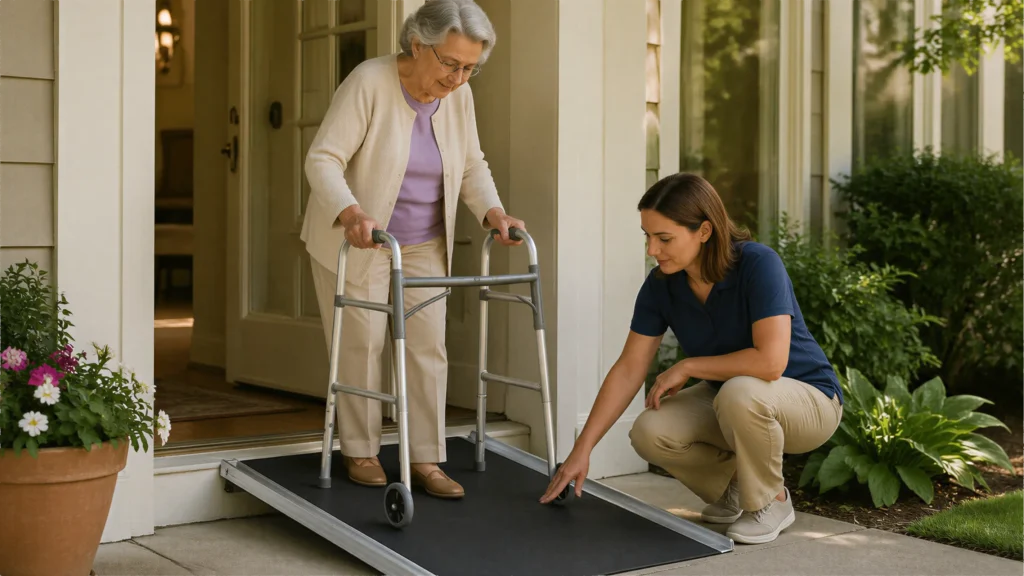
A doorway threshold can be a small barrier on paper and a huge problem in real life. One lip can stop a wheelchair, catch a rollator wheel, or make a tired senior freeze at the bathroom door. The right threshold ramp removes that daily hassle. The wrong one is too steep, blocks the door, or does not actually fit the rise you are trying to cross. If you want the broader mobility picture first, start with the main mobility and transfers guide.
Threshold ramps are all about matching the rise and the doorway. A ramp that works well for a low sliding-door track may be useless for a taller entry step. A short folding ramp may feel fine for a scooter with help, but too steep for a manual wheelchair user trying to move alone. Before buying, it helps to read ramps and thresholds overview and portable ramp types so you choose the right shape instead of just the first aluminum ramp that looks sturdy.
Quick Picks
- Best Overall: Adjustable Aluminum Threshold Ramp for Doorways for the best balance of rise range, traction, and everyday doorway use.
- Budget Pick: FACHNUO 2-Foot Portable Wheelchair Ramp for a lighter folding ramp when the rise is modest and portability matters.
- Premium Pick: EZ-ACCESS Portable Threshold Ramp for a more polished fit on uneven entries and doorways with awkward swing clearance.
- Best for Low Thresholds and Sliding Doors: Ruedamann 1.5-Inch Rise Bridge Threshold Ramp for tiny interior lips and track-style thresholds.
- Best for Higher Doorway Rises: VNN 4-Foot Portable Wheelchair Ramp for taller steps or larger entry rises where a longer run makes more sense.
Best Overall
Budget Pick
Premium Pick
Best for Low Thresholds and Sliding Doors
Best for Higher Doorway Rises
Comparison Table
| Product | Best For | Key Strength | Main Tradeoff |
|---|---|---|---|
| Adjustable Aluminum Threshold Ramp for Doorways | Most home entryways with a moderate rise | Adjustable feet, strong traction, and a more forgiving 48-inch run | Heavier than smaller folding ramps |
| FACHNUO 2-Foot Portable Wheelchair Ramp | Lower rises where portability matters | Lightweight folding design, easy carrying handle, and strong traction | Shorter length makes it steeper on taller rises |
| EZ-ACCESS Portable Threshold Ramp | Uneven doorways and more refined home fit | Adjustable swivel feet, sturdy standalone design, and better door clearance | More expensive than generic folding ramps |
| Ruedamann 1.5-Inch Rise Bridge Threshold Ramp | Tiny lips, sliding tracks, and interior thresholds | Simple low-profile bridge style and very quick daily setup | Only works for very low rises and should be removed before some doors close |
| VNN 4-Foot Portable Wheelchair Ramp | Taller home rises that need a longer run | Longer length, side baffles, strong traction, and better comfort on steeper entries | Bigger footprint and more storage bulk |
Quick Decision Guide
- Pick the adjustable 48-inch ramp if you want one ramp that handles the widest range of normal doorway threshold problems.
- Pick the FACHNUO 2-foot ramp if the rise is small enough and you need something lighter to move or store often.
- Pick the EZ-ACCESS if the doorway is awkward, the ground is uneven, or you want a more polished adjustable fit.
- Pick the Ruedamann bridge ramp if the problem is a tiny lip or sliding-door track, not a true step.
- Pick the VNN 4-foot ramp if the rise is tall enough that a short folding ramp would feel too steep.
- If the real problem is doorway handling with a walker rather than the lip itself, read training with a walker in tight spaces and indoor vs. outdoor walker tires and turning before buying a bigger ramp than you need.
- If the doorway is part of a bigger bathroom access problem, compare tub and shower transfer setups with a bench or board before treating the front edge like the whole issue.
Best Threshold Ramps for Doorways: Top Picks
1 / 5 Type One-piece aluminum threshold ramp with adjustable feet Rise Range About 3.34 to 6.3 in depending on footing setup Length 48 in Surface Textured anti-slip surface with included door mat Capacity About 700 lb Tradeoff About 26.5 lb, so it is heavier to move than short folding rampsAdjustable Aluminum Threshold Ramp for Doorways

This adjustable aluminum ramp is the strongest starting point for most home doorway problems because it gives you the two things that matter most: a more forgiving run and enough adjustability to match real-world thresholds. At 48 inches long, it avoids the too-steep feel that plagues many shorter doorway ramps, especially for wheelchairs and walkers. The adjustable feet also help it match entries that are not perfectly flat or uniform.
It is especially useful when the doorway rise is more than a tiny lip but not so large that you need a full permanent ramp system. The textured surface, included door mat, and wider track all make daily crossing feel more secure. That matters for walkers, wheelchairs, scooters, and even family members walking over the ramp. In a normal home, that everyday confidence usually matters more than an ultra-light fold.
Its downside is weight. This is not the ramp you want to pick up and stash after every single use unless you really have to. But if the goal is dependable home access over a moderate doorway rise, this one makes the widest range of situations easier without getting overly complicated.
Why It Helps:
- The longer run feels smoother and less abrupt than short doorway ramps on the same rise.
- Adjustable feet make it easier to fit an imperfect threshold instead of forcing a bad angle.
- The traction and overall width work well for both mobility devices and foot traffic.
What To Keep In Mind:
- At over 26 pounds, it is not the handiest ramp to move around all day.
- It still needs the rise measured correctly or the angle can end up too steep.
2 / 5 Type Folding aluminum threshold ramp Length 24 in Weight About 10.9 lb Capacity About 800 lb Features Handle, reflective strips, baffles, and non-slip texture Tradeoff Short length makes it steep on taller rises and it can affect some door clearancesFACHNUO 2-Foot Portable Wheelchair Ramp

The FACHNUO 2-foot ramp is the budget pick because it solves the most common short-rise problem without taking over the whole doorway. It folds, carries easily, and weighs far less than the longer adjustable ramps in this roundup. For a low step, small porch lip, or entry threshold where portability matters, that is a real advantage.
This is also a good fit for families who need the ramp only part of the time. If the ramp has to be moved so a door can close, taken in and out for a wheelchair user, or stored after visitors leave, the lighter folding design is much easier to live with. The traction is strong, the side baffles add security, and the carrying handle makes it more realistic for a caregiver to reposition it without dread.
Its weakness is steepness. A 2-foot ramp can only do so much, and the angle becomes much less comfortable as the rise climbs. That does not automatically make it bad, but it does mean you need to respect the limits. If the rise is more than modest, a longer ramp will usually feel safer and smoother.
Why It Helps:
- Low weight and a folding handle make it easy to move and store.
- The textured surface and side features help the ramp feel more secure than a bare plate.
- It is practical for temporary doorway access rather than a semi-fixed installation.
What To Keep In Mind:
- A short ramp gets steep fast, especially for manual wheelchairs and walkers.
- Door swing and side-wall clearance still need to be checked before buying.
3 / 5 Type Standalone aluminum threshold ramp Length About 36.25 in Rise Range About 3-5/16 to 5-7/8 in with adjustable swivel feet Surface Slip-resistant tread Use Case Uneven surfaces, single-step rises, and doorways with swing issues Tradeoff Higher cost than generic ramps of similar sizeEZ-ACCESS Portable Threshold Ramp

The EZ-ACCESS is the premium choice because it feels more thought through where many doorway ramps feel generic. The adjustable swivel feet are the key feature. They let the ramp sit more naturally on uneven surfaces and help it work at entries where a simpler flat-bottom ramp would wobble or fit badly. That kind of detail matters when the doorway is used many times every day.
It also does a very good job with awkward door situations. Some homes have storm doors, exterior lips, or uneven entry pads that make cheap folding ramps frustrating. This one handles those conditions better than most. The tread is solid, the frame feels stable, and the overall shape suits both wheelchairs and walkers. For a family that wants one good doorway solution instead of a revolving door of almost-right ramps, it is easy to justify.
The tradeoff is price, not function. There are cheaper ramps that will work in simpler situations. But when the doorway is fussy and the family wants a more polished, adjustable fit, this is one of the safest bets in the category.
Why It Helps:
- Adjustable swivel feet make it much easier to fit uneven or awkward doorway setups.
- The standalone design works well where a simple folding ramp would fight the door.
- Daily use feels more stable and predictable than with many generic threshold ramps.
What To Keep In Mind:
- It costs more than simpler ramps that may be fine for an easy threshold.
- It still needs correct measuring, especially around door swing and floor surface.
4 / 5 Type Low-profile bridge threshold ramp Rise Limit Best for rises under about 1.4 in Length About 16 in Width About 27.6 in Capacity About 600 lb Tradeoff Designed for very low thresholds only and may need removal before some doors closeRuedamann 1.5-Inch Rise Bridge Threshold Ramp
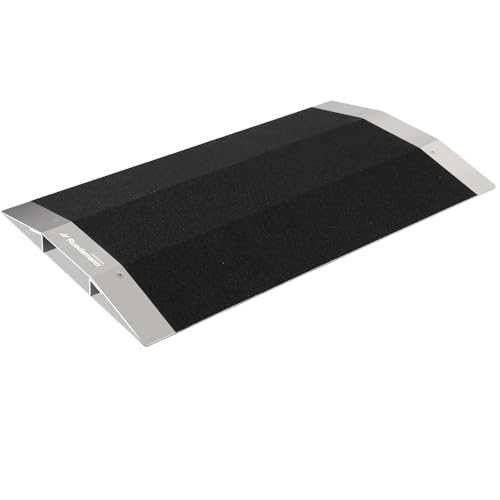
The Ruedamann bridge ramp is for a different job than the other ramps here. It is not trying to solve a bigger step. It is designed for the little interior or sliding-door threshold that still stops wheels cold every single day. In that role, it is excellent. It drops over the lip quickly, feels sturdy, and solves the kind of low threshold issue that makes a walker or wheelchair jerk to a stop.
This is why it works so well as a daily-use piece. You do not need to unfold it, carry much weight, or rethink the whole doorway every time. The anti-slip surface is helpful for both foot traffic and mobility devices, and the bridge design makes it useful at laundry-room entries, patio tracks, and other low transitions where a bigger portable ramp would be overkill. For many homes, these tiny transitions are the ones that cause the most daily irritation.
The tradeoff is that it has almost no range beyond that specific job. If the rise is taller, this ramp is not the answer. And because it can sit over a track or threshold edge, some door setups need it removed before closing. Used in the right situation, though, it is one of the most satisfying problem-solvers in the roundup.
Why It Helps:
- It handles tiny raised thresholds more cleanly than big folding ramps do.
- Setup is fast enough for genuine daily use instead of occasional use only.
- It works well for walkers, wheelchairs, scooters, and even safer foot traffic over a small lip.
What To Keep In Mind:
- This is only for low thresholds, not true steps or bigger rises.
- Some doors still need the ramp removed before closing normally.
5 / 5 Type Folding aluminum portable ramp Length 4 ft Capacity About 800 lb Safety Non-slip surface, side baffles, reflective strips, and transition plates Use Case Doorways, home steps, garage entries, and taller rises Tradeoff Longer footprint takes more space to place and storeVNN 4-Foot Portable Wheelchair Ramp

The VNN 4-foot ramp makes sense when the threshold problem is really a taller rise, not a tiny doorway lip. A longer run changes how the crossing feels. It is easier on manual wheelchairs, steadier for walkers, and less abrupt for caregivers pushing or guiding a device. That is the main reason to choose this model. It gives taller rises more breathing room than shorter folding ramps can.
It also has the right safety touches for that harder job. The traction is strong, the side baffles help with wheel control, and the transition plates help the ramp sit more naturally at the top and bottom. If the entry is a small front step, garage threshold, or taller exterior doorway, this ramp usually feels much more confidence-building than a compact 2-foot model.
Its tradeoff is bulk. Four feet of ramp takes more room, and storage is less tidy. It is also more ramp than you want for a tiny interior threshold. But when the rise is tall enough to make short ramps uncomfortable or too steep, this is the better doorway solution.
Why It Helps:
- The longer run feels safer and smoother on taller doorway rises.
- Safety features make it more confidence-building for bigger threshold problems.
- It works across walkers, wheelchairs, scooters, and even some loading tasks when needed.
What To Keep In Mind:
- A 4-foot ramp takes more floor space and is less convenient to stash.
- The longer design only makes sense when the rise is tall enough to need it.
How to Choose a Threshold Ramp for a Doorway
Measure the rise first, then the doorway, then the door swing. That order matters. Many bad ramp purchases happen because people only measure the width and forget the actual height or the path of the door. The same ramp can feel perfect on one entry and completely wrong on another. If the threshold is tiny, a bridge-style ramp may be enough. If the rise is several inches, a longer ramp is usually safer and more comfortable.
Short ramps are not automatically better because they are easier to store. They are also steeper. That matters most for manual wheelchairs, walkers, and anyone who has to push over the ramp without much momentum. If the ramp is too steep, it does not matter how portable it is. For mobility-device users who cross ramps often, negotiating curbs and ramps with a walker or rollator is worth reading alongside the product choice.
Think about the device using the ramp. A rollator user may mainly need the front wheels to stop catching at a lip. A wheelchair user may need enough run length to stay smooth and controlled. A transport chair pushed by a caregiver creates a different demand than a person propelling their own chair. If the main aid is a rollator or walker, compare rollators for indoor and outdoor use and lightweight transport chairs too, because wheel size and device type change how the threshold feels.
Door style matters as much as height. Storm doors, sliding tracks, and inward swings can all interfere with the wrong ramp shape. Some ramps need room for the top plate. Some need side clearance. Some work brilliantly under a sliding threshold but must be removed before the door closes. This is why doorway fit is never just a single number.
Finally, remember that a threshold ramp solves access, not transfer technique. If the struggle is happening after the doorway, such as bed-to-chair movement or seated lateral transfer, the next answer may be transfer boards for home use or a different transfer aid rather than a bigger ramp.
Common Mistakes When Choosing Threshold Ramps
- Buying by width only and forgetting to measure the actual rise.
- Choosing the shortest portable ramp because it is easy to store, then discovering it is too steep to use comfortably.
- Using a bridge ramp for a true step instead of a small threshold lip.
- Ignoring the path of a storm door or sliding door track.
- Replacing a good ramp too quickly when the real problem is wheel size, turning control, or bedroom layout.
The biggest mistake is treating every threshold like the same problem. A one-inch lip, a sliding track, and a five-inch exterior step all need different ramp shapes. The more closely the ramp matches the exact doorway, the safer and less annoying it will feel every day.
Frequently Asked Questions About Threshold Ramps
What is a threshold ramp used for?
A threshold ramp helps a wheelchair, walker, scooter, or transport chair cross a raised doorway lip or small entry step more smoothly and safely.
How do I know what size threshold ramp I need?
Start with the rise height and the doorway setup. The right ramp depends on how tall the threshold is, how much room you have, and whether the door swing or track changes the fit.
Are short threshold ramps safe?
They can be, but only when the rise is small enough. A short ramp gets steep quickly, so it is not always the best choice for manual wheelchair users or taller steps.
What is the difference between a bridge threshold ramp and a folding ramp?
A bridge ramp is usually for a very low threshold or track. A folding ramp is better for taller rises and situations where the ramp needs to be moved or stored.
Can a threshold ramp block the door from closing?
Yes. Some ramps interfere with storm doors, sliding tracks, or door sweep clearance. That is why measuring the full doorway setup matters, not just the opening width.
Are threshold ramps only for wheelchairs?
No. They can also help walkers, rollators, scooters, transport chairs, and even reduce trip risk for people walking over a raised lip.
When is a threshold ramp not enough?
It is not enough when the problem is a larger step sequence, a major bathroom access barrier, or a transfer issue happening beyond the doorway itself. In those cases, a different access or transfer solution may be needed.
If the doorway problem is connected to bathroom access, compare tub and shower transfer setups with a bench or board. If the problem starts after the doorway at the bed, chair, or wheelchair, move next to transfer boards for home use or patient lifts and slings instead of expecting a ramp to solve an indoor transfer problem.