As an affiliate, we may earn a commission from qualifying purchases. We get commissions for purchases made through links on this website from Amazon and other third parties.
Short steps and toe catches can turn an ordinary room into a fall setup. A rug edge, doorway strip, or small patch of uneven ground suddenly becomes a real problem when the foot does not clear the floor well.
The good news is that walking quality can improve with practice. The better news is that the drills do not need to be complicated. If you want the bigger picture first, start with the mobility and transfers master guide. If a walker is part of the plan, also check proper walker height and posture because bad fit can make short steps worse.
Why This Matters
Step length and foot clearance affect more than how walking looks. They affect whether you:
- catch a toe on a threshold
- shuffle instead of taking a full step
- freeze before a turn
- clip the walker on a doorway
- lose balance when you try to speed up
Good gait practice usually works on two things at the same time: making the step long enough and making the swinging foot clear the floor. That is why many home programs include stepping drills, balance work, and simple strength moves instead of just telling someone to "pick up your feet."
Short, uneven steps can also be a sign that something more specific is going on. Foot drop, Parkinson's gait changes, and one-sided weakness after stroke all need more than a generic walking cue.
Key Factors That Change the Decision
The cause of the short step
Not every short step comes from the same problem. Sometimes the issue is leg weakness. Sometimes it is pain, fear of falling, stiff ankles, poor balance, or a walking aid that is set too far away. Sometimes the foot really is dragging because the toes cannot lift well.
If the problem shows up on only one side, gets worse fast, or started after a new injury or illness, do not treat it like a minor walking habit.
The walking aid and shoe setup
The best exercises in the world will not help much if the walker is too high, too low, or too far in front. The same goes for floppy slippers or slick shoes. A safer base starts with walker fit and stable non-slip shoes.
The amount of support available
Some people can practice beside a counter with light fingertip support. Others need a caregiver nearby, a gait belt, or a physical therapist setting the program. The right support level matters because gait drills often fail when the person is too busy trying not to fall.
Fatigue and divided attention
Many people walk worse when they are tired, rushed, or talking while moving. Step quality often drops before the person notices it. That is why short practice blocks usually work better than a long session done with bad form.
How to Use, Choose, or Set It Up Safely
Start with the setup, not the drill
Pick a clear area with a sturdy support nearby, like a kitchen counter or hallway rail. Wear real shoes, not socks. Turn on the lights. Remove throw rugs, cords, and pet bowls from the path.
If the first few steps after standing are the messy part, pair this work with sit-to-stand practice drills. A cleaner stand often leads to a cleaner first step.
Use a simple practice sequence
You do not need ten fancy drills. A short routine like this is enough for many people:
- marching in place beside support for 20 to 30 seconds
- toe raises and heel raises for 8 to 12 reps
- side steps along a counter for 8 to 10 steps each way
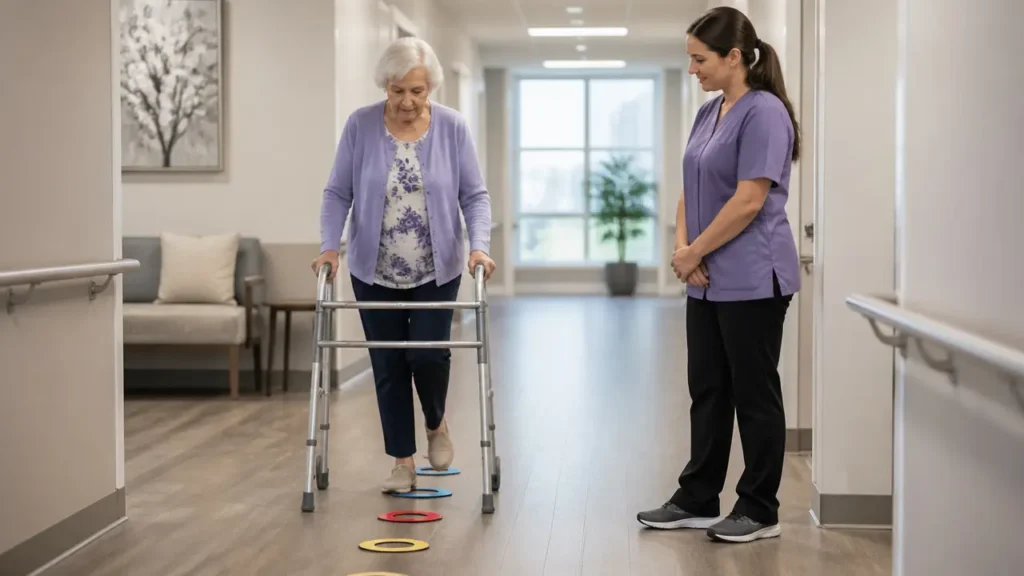
- step-over practice across a strip of tape or another flat visual target
- slow start-stop walking with a focus on full steps and clear toes
The main goal is clean movement. Slow is fine. Controlled is better than fast.
Make the step cue specific
General cues like "walk better" do not help much. Better cues are:
- "take a bigger step"
- "clear the toes"
- "heel first"
- "stand tall"
- "look ahead, not down"
For some people, a visual cue helps. A strip of tape on the floor can give the foot a target. That can be especially useful for the person who shortens steps during turns or in open spaces. If freezing or shuffling is part of Parkinson's, external cue strategies are often more useful than repeating the same verbal cue louder.
Add direction changes once straight walking is steady
Real life is not one long straight hallway. Add practice for:
- stepping over low visual targets forward and sideways
- small turns around a chair or cone
- figure-8 walking beside support
- stopping, re-starting, and turning around safely
These drills help when the real problem is not the first step, but the change of direction. That is where turning and backing up safely and walker training in tight spaces become important.
Keep the dose realistic
A practical home dose is often 10 to 15 minutes, 2 to 4 days a week, with rest before form falls apart. The goal is not to finish tired and sloppy. The goal is to finish while the steps still look good.
Look for real-life wins:
- fewer toe catches
- less shuffling at doorways
- longer first steps after standing
- smoother turns
- less need to stare at the floor
If those things are not improving, change the plan instead of just adding more reps.
Common Mistakes and Red Flags
Common mistakes:
- practicing in socks or loose slippers
- setting up drills far from any support
- using objects on the floor that are too tall or unstable
- rushing the drill instead of controlling the step
- staring straight down the whole time
- assuming every short step is just a bad habit
Red flags:
- one foot suddenly starts dragging
- repeated toe catches on one side
- new numbness or marked weakness
- dizziness while walking
- near-falls during simple drills
- pain that changes the walking pattern every time
Those are signs to slow down and get more help. Do not keep drilling through a pattern that is getting less safe.
When to Get More Help
Get PT, OT, or medical input when:
- the cause of the drag or shuffle is not clear
- one side is much worse than the other
- the person keeps catching a toe even during short, supervised practice
- a walker, brace, or shoe change may be needed
- turning, backing up, or getting started is still unsafe after basic practice
Home drills are useful, but they are not a substitute for gait assessment when the pattern looks neurological, one-sided, or steadily worsening. If the first steps are the main problem, compare posture, step length, and base of support quick wins before you add harder drills.
Frequently Asked Questions
What causes toe catching during walking?
Common causes include weak ankle lift, short shuffling steps, poor balance, fatigue, bad shoe choice, and walker setup problems. Sometimes it points to foot drop or a neurologic gait issue.
How often should I do step length drills?
Many people do well with short sessions 2 to 4 times a week. Stop before form gets sloppy.
Should I practice in shoes or barefoot?
Most people should practice in supportive, non-slip shoes. Socks and floppy slippers make foot placement less stable.
Can I do step-over drills with a walker?
Only if the person is already steady enough for that level and the setup is closely controlled. Many people should start beside a counter first.
What if one foot keeps dragging more than the other?
That is a sign to look more closely at weakness, foot drop, stroke-related changes, or another one-sided problem instead of treating it like a simple balance issue.
Do these exercises help if the person has Parkinson's or had a stroke?
They can help, but the program often needs more specific cues, support, and progression for those conditions.
When should I stop home practice and call a clinician?
Stop and get help if there is a new drag, repeated near-falls, new dizziness, sudden weakness, or no safe way to practice without heavy hands-on support.
If you need the standing piece cleaned up first, read sit-to-stand practice drills. If turning is the weak link, compare turning and backing up safely. If the pattern looks more specific than a simple short step, review foot drop options and stroke walking strategies.