As an affiliate, we may earn a commission from qualifying purchases. We get commissions for purchases made through links on this website from Amazon and other third parties.
A cruise can be one of the easier vacations for someone with limited mobility, but only if the access details are handled before sailing. The ship may have accessible cabins, dining, shows, elevators, and public restrooms, yet one wrong assumption can still make the trip hard.
The biggest problems usually show up in three places: the cabin, the route through the ship, and the shore excursion. A cabin may be called "accessible" but still not fit a scooter. A ship may be easy on quiet mornings and packed after a show. A port may require a tender boat, which can make wheelchair access difficult or impossible depending on conditions.
If the traveler uses a wheelchair, scooter, walker, oxygen, or caregiver help, plan the cruise like a transfer chain. You are not only booking a room. You are planning bed transfers, bathroom transfers, elevator waits, gangways, dining routes, port days, and return travel. For the broader transfer picture, start with the mobility transfers master guide.
Quick Answer
The safest accessible cruise plan starts before booking: confirm the exact cabin features, ask which ports use tenders, check scooter or wheelchair rules, and choose excursions by real mobility level. A ship can be accessible while a port, bus, beach, or tender boat is not.
Why Cruise Access Needs Extra Planning
Cruise ships are controlled environments, which can help. Food, entertainment, medical help, and lodging are all in one place. That reduces the need to pack up every morning or find a new accessible bathroom every day.
But ships also create access limits that hotels do not. Hallways can be narrow. Elevators can be crowded. Deck surfaces can be wet. Thresholds can be awkward. The ship may move. Shore days may involve ramps, gangways, buses, cobblestones, tenders, sand, heat, and long lines.
Accessible cabins are limited. They can sell out early, especially on popular routes and newer ships. Some cruise lines also have different cabin categories for full wheelchair access versus limited mobility. A room with grab bars may not have the same turning space as a fully accessible stateroom.
The safest trip starts by matching the ship and itinerary to the traveler's actual mobility level. If the person cannot transfer safely at home, they will not magically transfer better at sea. If bathroom transfers are already difficult, the cabin bathroom needs extra attention before booking.
Cabin Features to Confirm Before Booking
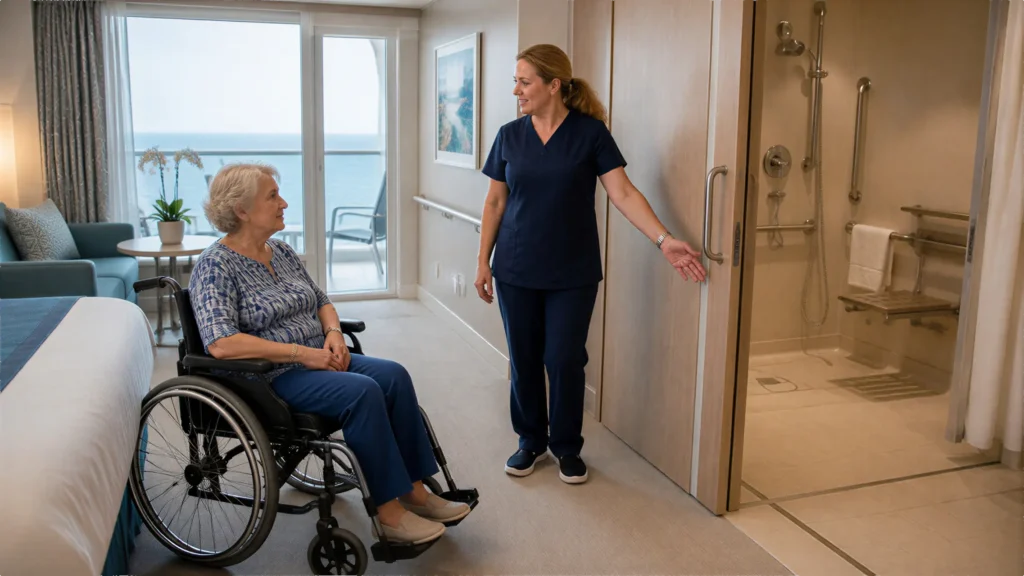
Ask for the exact accessible cabin features in writing. Do not rely only on a website label. Confirm door width, bathroom entry, shower type, toilet height, grab bars, bed height, turning space, closet height, balcony access, and whether both sides of the bed are reachable.
A roll-in shower can make bathing possible for a wheelchair user, but only if the shower has enough space, a seat that works, a handheld showerhead, and drainage that does not flood the bathroom. If the person needs a transfer bench or shower chair, ask what the ship provides and what you may bring.
Check bed access. Some accessible cabins have open bed frames or enough room for a wheelchair beside the bed. Others may be tight once scooters, luggage, and medical equipment are inside. If bed height is a problem at home, it can be a problem on the ship too. The guide to bed height and transfer safety can help you know what to ask.
Ask about emergency alerts if the traveler has hearing or vision loss. Some ships offer visual alert kits, vibrating alarms, amplified phones, or other communication supports by request. These often require advance notice.
If the traveler uses oxygen, CPAP, a power wheelchair, or a scooter, ask about electrical outlets, extension cord rules, battery charging rules, oxygen vendor policies, and storage. Do this before final payment, not at boarding.
Decks, Elevators, and Daily Ship Movement
The cabin location matters. A room near elevators can reduce walking, but it may also bring noise and crowds. A room far from elevators can be quiet but exhausting. Pick based on the traveler's endurance, not only the view.
On large ships, distance is real. Getting from the cabin to dining, theater seating, medical care, or the gangway can take time. Build extra time into every plan. Elevator waits after shows, dinner, or port returns can be long for wheelchair and scooter users.
Watch deck surfaces. Pool decks and outdoor areas can be wet, sloped, windy, or crowded. A rollator that works well at home may feel less stable when the ship moves or when people cut across the path. If the person uses a walker, review walker and rollator safety before relying on it in crowds.
Scout routes early. On the first day, find the nearest accessible restroom, medical center, dining route, theater wheelchair seating, quiet elevator bank, and emergency route. Do this before the ship is busy and before the traveler is tired.
For scooter users, practice turning in the cabin hallway and entering the room. Scooters can be hard to maneuver in narrow corridors, especially when housekeeping carts are out. If transfers to and from a scooter are part of the trip, use safe scooter transfer steps before sailing.
Gangways, Tender Ports, and Shore Access
Ports are where many access plans break down. Some ports let the ship dock directly, which usually gives a more stable gangway route. Other ports use tender boats, which carry passengers from ship to shore. Tender access can depend on the ship, port, weather, sea movement, equipment, and crew rules.
Do not assume tender access will be available for a wheelchair or scooter user. Ask the cruise line which ports are tender ports and what the rules are for mobility devices. Even when a ship has tender equipment, access may not be guaranteed if conditions are unsafe.
Gangways can be steep. A person who walks short distances may manage a flat hallway but struggle on a ramped gangway. A caregiver should not push a manual wheelchair up a steep gangway unless crew guidance and conditions make it safe. Wet metal, crowds, and sudden stops increase risk.
Shore excursions vary widely. Some are truly accessible. Some are "limited mobility" tours that still require steps, uneven ground, bus stairs, or long standing periods. Ask specific questions: Is there a lift-equipped bus? Are restrooms accessible? Is there walking over gravel, sand, or cobblestone? Can a scooter fit? Is there shade? How far is the route from ship to vehicle?
If the person also flies to the port, connect this plan with airplane travel with a wheelchair so airport fatigue does not ruin the first transfer day.
Excursion Safety for Walkers, Wheelchairs, and Scooters
Choose excursions by energy cost, not just interest. A beautiful tour can be unsafe if it requires long waits, high bus steps, rough sidewalks, or a restroom the person cannot use. Look for clear access descriptions and call if the description is vague.
For wheelchair users, ask whether the chair stays with the person or must be stored under a bus. If the person must transfer to a bus seat, ask how high the step is, whether there is a lift, and who can assist. If a transfer board is needed, pack and practice it before travel. The transfer board guide can help you decide whether that is realistic.
For scooter users, ask about battery range, charging, terrain, and storage. Some scooters are too large for certain vehicles or tour routes. A smaller travel scooter may fit better, but it may be less stable on rough ground. If choosing between devices, review mobility scooter versus power wheelchair.
For walker users, watch for curbs, ramps, cobblestones, ship thresholds, and wet bathroom floors. Cruise ports often combine crowds with uneven surfaces. If outdoor steps and curbs are part of the itinerary, practice curb and step negotiation before the trip.
Plan a low-effort option for every port. That may be staying on the ship, using only the port shopping area, booking a private accessible tour, or doing a shorter excursion in the morning. A rest day is not a wasted day if it prevents a fall.
Red Flags and Common Errors
The first error is booking a standard cabin and hoping it will work. If the traveler needs a wheelchair-accessible bathroom, turning space, or roll-in shower, a standard cabin can become unsafe fast.
The second error is assuming every port is accessible. The ship may be accessible while the port is not. Tender ports, old towns, beaches, and small excursion vehicles can all limit access.
The third error is overpacking the cabin. Luggage, scooters, oxygen equipment, chargers, and medical supplies can block the path from bed to bathroom. Keep the night route clear and charge devices where cords do not cross walking paths.
The fourth error is ignoring fatigue. Cruise days can be long. The traveler may manage breakfast and a show, then be too tired for a safe shower transfer. Build rest into the day, especially before bathing, toileting, and shore returns.
The fifth error is waiting until boarding day to ask for help. Cruise accessibility teams often need advance notice for equipment, interpreters, medical forms, oxygen arrangements, dietary needs, service animals, and accessible transportation.
When to Get Clinical or Cruise-Line Help
Ask a physical or occupational therapist before travel if the person has had recent falls, new weakness, unsafe bathroom transfers, or trouble getting into cars, beds, or chairs. Bring the exact trip details: cabin layout, device type, planned excursions, and whether tender ports are involved.
Contact the cruise line's accessibility or special needs department before booking. Ask for written confirmation of cabin features, equipment policies, battery rules, oxygen rules, service animal requirements, boarding help, tender limits, and excursion access.
Get medical guidance if the traveler uses oxygen, has unstable heart or lung symptoms, needs dialysis, has pressure injury risk, or needs help with medications that cannot be missed. A cruise is easier when the health plan is boring and predictable.
Frequently Asked Questions
Are cruises accessible for wheelchair users?
Many modern cruise ships have accessible cabins, dining areas, theaters, restrooms, and gangways. Access still depends on the ship, cabin, itinerary, port, tender rules, and shore excursions. Confirm details before booking.
What should I ask about an accessible cruise cabin?
Ask about door width, turning space, roll-in shower, grab bars, toilet height, bed access, balcony threshold, lowered storage, emergency alerts, outlets, and whether mobility equipment can fit inside the room.
Are tender ports wheelchair accessible?
Not always. Tender access depends on the ship, port, weather, sea conditions, equipment, and cruise-line rules. Ask which ports use tenders and whether wheelchair or scooter users can go ashore safely.
Can I bring a mobility scooter on a cruise?
Often yes, but the cruise line may have size, storage, battery, and charging rules. The scooter usually needs to fit in the cabin, not stay in the hallway. Confirm before booking.
How can caregivers make cruise transfers safer?
Plan routes early, keep the cabin floor clear, allow extra time, avoid crowded elevator rushes when possible, and choose excursions that match the person's real endurance and transfer ability.
Cruise planning should match the rest of the trip, not sit apart from it. Use hotel room mobility checks before or after the sailing if the trip includes overnight stays on land. If port days involve long tours, build in a plan for public restroom transfers before the person is tired. When bringing equipment is not practical, compare mobility equipment rental early enough to confirm delivery rules.