As an affiliate, we may earn a commission from qualifying purchases. We get commissions for purchases made through links on this website from Amazon and other third parties.
A rollator can give a senior much more freedom than a standard walker, but only if it matches the place where it will be used. The wrong one feels too bulky in the bathroom, too shaky on rough sidewalks, or too heavy to lift into the trunk after an appointment. If you want the bigger mobility picture first, start with the main mobility and transfers guide.
The real choice is not just indoor versus outdoor. It is also wheel size, frame weight, seat height, brake feel, and whether the person using it can safely control four wheels instead of lifting a walker step by step. If you are still deciding whether a rollator is even the right type of aid, read rollator vs. standard walker: which is safer before you buy.
Quick Picks
- Best Overall: Drive Medical Nitro Euro-Style Rollator for the best mix of indoor turning, outdoor wheel size, and easy folding.
- Budget Pick: Medline Aluminum Rollator Walker for a lighter, simpler option that works well for everyday home use.
- Premium Pick: byACRE Carbon Ultralight Rollator for the easiest lifting, travel, and day-to-day handling.
- Best for Taller Users: NOVA Zoom Rollator Walker for its higher seat and more generous fit.
- Best for Car Loading: Drive Medical Nitro Elite CF Rollator for carbon-fiber weight savings without giving up big wheels and stable steering.
Best Overall
Budget Pick
Premium Pick
Best for Taller Users
Best for Car Loading
Comparison Table
| Product | Best For | Key Strength | Main Tradeoff |
|---|---|---|---|
| Drive Medical Nitro Euro-Style Rollator | Most seniors who need one rollator for home and outings | Large wheels, smooth steering, easy one-hand fold, and a strong seat/storage setup | Costs more than basic aluminum rollators |
| Medline Aluminum Rollator Walker | Value-focused home and sidewalk use | Light frame, simple controls, compact fold, and easy brake levers | Small 6-inch wheels feel less capable on rough outdoor surfaces |
| byACRE Carbon Ultralight Rollator | Frequent car trips, travel, and low-lift households | Extremely light frame, fast folding, and very easy loading | Premium cost and fewer built-in extras than bulkier models |
| NOVA Zoom Rollator Walker | Taller users who want a higher seat and roomy fit | Higher seat height, 300-pound capacity, and smooth 8-inch wheels | Too tall for shorter users and still wider than compact indoor rollators |
| Drive Medical Nitro Elite CF Rollator | Seniors who need big-wheel comfort with easier lifting | Carbon-fiber frame with 10-inch front wheels and familiar Nitro handling | Still expensive, and not as light as the byACRE |
Quick Decision Guide
- Pick the Drive Nitro Euro if you want the safest all-around starting point for mixed indoor and outdoor use.
- Pick the Medline Aluminum if the budget matters and most walking happens on flat indoor floors, short driveways, or smooth sidewalks.
- Pick the byACRE Carbon if loading the rollator into a car is the hardest part of the day.
- Pick the NOVA Zoom if the person is taller, wants a higher seat, or feels cramped on lower rollators.
- Pick the Nitro Elite CF if you want the familiar Nitro feel but need something easier to lift than a standard aluminum model.
- If the person still needs more support than a four-wheel rollator gives, compare 2-wheel and 4-wheel walkers before assuming a lighter rollator will fix the problem.
- If posture is the main complaint rather than wheel size or storage, compare upright walkers for posture support before spending more on a standard rollator.
Best Rollators for Seniors: Top Picks
1 / 5 Type Four-wheel rollator with seat and storage bag Weight About 17 lb Wheels 10 in front casters for smoother indoor and outdoor travel Fit Adjustable handles and moveable backrest Storage Removable zippered bag under the seat Tradeoff Costs more than simpler aluminum rollatorsDrive Medical Nitro Euro-Style Rollator

The Nitro Euro is the easiest place to start for most seniors because it handles both indoor and outdoor use without forcing a big compromise in either direction. The 10-inch front wheels roll more smoothly over rough sidewalks, thresholds, and uneven pavement than smaller wheels, but the frame still turns cleanly around furniture and inside ordinary home spaces. That balance is hard to find. Many rollators feel either too stripped down for outdoor use or too bulky for daily home life. This one lands in the middle in a good way.
It also gets the practical details right. The folding system is simple, the frame stays controlled when folded, and the under-seat storage is secure enough for real daily use instead of just holding a tissue pack and a wallet. The brake cables stay tucked in, which reduces snagging and gives the whole rollator a cleaner feel around furniture and doorways. For seniors who walk indoors, sit and rest often, and still want to go to appointments, restaurants, or neighborhood sidewalks, this is the kind of rollator that does not make you keep wishing you bought a different one.
The main downside is price. This is not the cheapest option, and some people do not need everything it offers. But if you want one rollator that can cover the widest range of normal senior use without feeling flimsy or awkward, it is the best-balanced pick in the group.
Why It Helps:
- Large front wheels make outdoor surfaces less jarring without turning the frame into a giant outdoor-only walker.
- The fold is quick and controlled, which matters when a caregiver is also managing doors, bags, or car transfers.
- The seat, backrest, and storage bag all feel useful instead of like afterthoughts.
What To Keep In Mind:
- It costs more than simpler rollators that may be good enough for mostly indoor use.
- It is still a rollator, so safe braking and turn control matter more than raw wheel size.
2 / 5 Type Lightweight aluminum rollator with seat Weight About 14 lb Capacity 250 lb Wheels 6 in wheels for indoor and smooth outdoor surfaces Fit Adjustable handles about 31 to 35 in Storage Under-seat storage Tradeoff Small wheels feel less forgiving on rough pavement and curbsMedline Aluminum Rollator Walker
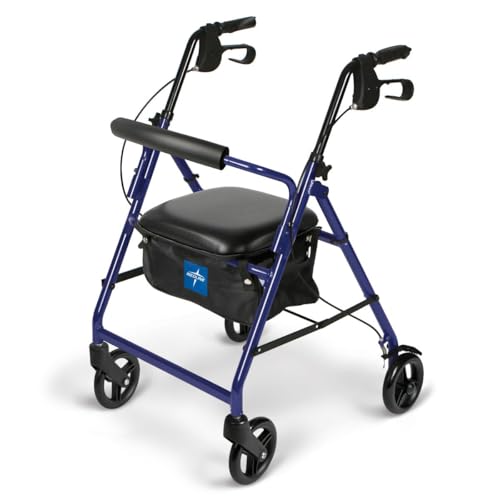
The Medline aluminum rollator is the smart value pick when the person mainly needs support inside the house or on smoother outdoor paths. At about 14 pounds, it is easy to lift, easy to fold, and far less intimidating than heavier frames that promise all-terrain use. For a senior who needs something to move room to room, rest occasionally, and make short outings without carrying a lot of weight, that simplicity is a real advantage.
The brake handles are also friendly for older hands. Push up to slow, push down to lock, and the grip shape is easier on fragile hands than some stiffer brake levers. The seat and backrest are basic but comfortable enough for short rests, and the whole frame is straightforward to adjust. This is the kind of rollator that works well when the person is smaller, the home has tighter spaces, and the goal is steady daily mobility rather than long outdoor walks.
Its limits show up on rough ground. The 6-inch wheels are fine for hard floors, smooth sidewalks, and short parking-lot trips, but they do not smooth out cracks, brick, or rough transitions the way larger wheels can. If outdoor stability is the top priority, move up to one of the larger-wheel picks instead of expecting this frame to do everything.
Why It Helps:
- The lighter frame is easier for seniors and caregivers to lift in and out of the car.
- Brake handles are simple and gentle enough for weaker or more painful hands.
- It fits smaller homes well and does not feel oversized for routine daily use.
What To Keep In Mind:
- Small wheels make rough pavement and bigger transitions feel harsher.
- The 250-pound capacity is enough for many people, but not everyone.
3 / 5 Type Carbon-fiber rollator with seat Weight About 10.6 lb Frame Fully assembled, foldable carbon design Wheels Puncture-proof wheels for indoor and outdoor use Travel Very easy to lift and store Tradeoff Premium price and fewer built-in extras than bulkier rollatorsbyACRE Carbon Ultralight Rollator

The byACRE is for households where lifting the rollator is almost as important as walking with it. At about 10.6 pounds, it changes the daily routine in a way heavier rollators do not. Putting it into a trunk, moving it across a threshold, sliding it into a restaurant corner, or carrying it into an elevator feels much more manageable. For an older spouse or adult child doing most of the loading, that difference is not small.
It also feels more refined than most mobility aids. The frame is smooth, quick to open, and free of the knobs and cable clutter that make many rollators awkward to grab. The wheels handle real outdoor walking better than the low weight suggests, and the posture it encourages often feels more upright and natural. That makes it especially appealing for seniors who still go out often and want a rollator that feels less medical and less tiring to manage.
What you give up is mostly value, not function. It is expensive, and some households will decide that a heavier rollator with more built-in storage makes more sense. But if the normal problem is, "I can walk with a rollator, but I hate dealing with the thing in the car," this is the premium answer.
Why It Helps:
- Extremely low weight makes loading, carrying, and storing far easier than with standard rollators.
- The cleaner frame design is easier to grab without snagging on exposed hardware.
- It still feels stable enough for real indoor and outdoor daily use.
What To Keep In Mind:
- The price is high, so it only makes sense if the low-lift advantage really matters in daily life.
- It is travel-friendly, but not the best value choice for someone who mostly walks inside the house.
4 / 5 Type Rollator walker with higher seat Weight About 16.25 lb Capacity 300 lb Seat Height 22 in Fit Best for people about 5 ft 5 in to 6 ft 1 in Storage Pouch under seat Tradeoff Seat and handle height are too tall for many shorter peopleNOVA Zoom Rollator Walker

The NOVA Zoom stands out because it solves a common fit problem that many seniors do not notice until after the box arrives: the seat is too low and the handles are not quite right. This model sits higher, gives taller users more room, and feels more natural for people who end up hunched over on lower rollators. That alone can make daily walking feel safer and less tiring.
It also handles outdoor use well enough for real errands and neighborhood walking. The 8-inch wheels roll smoothly, the frame feels steady, and the storage pouch is big enough for practical daily items. If the person is taller, more active, or simply wants a rollator that does not feel undersized, this model makes a lot of sense. It is also one of the better choices for someone who wants a higher seat for easier standing after a rest break.
The tradeoff is obvious: shorter users should be cautious here. A seat that is too high is not a small comfort issue. It changes how safe it feels to sit and stand. So this is a strong pick when the fit works, but it is not the one-size-fits-most option that the Nitro is.
Why It Helps:
- The higher seat and roomy fit work better for taller seniors than many standard rollators.
- Outdoor handling is solid without making the frame feel overly heavy.
- Standing up from the seat feels easier when the seat height matches the person.
What To Keep In Mind:
- Shorter users can find the seat and handle position awkward or unsafe.
- It still needs enough hallway and doorway clearance for comfortable daily use.
5 / 5 Type Carbon-fiber version of the Nitro rollator Weight About 14.5 lb Wheels 10 in front casters Fit Adjustable handles and backrest Fold One-hand fold with secure closure Tradeoff Still expensive and only moderately lighter than basic aluminum rollatorsDrive Medical Nitro Elite CF Rollator

The Nitro Elite CF is the pick for people who like the standard Nitro layout but want a little less weight to fight with. It keeps the big front wheels, easy steering, and familiar folding setup of the regular Nitro, but drops enough weight to make car loading and carrying more realistic for smaller seniors or older spouses. If the standard Nitro felt right except for the lift, this is the logical step up.
In use, it feels stable and predictable. It tracks well outdoors, handles mixed surfaces more smoothly than small-wheel rollators, and still folds in a way that feels fast and low-drama. For many households, that combination is exactly what they want: not the absolute lightest rollator, but a lighter version of a proven shape that already works well indoors and out.
The downside is that the price climbs fast once you move into carbon-fiber frames. It is also not light enough to erase every lifting complaint. If the only goal is the lowest possible carry weight, the byACRE makes more sense. This one is better for households that want lighter handling without changing to a completely different rollator design.
Why It Helps:
- It preserves the strong Nitro steering and wheel setup while making trunk loading easier.
- Big front wheels still help with rougher sidewalks, driveway cracks, and outdoor edges.
- The folding design is simple enough for routine errands and appointments.
What To Keep In Mind:
- This is still a premium rollator, not a budget-friendly way to save a little weight.
- If carrying weight is the only priority, even lighter carbon options exist.
How to Choose a Rollator for Indoor and Outdoor Use
Start with where the rollator will actually live. If it will spend 90 percent of its time in a smaller home, width and turning matter more than giant wheels. If it will go to sidewalks, clinics, and parking lots every week, bigger front wheels become much more useful. That is why it helps to read indoor vs. outdoor walkers: tires, width, and turning before you decide that bigger is always better.
Handle height matters more than many people expect. A rollator that is too low pushes the person into a rounded posture, while one that is too high makes braking and body control worse. Before buying, measure the person in shoes and compare that to the handle range. If posture has already been a problem, review proper walker height and posture so the setup is right from the start.
Think about car use early. A rollator that feels fine in the living room may become a burden if somebody has to lift it in and out of a trunk several times a week. Frame weight, fold direction, and whether the rollator stays neatly folded all matter. If the family already struggles with loading mobility equipment, loading mobility devices into vans and cars is worth reading before choosing a heavier frame.
Also remember that four-wheel walkers are faster than standard walkers. That can be a good thing or a bad thing. If the person has weak hand control, poor attention, or trouble slowing down on slopes, a rollator may not be the safer choice just because it is modern and easier to push. Skills like braking, turning, and doorway control still matter. For that reason, training with a walker in tight spaces and negotiating curbs and ramps with a walker or rollator are just as important as the product choice itself.
Finally, do not buy storage, cup holders, and trays before you buy the right frame. Accessories help after the fit and control are right. If that is your next step, compare walker and rollator accessories after you choose the main rollator.
Common Mistakes When Choosing Rollators
- Buying the lightest frame without checking whether the wheels are big enough for the surfaces used every week.
- Choosing by seat comfort alone and ignoring handle height, brake feel, and turning space.
- Assuming a rollator is automatically safer than a standard walker for someone who tends to rush or roll forward too fast.
- Buying a taller model for a shorter person because the seat looks more comfortable.
- Forgetting that someone still has to fold, lift, store, and transport the rollator regularly.
The biggest mistake is solving the wrong problem. Some seniors need more walking support, not a faster walker. Others need a rollator mainly because they fatigue quickly and need a seat. If the real issue is control rather than endurance, a standard walker may still be the better answer. The right mobility aid is the one the person can use safely every single day, not the one with the best-looking feature list.
Frequently Asked Questions About Rollators
Are rollators safer than standard walkers for seniors?
Sometimes, but not always. They are easier to push and usually less tiring, but they also move faster and require better brake control. A standard walker can still be safer for someone who needs more stopping power and slower movement.
What wheel size is best for indoor and outdoor rollator use?
Larger wheels usually handle outdoor cracks, rough sidewalks, and door thresholds better. Smaller wheels are often fine indoors and can keep the frame lighter and simpler.
How do I know if a rollator is too big for my house?
Look at the tightest turns, not just the doorway width. Bathrooms, bedside paths, and kitchen corners are usually where oversized rollators become frustrating.
Is a seat on a rollator really useful?
Yes, especially for seniors who tire easily or wait in clinics, stores, or long hallways. The seat is most helpful when it is the right height for sitting down and standing back up safely.
Can a caregiver push someone while they sit on a rollator?
Not with a standard rollator seat. Most rollators are meant for walking support and short rests, not for transport like a wheelchair. If transport is part of the plan, a combo or transport chair is safer.
What is the easiest rollator to put in a car?
The easiest ones are usually the lighter carbon-fiber or slim-fold models that stay compact when folded. Total weight matters just as much as the folding mechanism.
When should a senior move from a cane to a rollator?
That usually happens when a cane is no longer enough to steady walking, fatigue sets in quickly, or the person needs a seat during outings. The change should still match the person's balance and braking ability.
If the person is starting to tire too fast even with a rollator, compare lightweight transport chairs for longer outings. If the issue is not endurance but a poor fit around thresholds and surface changes, look at threshold ramps for doorways instead of replacing the rollator too quickly.