
As an affiliate, we may earn a commission from qualifying purchases. We get commissions for purchases made through links on this website from Amazon and other third parties.
Choosing the best bed rail is really about choosing the safest way to get into, out of, and around the bed. Some people need a small grab point to push up. Others need a longer rail that also helps prevent rolling toward the edge at night. And sometimes the real fix is not a rail at all. If you are still sorting out the bigger picture, start with the overall transfer plan before shopping bedside hardware.
The wrong bedside rail can create new problems. A model that sits too high above the mattress can jab the thigh during transfers. A soft mattress can let the rail shift. A longer rail can help at night but get in the way during bed changes and caregiving. This guide focuses on five strong home-use options for adults who still do at least part of the transfer themselves, plus the key situations where bed-height setup or a hospital-style bed is the safer move.
If bedside hardware is only part of the problem, the mobility and transfers master guide covers the bigger transfer and room-setup picture.
Quick Picks
- Best Overall: LandTale Bed Assist Rail for a steady, leg-supported handhold that feels planted during daily stand-ups.
- Budget Pick: Able Life Bedside Safety Handle for a low-profile handle that is light, compact, and easier to live with in a small bedroom.
- Premium Pick: Stander Bed Rail Advantage Traveler for travel use, heavier users, and families who want a collapsible rail with higher support capacity.
- Best for Daily Use: Stander EZ Adjust Bed Rail for sleepers who want a longer nighttime rail plus a fold-down design for care access.
- Best Alternative: Carex Adult Bed Rail for people who want a taller bedside support handle more than a compact assist bar.
Best Overall
Budget Pick
Premium Pick
Best for Daily Use
Best Alternative
Comparison Table
| Product | Best For | Key Strength | Main Tradeoff |
|---|---|---|---|
| LandTale Bed Assist Rail | Daily stand-up help on standard beds | Support leg and middle bar make it feel planted | Does not fit very low platform beds |
| Able Life Bedside Safety Handle | Small rooms and simple transfers | Light, low-profile handle with adjustable height | Not built for adjustable beds or very soft mattresses |
| Stander Bed Rail Advantage Traveler | Travel and higher body weight | Collapsible rail with 400 lb support | Strap setup still takes real effort |
| Stander EZ Adjust Bed Rail | Nighttime edge coverage plus daytime access | Rail extends longer and folds down for caregivers | Can shift mattresses or become awkward on low beds |
| Carex Adult Bed Rail | Taller grab point and simple bedside support | Height-adjustable 2-in-1 support rail design | Better as a support rail than as a true full guard rail |
Quick Decision Guide
- Pick the LandTale if you want a bedside rail that feels steady when someone pushes down hard to sit up or stand.
- Pick the Able Life if the room is tight, the bed is standard height, and you want a handle that does not look or feel bulky.
- Pick the Traveler if you need a rail that can collapse for trips or you want a sturdier option for a heavier adult.
- Pick the EZ Adjust if rolling toward the edge at night is part of the problem and the caregiver still needs fold-down access during the day.
- Pick the Carex if the person wants a taller bedside grab point and does not need a long nighttime barrier.
- Skip this whole category and look at patient lifts and slings if the person cannot help with the transfer, cannot bear enough weight to stand, or is sliding toward the edge of the bed without being able to help.
- If the person gets up confused at night or wanders, dementia wandering and transfer resistance is usually a better place to start than buying a bigger rail and hoping for the best.
Best Bed Rails and Alternatives: Top Picks
1 / 5 Focus Compact bedside assist rail with support leg Fit Beds 12 to 19 in from floor to frame and mattresses over 5 in Support Middle bar plus foam-padded handle Use Case Daily stand-up help after surgery or with mild weakness Tradeoff Not a fit for low platform beds or tight frame gapsLandTale Bed Assist Rail
The LandTale is the easiest all-around pick for families who want a bedside rail that feels planted instead of wobbly. The support leg matters here. Instead of relying only on the under-mattress base, this model adds a leg to the floor and a middle crossbar to stiffen the frame. That makes it a strong match for someone who still does their own sit-up and stand but needs a firm handhold to finish the move.
In daily use, this rail works best on regular beds with 12 to 19 inches of clearance from the floor to the frame and a mattress taller than 5 inches. The foam handle is comfortable on the hand, the three-way adjustment gives you more setup flexibility than most compact rails, and assembly is simple enough for most households. The main limit is bed fit. On very low platform beds or tight frame-and-mattress setups, the base can be hard to place cleanly, and this is not the rail to buy if you need broad nighttime edge coverage.
Why It Helps:
- The floor support leg gives the rail a more planted feel during hard push-offs.
- The middle bar adds useful stiffness instead of leaving the handle to flex on its own.
- Three adjustment points make it easier to tune the fit to the person and bed height.
What To Keep In Mind:
- It is not made for beds with very low frame clearance.
- The compact rail shape helps with transfers more than full edge protection.
2 / 5 Focus Low-profile assist handle for everyday bedside transfers Safety ASTM F3186-17 portable bed rail standard Fit Traditional or platform beds with 6 to 14 in mattresses Support Height-adjustable handle up to 20 in and 300 lb capacity Tradeoff No adjustable-bed compatibility and limited nighttime barrierAble Life Bedside Safety Handle
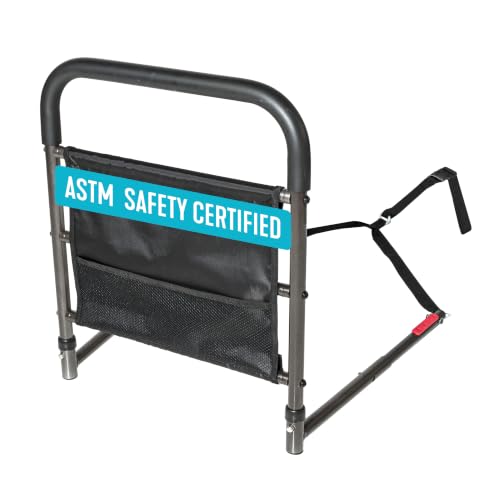
The Able Life Bedside Safety Handle is the smart budget pick for people who do not want a large rail dominating the side of the bed. It is smaller, lighter, and less obtrusive than the longer rails in this roundup, but it still gives a real padded handhold for sitting up, pivoting, and standing. The handle adjusts from 13 to 20 inches tall, and the unit fits most twin through California king traditional or platform beds with mattresses between 6 and 14 inches.
This is the model that makes the most sense for a small bedroom, a guest room, or a travel backup because it keeps the setup simple and the frame light. It also has a four-pocket organizer that is actually useful for glasses, a phone, or a remote. The tradeoff is that it must be strapped correctly to the frame, and the setup is less pleasant on heavy beds pushed against a wall. It is also off the table for adjustable beds and extra-soft mattresses, and it is better as a transfer handle than as a roll-off barrier.
Why It Helps:
- The low-profile shape is easier to live with in tight rooms.
- The adjustable handle height helps match the rail to the mattress and the person’s reach.
- The light frame packs and stores more easily than longer rails.
What To Keep In Mind:
- The strap installation is the annoying part and should not be skipped.
- It helps with standing and repositioning, but it does not provide much edge coverage.
3 / 5 Focus Portable collapsible rail for home and travel Safety ASTM F3186-17 portable bed rail standard Support Padded handle with 400 lb capacity Fit Regular beds with 6 to 16 in mattresses Tradeoff Still needs careful strap setup and is not for adjustable bedsStander Bed Rail Advantage Traveler
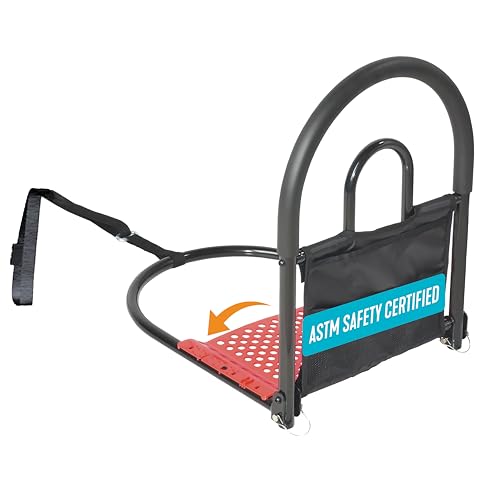
The Stander Bed Rail Advantage Traveler earns the premium spot because it does two jobs well that most bedside rails only do halfway. First, it gives a sturdy padded handhold with bariatric support up to 400 pounds. Second, it collapses for travel or storage without turning into a complicated project. If you need one rail that can stay at home most of the time but also ride along to a hotel, rehab stay, or family visit, this is the cleanest solution in the group.
It is still a compact rail, not a long side rail, so think of it as a standing and repositioning aid first. The pockets are handy, the frame stays fairly unobtrusive, and the portability is real enough that families actually use it away from home. The downside is the same one that shows up on many under-mattress rails: you still need to route and tighten the safety strap correctly, which can be clumsy on heavy beds, beds against walls, or setups where the mattress and frame are hard to lift.
Why It Helps:
- The collapsible frame makes it the best choice for travel and temporary setups.
- The 400 lb support capacity gives it more headroom than most compact rails.
- The padded handle feels secure for hard morning stand-ups.
What To Keep In Mind:
- You still need a proper bed-frame strap install, not a shortcut.
- It is a transfer aid, not the best pick if you want a long guard rail through the night.
4 / 5 Focus Longer adjustable rail for night protection and transfers Safety ASTM F3186-17 with 300 lb support Range Rail adjusts from 26 to 34 to 42 in Caregiver Folds down 180 degrees for linen changes and bedside care Tradeoff Can shift mattresses or create clearance issues on some bedsStander EZ Adjust Bed Rail
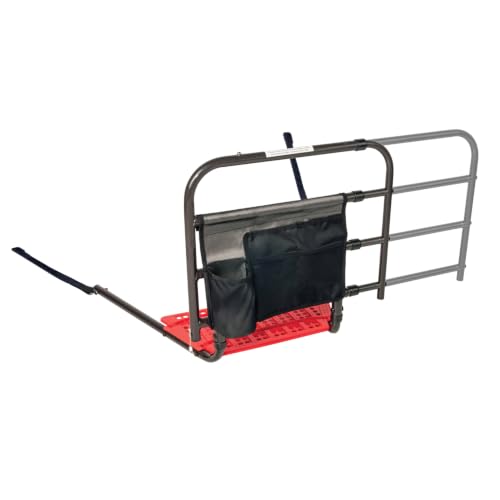
The EZ Adjust is the pick for families who want more than a simple stand-assist handle. Its rail can extend to 26, 34, or 42 inches, which gives more nighttime edge coverage for sleepers who drift toward the side of the bed. At the same time, it still works as a sturdy support point for bed entry, exit, and repositioning. That combination makes it especially useful when the same person needs both transfer help during the day and extra reassurance while sleeping.
This is also the most caregiver-friendly design here because the rail folds down 180 degrees and tucks to the side for bed changes or hands-on care. That convenience is real, but bed fit matters a lot. On some slat beds, lower beds, or thinner mattresses, the rail can sit awkwardly, wobble more than expected, or become something you bump into when folded down. It can also nudge the mattress over time, so this is best on a stable homestyle bed where the geometry works cleanly.
Why It Helps:
- The longer adjustable rail adds real nighttime edge coverage.
- Folding the rail down makes caregiving and sheet changes easier.
- It balances transfer support with sleep-time protection better than compact handle-only models.
What To Keep In Mind:
- It takes up more space and asks more from the bed setup.
- Some beds let the frame shift the mattress or leave the folded rail in the way.
5 / 5 Focus Tall 2-in-1 bedside support rail and hand rail Fit Twin to king beds on either side Range Height adjusts from 32 to 44 in Support 250 lb capacity with strap-mounted frame and mesh pouch Tradeoff Acts more like a tall grab point than a full side railCarex Adult Bed Rail

The Carex is the best alternative pick because it solves a slightly different problem from the low-profile assist handles. It gives a taller, more visible rail that doubles as a hand rail for getting in and out of bed. That makes it a good fit for people who want something easier to spot and reach when they pull upright, especially if they like a higher grab point than compact bedside handles usually provide.
It is also one of the simpler options to assemble because no tools are required, and it fits either side of twin through king beds with a strap to the frame. The height adjustment from 32 to 44 inches gives plenty of room to dial in the grip point. The tradeoff is that this model makes more sense as a support rail than as a true long containment rail. If your main concern is someone rolling hard toward the edge at night, the EZ Adjust covers more surface. If the goal is standing support and a taller bedside grab point, the Carex is the better fit.
Why It Helps:
- The taller frame is easier for some people to spot and reach.
- The 2-in-1 design works well for people who mostly want bedside standing help.
- Tool-free assembly keeps setup simple for home use.
What To Keep In Mind:
- It is better for support than for broad nighttime edge coverage.
- The mesh pouch is convenient, but the real value is the grab point, not storage.
How to Choose Bed Rails and Alternatives
Start with the exact task that feels unsafe.
If the problem is sitting up from flat, you want a firm handhold in the right spot. If the problem is sliding toward the edge at night, you want more rail length and better mattress fit.
If the problem is that the person cannot help enough to stand, then a rail is the wrong category. In that case, go back to a broader transfer plan and compare lift-based options, not just grab bars.
Next, check bed compatibility before you think about features. Mattress thickness, bed height, bed-frame style, and under-mattress clearance matter more than a pouch or a fold-down hinge. Adjustable beds are where families get burned most often. Many popular rails in this category are made for regular homestyle beds, not moving deck systems. If the bed is already part of the problem, solve that first with a better bed setup instead of trying to force a standard rail to work.
Then think about how the rail will be used in real life. A caregiver who changes bedding, helps with toileting, or assists with turning may hate a long fixed rail that blocks access. If that sounds familiar, read repositioning in bed without lifting because hand placement, body position, and bed access all matter as much as the rail itself. A fold-down rail can be worth the extra bulk if you are working from bedside several times a day.
Finally, be honest about what counts as “safer” for your household. Safer does not always mean bigger. A small handle that fits the bed correctly and gets used every day is better than a long rail that shifts, crowds the bed, or creates a gap problem. And if bathroom transfers are part of the same struggle, do not try to make one bedside product solve every room. A tub or shower bench transfer setup solves a different transfer job and usually does it much better.
Common Mistakes When Choosing Bed Rails and Alternatives
- Buying the longest rail available when the person really just needs a stable handhold to push up.
- Ignoring mattress thickness, bed-frame height, or whether the bed is adjustable before ordering.
- Skipping the safety strap because the rail “seems secure enough” during a quick test.
- Using a bed rail to try to lift someone who cannot help with the transfer.
- Treating a rail like a fix for confusion, wandering, or unsafe nighttime walking.
The biggest mistake is trying to solve a care-level problem with a hardware upgrade. If the person cannot follow cues, has major one-sided weakness, or keeps sliding lower in bed, a bedside rail alone will not make the transfer safe. That is when you step back and change the whole plan, not just the product on the bedside.
Frequently Asked Questions About Bed Rails and Alternatives
Are bed rails safe for seniors?
Bed rails can be safe when they match the bed, the mattress, and the person’s actual transfer ability. Problems show up when the rail leaves a bad gap, shifts on a soft mattress, or gets used as a restraint instead of a support aid.
Can you use a bed rail on an adjustable bed?
Usually not with the standard under-mattress rails in this guide. Most of these models are made for regular homestyle beds, and several specifically exclude adjustable beds. Always check the bed type before you buy.
What is the difference between a bed rail and a bed assist handle?
A bed assist handle is smaller and mainly helps with sitting up, pivoting, and standing. A longer bed rail adds more edge coverage for sleep-time reassurance, but it is bulkier and can get in the caregiver’s way.
How high should a bed rail be above the mattress?
High enough to give a solid handhold without leaving an awkward gap or pressing into the leg during transfers. The right height depends on mattress thickness, bed height, and whether the person is pushing up, rolling, or both.
When is a bed rail not enough?
A bed rail is not enough when the person cannot bear enough weight to help, cannot follow transfer cues, or needs full lifting support. In those cases, a lift, different bed setup, or a bigger transfer plan is the safer answer.
Can a bed rail help after surgery or stroke?
Yes, if the person can still follow directions and use the stronger side to help with the move. The handle position, bed height, and the side where the rail sits all matter more than buying the biggest rail.
If bedside safety problems keep spilling into the rest of the house, think about bedside commode setup to cut risky nighttime walks, review toilet transfer setup and errors for the next sit-to-stand step, compare lift-chair recliner safety and fit for easier daytime seat transfers, and add grab-bar placement for toilet and tub transfers for wet-floor risk that a bed rail cannot touch.