As an affiliate, we may earn a commission from qualifying purchases. We get commissions for purchases made through links on this website from Amazon and other third parties.
Getting a ride is easy right up until the vehicle, the curb, and the mobility device do not match. That is when a simple trip turns into a rushed transfer, a driver who cannot fit the device, or a passenger trying to stand in the street while everyone feels pressured to hurry.
The safest transportation choice is the one that fits both the person and the equipment. Some riders only need space for a folding walker. Others can transfer but need room for a rigid wheelchair. Others should not be transferring out of a power chair at all and need a ramp or lift-equipped vehicle from the start. If you are still sorting out the device side of that decision, compare mobility scooter vs. power wheelchair and mobility equipment rental near you.
If curbside rides are only one part of the route, the mobility and transfers master guide helps connect the bigger transfer and equipment plan.
Why This Matters
Transportation problems create risk fast because they add:
- time pressure
- traffic nearby
- weather
- unfamiliar helpers
- curbs, slopes, and uneven surfaces
The wrong ride setup can lead to:
- a device that will not fit
- a transfer attempted too quickly
- standing without enough support while loading
- a pickup point with no curb cut or safe waiting area
- a missed medical visit or delayed discharge home
This matters even more when the rider:
- uses a power chair or non-folding wheelchair
- needs hands-on transfer help
- gets fatigued easily
- has poor balance in tight spaces
- cannot tolerate being left waiting outdoors
If public outings are already hard once you arrive, also see public restroom transfers in tight spaces and hotel room mobility checks and requests to make.
Key Factors That Change the Decision
The type of device
A cane or folding walker is a very different transportation problem from a rigid manual chair, and both are very different from a power wheelchair or scooter.
Think in these categories:
- foldable device that can be stored after transfer
- rigid or heavier device that needs extra cargo space
- non-folding power device that usually needs a ramp, lift, and securement
Do not assume a larger car is automatically accessible. More cargo room is not the same as a wheelchair-accessible vehicle.
Whether the rider can transfer safely
Some riders can transfer into a car seat with minimal help. Others need a stable grab point, extra time, and a careful curbside setup. Others should remain seated in their wheelchair during transport.
That single question changes everything:
- if the rider can transfer safely, a standard car or larger vehicle may work
- if the rider cannot transfer safely, the ride must match the chair, not the other way around
The pickup and dropoff environment
Even the right vehicle can become a bad plan at the wrong curb. A safe loading zone matters more than people think. Look for:
- level pavement
- enough room to open the door fully
- a curb cut or ramp nearby
- low traffic pressure
- lighting if the ride is at night
If outdoor surfaces are part of the problem, pair this with ramps and thresholds and rain and wet floors traction and towel strategy.
Local availability
Accessible rideshare options and accessible taxis vary widely by city. In some places, wheelchair-accessible rides are built into the app. In others, the safer answer is an accessible taxi, paratransit, or medical transportation service booked separately.
For that reason, transportation planning works better when it includes a backup instead of assuming the app will always show the needed vehicle.
How to Use, Choose, or Set It Up Safely
Start with the right vehicle question
Before booking, answer these four questions:
- What device is the rider bringing?
- Can the rider transfer into a regular vehicle seat?
- Does the device fold, come apart, or stay rigid?
- How much hands-on help is safe and realistic at the curb?
If the rider uses a folding walker or folding wheelchair and can transfer safely, a standard ride or larger vehicle may work. If the rider uses a non-folding power wheelchair or should stay seated in the chair, look for a wheelchair-accessible vehicle or accessible taxi instead.
Match the ride type to the real need
In practical terms:
- standard rides are for riders who can transfer and whose device fits safely
- larger rides can help when a manual chair or scooter parts need more cargo room
- assist-style services can help riders who need extra time and light physical assistance but do not need a ramp or lift
- wheelchair-accessible vehicles are the right choice when the rider remains in the wheelchair or uses a non-folding powered device
If the only plan is "maybe the driver can make it work," the plan is too weak.
Use the app notes and messages before the driver arrives
Keep the note short and useful. A good message sounds like:
- "Pickup at main entrance by the curb cut."
- "Folding wheelchair, rider transfers to seat."
- "Power wheelchair user, needs accessible van."
The goal is not to share a diagnosis. The goal is to prevent a mismatch at the curb.
Set up the pickup like a transfer, not a surprise
Before the car arrives:
- confirm the pickup pin is exact
- move to the safest loading area you can reach
- have bags, phone, keys, and payment ready
- lock wheelchair brakes before transferring if applicable
- fold or prepare removable parts only when it is safe to do so
If device loading is the hard part, review loading mobility devices into vans and cars before the next trip.
Do not rush the transfer
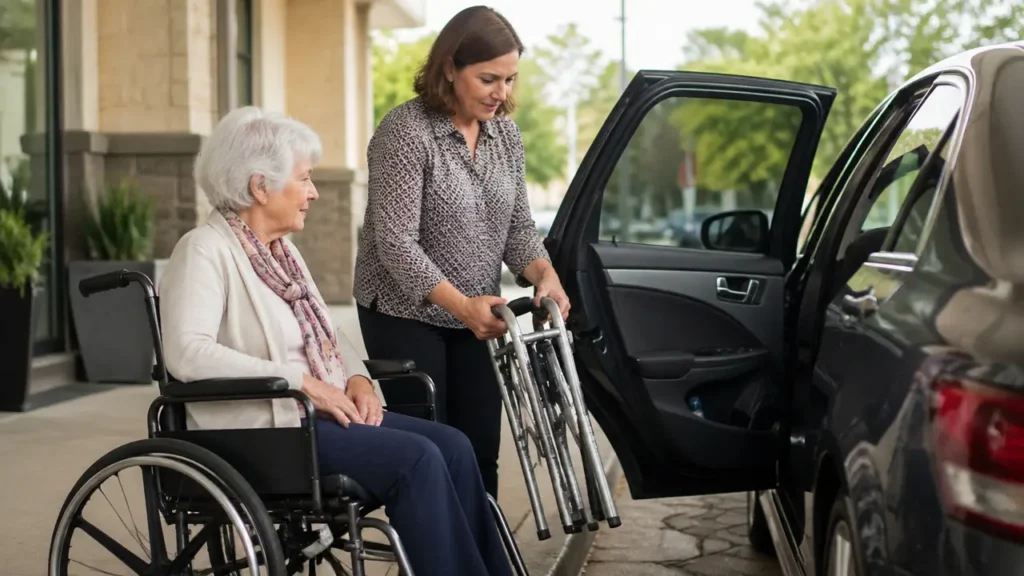
The biggest mistake is letting the arrival of the car force a fast, sloppy transfer. A safer curbside routine is:
- position the rider at the safest side of the vehicle
- confirm feet, brakes, and hand placement
- transfer with the same method you would use anywhere else
- load the device only after the rider is settled
- confirm nothing blocks the driver or shifts loose during travel
Nobody should be lifting the rider into the seat. Assistance can mean opening doors, stabilizing a walker, or helping store a foldable device. It should not mean dead-lifting a person.
Have a backup for appointments and long trips
For airports, specialty clinics, or time-sensitive appointments:
- reserve early when possible
- confirm the exact pickup entrance
- keep a second transportation option in mind
- allow extra time for loading and unloading
If air travel is part of the bigger plan, continue with airplane travel with a wheelchair: what to expect.
Common Mistakes and Red Flags
Common mistakes:
- assuming a bigger vehicle is automatically wheelchair-accessible
- requesting a regular ride for a non-folding power chair
- waiting at a curb with no safe loading zone
- expecting the driver to improvise a lift
- not checking whether the pickup pin is accurate
- carrying too many loose bags during the transfer
Red flags that should change the plan:
- the rider cannot transfer without major physical help
- the device clearly will not fit safely
- the driver seems unsure about how the service works
- the pickup area is sloped, crowded, or in active traffic
- the rider becomes rushed, short of breath, or unsteady before getting in
When those red flags show up, rescheduling is safer than forcing the transfer.
When to Get More Help
Get more help when:
- rides are being missed because the current transportation setup keeps failing
- the rider's transfer ability has changed
- a power chair or scooter now needs true accessible transport
- caregivers are getting hurt trying to load equipment
- community outings are shrinking because transportation has become too stressful
That is the point to ask rehab, social work, case management, or local disability transportation services for a more durable plan instead of relying on trial and error.
Frequently Asked Questions
Can I use a regular rideshare if I have a folding wheelchair?
Sometimes, yes, if you can transfer safely into the seat and the folded wheelchair fits securely in the vehicle.
Is an assist-style rideshare the same as a wheelchair-accessible vehicle?
No. Assist-style rides may help with door-to-door support and folding devices, but they may not have ramps or lifts.
Should a driver lift me into the car?
No. Assistance should not involve manually lifting your body weight into the seat.
What if a wheelchair-accessible vehicle is not available in my area?
Look for an accessible taxi, paratransit, medical transportation, or another service that is built for the chair you use.
Do I need to tell the driver my diagnosis?
No. It is usually enough to explain the device and the pickup needs, not the medical condition behind them.
Is Uber XL or a large rideshare enough for a power wheelchair?
Usually not. Extra cargo room is not the same as having a ramp, lift, and securement for a non-folding powered chair.
What makes a pickup point safer?
A safer pickup point has level ground, enough room to open doors, low traffic pressure, and a curb cut or ramp nearby when needed.
If transportation is becoming part of a larger mobility-planning problem, continue with loading mobility devices into vans and cars, public restroom transfers in tight spaces, and hotel room mobility checks and requests to make.