As an affiliate, we may earn a commission from qualifying purchases. We get commissions for purchases made through links on this website from Amazon and other third parties.
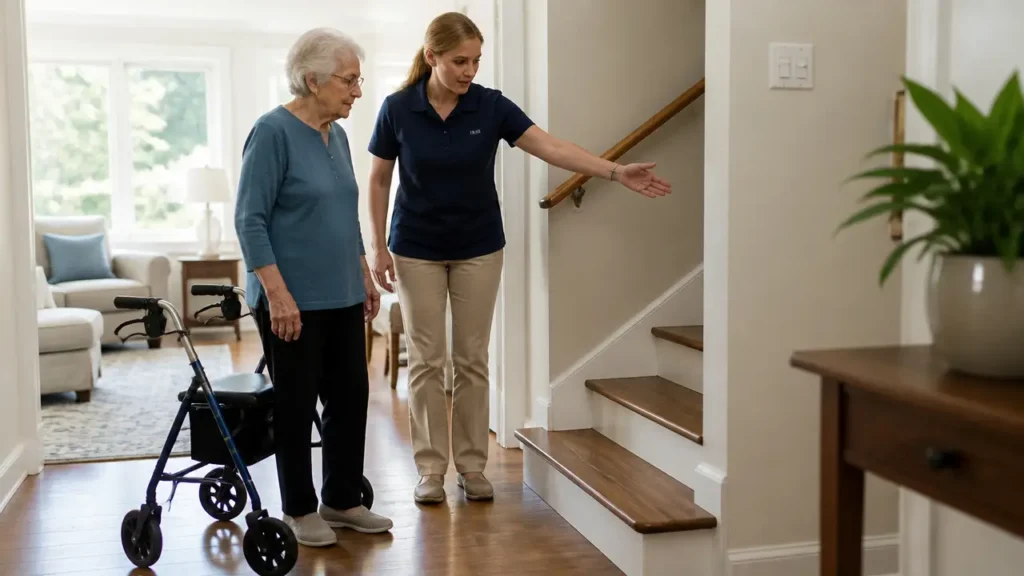
The safest way to use a walker on stairs is usually not to use the walker on the stairs at all.
That sounds backward, but it is the truth most people need to hear first. Walkers are made for level ground. Stairs need a handrail, stable foot placement, and a different movement pattern. If you try to climb stairs with a wheeled walker in normal walking position, the device can tip, roll, or pull you off balance. For the bigger picture on home mobility decisions, start with the mobility and transfers master guide.
First: Know Which Walker You Have
The type of walker matters.
Never use a rollator on stairs
A rollator with wheels and a seat should not be used on stairs. That includes four-wheel rollators and most three-wheel rollators.
The brakes are made for flat ground, not for holding a device steady on steps. Even a short porch step can be enough to create a dangerous roll or tip. If you are still deciding between walker types, compare rollator vs. standard walker first.
A standard walker is different, but still needs caution
A basic walker without wheels may sometimes be carried folded while the person uses the handrail, but only if a clinician has shown that method and the person has the balance, grip, and judgment for it.
That is not the same as climbing with the walker open in front of you like you do on flat ground.
When Stairs May Still Be Possible
Some people who use a walker on level surfaces can still manage stairs in a limited way.
That is more likely when they:
- can hold a handrail well
- can place one foot securely on each step
- can follow a clear step sequence
- have enough balance to pause between steps
- are not carrying laundry, bags, or other items
If those things are not true, stairs may not be the right choice right now. A second walker on the other floor, help from another person, a different living setup, or a stair lift may be safer than “making do.”
The Safest General Rule
If you normally use a walker and must deal with stairs, the usual safer plan is:
- park the walker at the top or bottom
- use the handrail
- use a cane or folded walker only if therapy has cleared that method
- go one step at a time
That is the core answer for most homes and public places.
If the stair area is poorly lit, has shallow rails, or has open edges, fix that problem too. The stairway itself often needs work before any technique will feel safe. Start with handrails, edge guards, and raised lip safety and landings, railings, and visual markers for depth perception.
Step-by-Step: Rail Plus Cane or Folded Walker
Use this only if a PT or OT has said this is appropriate for the person.
1. Set up before the first step
Make sure the rail is sturdy and continuous. Turn on the lights. Remove loose items from the stairs and landing. Stop if the surface is wet, cluttered, or visually confusing.
If a cane is part of the plan, it should already be the right height. If not, review how to size and fit a cane correctly.
2. Hold the rail with the stronger, safer hand
The rail is the main support. The cane or folded walker is secondary.
If carrying a folded standard walker, grip it so it does not swing into the legs or catch on the steps. Some people do better with a cane on stairs and keep the walker waiting at the destination instead of carrying it.
3. Go up with the stronger leg first
The usual stair sequence is:
- stronger leg up first
- weaker or painful leg next
- cane or folded walker comes with the weaker side as instructed
People often remember this as “up with the good.”
Pause on each step if needed. There is no prize for doing the flight in one smooth run.
4. Go down with the weaker leg first
Going down usually reverses the sequence:
- cane or secondary support goes down first if used
- weaker or painful leg goes down next
- stronger leg follows
That is the “down with the bad” reminder many therapists teach.
The rail stays active the whole time. Do not let go of it just to reposition the device faster.
5. Use the landing to reset
A landing is where many near-falls happen because people turn too quickly.
Stop fully. Get both feet stable. Then turn in small steps instead of twisting. If landings feel harder than the stairs themselves, the related guide to training with a walker in doorways and tight spaces helps with that turning problem.
What Not to Do
Do not:
- use a rollator on stairs
- drag a walker up or down behind you
- carry a bulky walker with both hands and skip the rail
- rush because someone is waiting behind you
- carry bags, laundry, or food while doing the stairs
- use stairs in socks on smooth treads
- improvise on unfamiliar stairs if you already feel shaky
Another mistake is trying to solve a stair problem with willpower when the real issue is equipment mismatch. A walker that works well on flat ground may still be the wrong tool for a home with daily stairs. If that sounds familiar, compare indoor and outdoor walker differences and negotiating curbs and ramps with a walker or rollator.
What About Going Down Backward?
Some people do find that going down backward reduces knee pain for a short time.
That does not make it the best default plan. It changes the visual and balance demands, and it is a poor long-term strategy for most people. If a therapist has shown it for a very specific situation, follow that instruction. Otherwise, stick with forward stair technique, the handrail, and one step at a time.
Public Stairs, Porch Steps, and Unfamiliar Entrances
Many stair problems happen away from home.
A hotel, church, medical office, restaurant patio, or front porch may have only one rail, poor lighting, wet concrete, or a narrow landing that makes the usual routine much harder. That is why it helps to scan the setup before committing.
Look for:
- whether there is a solid rail the whole way
- whether the tread edges are easy to see
- whether the surface is wet, icy, or cluttered
- whether there is a ramp or step-free entrance nearby
- whether you have enough room at the top or bottom to park the walker safely
If the answer looks shaky, do not let pride make the decision. Ask for the alternate entrance, use the ramp, or get help moving the walker while you use the rail. For travel situations, hotel room mobility checks and curb or ramp negotiation with a walker or rollator are the most relevant follow-ups.
If a Caregiver Is Helping on the Stairs
The helper’s job is to guard, not to pull.
They should stay close enough to steady the person if needed without blocking the rail, crowding the feet, or creating a second hazard on the steps. Exact guarding position depends on which side is weak, which hand uses the rail, and how the therapist taught the move.
What does not help:
- standing so close that the person cannot place the feet
- grabbing the arms and throwing balance off
- carrying the walker and a bag at the same time
- talking the person into “just trying it” when they already look unsafe
If the person needs so much hands-on help that the helper is doing half the work, the stair plan is probably too risky and needs to change.
Better Alternatives When Stairs Are a Daily Problem
If the person is facing stairs every day and the current method already feels sketchy, do not keep normalizing it.
Safer alternatives can include:
- one walker upstairs and one downstairs
- using a cane only on the stairs if cleared
- changing sleeping or bathing location temporarily
- adding a second rail
- using a stair lift
- getting help from another person during stair use
A home with only one good rail and poor lighting is asking too much from someone who already needs a walker on flat ground.
If the real challenge is outdoor entry rather than a full staircase, the better guide may be negotiating curbs and ramps with a walker or rollator.
When Stairs Are Not Safe Enough
Stairs are probably not safe right now if the person:
- cannot use a rail reliably
- needs both hands just to manage the walker
- freezes, panics, or gets dizzy on steps
- has frequent near-falls
- cannot lift the feet well enough to clear each step
- becomes unsafe when carrying even a light object
That does not mean giving up. It means the current plan is wrong and needs to change. A safer route, home modification, or therapist-led stair plan is better than one more close call.
If Someone Falls or Gets Stuck Midway
Do not try to drag them the rest of the way up or down.
If they can sit safely on a step or landing, get them stable first and call for help. If there is injury, head impact, severe pain, or clear inability to move, get emergency help. For planning before that ever happens, review what to do if someone falls midway on stairs.
Frequently Asked Questions
Can I use a rollator on stairs if I lock the brakes?
No. Rollators should not be used on stairs, even with the brakes locked.
Can I climb stairs with a standard walker?
Not in the normal open-walker walking position. Some people may use the rail and carry a folded walker if a clinician has cleared that method.
Should I use a cane on stairs instead of a walker?
Sometimes, yes. That is a common stair workaround when the walker is parked at the top or bottom, but it should be cleared and practiced first.
What is the basic stair sequence?
Going up, lead with the stronger leg. Going down, lead with the weaker or painful leg.
What if there is only one handrail?
That makes the stairs harder and sometimes unsafe. A second rail or a different plan may be needed.
Is it okay to carry the walker while I use both hands on the rail?
No. If both hands are needed on the rail, carrying the walker is not a safe plan.
When should I stop trying stairs altogether?
If you keep having near-falls, cannot control the device, or cannot use the rail safely, the stair plan needs to change right away.
If stairs are only one part of the mobility problem, the best follow-ups are rollator vs. standard walker, proper walker height and posture, and negotiating curbs and ramps with a walker or rollator. If the home stairway itself is part of the problem, review handrails and edge safety and stair emergency planning.