As an affiliate, we may earn a commission from qualifying purchases. We get commissions for purchases made through links on this website from Amazon and other third parties.
An indoor walker and an outdoor walker often need different things.
Inside the home, the biggest problem is usually getting through doorways, around furniture, and into bathrooms without scraping walls or getting stuck mid-turn. Outside, the bigger problem is cracks, rough pavement, thresholds, grass, and longer distances. That is why a walker that feels smooth outdoors can feel bulky and frustrating in a small home, while a compact indoor model can feel underbuilt on uneven ground. If you want the broader decision tree for mobility devices, begin with the mobility and transfers master guide.
What Each Option Means
An indoor walker or indoor-focused rollator is built around maneuverability.
That usually means:
- a narrower frame
- a tighter turning radius
- smaller wheels
- lighter weight
- easier handling in small rooms and hallways
For some people, that points to a compact four-wheel rollator. For others, especially in very tight apartments or older homes, it may point to a three-wheel rollator because three-wheel models are narrower and turn more tightly. The tradeoff is support. Three-wheel rollators are agile, but they are less stable and usually do not include a seat.
An outdoor walker or outdoor-focused rollator is built around surface handling and endurance. That usually means:
- larger wheels
- a wider, steadier base
- more stability on uneven ground
- a seat for rest breaks
- a heavier frame
Large wheels matter outside because they roll more easily over cracks, rough sidewalks, and short lips in the pavement. Many sources put indoor wheels in the 6- to 7-inch range and larger outdoor wheels at 8 inches and above.
It is also important to separate walkers from rollators. A standard or two-wheel walker gives more weight-bearing support than a rollator. If someone needs to lean hard on the device, a rollator may be the wrong category no matter how good the wheel size looks on paper. That is the main safety point behind rollator vs. standard walker and 2-wheel vs. 4-wheel walkers.
The Biggest Safety and Use Differences
The first difference is turning.
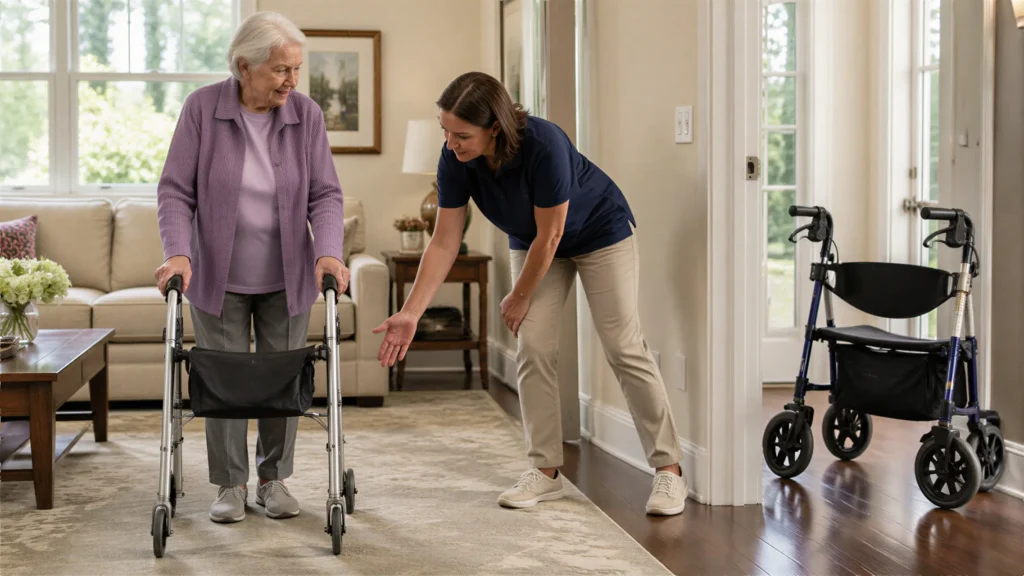
Indoors, tighter turns usually matter more than top-end stability. You are navigating bathroom doors, kitchen corners, bed-to-chair routes, and hallway traffic. A narrower frame helps, and a three-wheel or compact four-wheel rollator often feels easier in those spaces. Some compact indoor models are about 18 to 19 inches wide, and many guides suggest choosing a walker that is at least 2 to 4 inches narrower than the narrowest spot in the home.
The second difference is what the wheels are actually trying to do.
Smaller wheels are quicker indoors because they pivot easily and do not fight tight corners. Larger wheels do better outdoors because they bridge surface irregularities better and roll with less jarring over cracks and rough terrain. If you mainly walk in the kitchen, bathroom, bedroom, and hallway, smaller wheels usually feel more controlled. If you take neighborhood walks or deal with sidewalks, curb cuts, or bumpy parking lots, bigger wheels make more sense.
The third difference is stability.
Three-wheel rollators are lighter and more agile, but they give up stability and usually do not include a seat. Four-wheel rollators are wider and heavier, but they usually feel steadier and give the person a place to rest. That matters for people who tire easily or get short of breath. It also matters for caregivers because a seat changes the whole pacing plan for longer outings.
The fourth difference is how much support the device can safely provide.
Rollators work best for people who need balance support and maybe endurance support, but not heavy weight-bearing. If someone leans hard into the handles, freezes, or cannot manage the brakes reliably, the best indoor-outdoor split may actually be a standard walker indoors and a different device outdoors. That is often a better answer than forcing one rollator to do everything.
Who Each Option Fits Best
An indoor-focused walker or rollator fits best when the person:
- lives in a smaller home, apartment, or older house with narrow passages
- needs sharp turns around furniture
- does most walking on flat indoor floors
- can manage smaller wheels and lighter frames
- values agility more than a built-in rest seat
A compact four-wheel rollator is often the middle ground. It keeps some stability and may still offer a seat. A three-wheel rollator is more of a specialist option for people who are fairly steady, do not need much weight through the device, and need tight turns more than they need a seat.
An outdoor-focused rollator fits best when the person:
- walks farther outside than inside
- needs a seat for planned rest breaks
- deals with sidewalks, driveway cracks, grass edges, or rough pavement
- benefits from a wider, steadier base
- has enough hand strength and coordination to use the brakes reliably
If the person needs heavy support or leans substantially into the device, a rollator may not fit at all. In that case, review mobility aids: walkers, canes, and rollators, proper walker height and posture, and training with a walker in doorways and tight spaces before buying wider or more rugged gear.
Many families do best with two setups instead of one compromise device:
- a smaller indoor walker for daily home routes
- a larger outdoor rollator for errands and longer walks
That is especially helpful when the home is tight but the person still enjoys outdoor activity.
Setup and Home Considerations
Start with measurements, not marketing.
Measure:
- the narrowest doorway
- the tightest hall turn
- the bathroom entry
- the space beside the bed and favorite chair
- the trunk or back seat if the walker travels by car
Then compare those numbers with the walker's full width and folded size. A lot of buyer regret comes from skipping that step.
Handle height matters too. If the handles are too low, the person hunches and loses posture. If they are too high, the shoulders elevate and control gets worse. Adjust height before judging the device. If the rollator has a seat, seat height also matters. The person should be able to sit with feet flat and stand without feeling trapped too low.
For indoor use, clear the route so the best walker does not have to fight bad flooring. Remove clutter, flatten rug edges, and practice turns in an open hallway before using the device while carrying items. If the real issue is doorway or turning technique, negotiating curbs and ramps is less relevant than tight-space walker training, but both help show how control changes with terrain.
For outdoor use, check the whole route, not just the walker. The same person may do well on smooth sidewalks and poorly on grass, gravel, steep curb ramps, or wet pavement. Larger wheels help, but they do not make every terrain safe. If outdoor walking includes curbs, sloped driveways, or short ramps, practice on a calm day before trying a busy outing.
Common Mistakes
One mistake is buying the widest, biggest all-terrain rollator for someone who mostly moves around a small home.
Outside, that frame may feel solid. Inside, it may bang into walls, get stuck in bathroom doors, and make every turn exhausting. The frustration can lead the person to stop using it.
Another mistake is buying the smallest, nimblest model for someone who really needs more support. Three-wheel rollators are appealing because they turn well, but they are not the safest choice for someone with significant balance problems or a need for heavy weight-bearing support.
Families also underestimate brake demands. A rollator is only safe if the person can squeeze, control, and lock the brakes when needed. If they cannot do that reliably, a less mobile device may actually be safer.
Other common errors include:
- not measuring doorways before buying
- assuming bigger wheels are always safer everywhere
- forgetting that a seat adds width and weight
- sitting without locking the brakes
- ignoring folded weight when the walker has to go in and out of a car
- using a rollator for transportation instead of walking support
Watch for signs the current device is wrong:
- frequent wall bumps or scraped knuckles indoors
- fear during turns
- the walker rolling too far ahead outdoors
- trouble getting through the bathroom door
- leaning heavily on a device that should only guide balance
- inability to sit or stand from the built-in seat safely
Frequently Asked Questions
Are indoor walkers always smaller?
Usually, yes. Indoor-focused models tend to favor narrower frames, smaller wheels, and easier turning.
Are larger wheels safer?
Outdoors, often yes. Indoors, not always. Larger wheels handle rough ground better, but they can make a device feel bulkier in tight spaces.
Is a three-wheel rollator safer indoors?
Only for the right person. It is more maneuverable indoors, but it is less stable than a four-wheel rollator and usually has no seat.
How much clearance should I leave for doorways?
A practical rule is to choose a walker at least 2 to 4 inches narrower than the narrowest spot you need to pass through.
Can one walker work both indoors and outdoors?
Sometimes, but often it is a compromise. If the home is tight and the outdoor surfaces are rough, two setups may be more practical and safer.
Should I choose a rollator if I need to lean heavily on it?
Usually no. Rollators are better for balance and endurance support than for heavy weight-bearing. A walker may be safer if you need to put a lot of weight through the device.
Do seats matter?
Yes. A seat helps with endurance and planned rest breaks, but it also adds width and weight. Indoors, that tradeoff is not always worth it.
If you are still between models, compare rollators with standard walkers, then review proper walker height and posture and doorway and turning practice. If the device is mainly for longer outings, the indoor/outdoor rollator roundup can help you match wheel size, width, and seat needs more precisely.