As an affiliate, we may earn a commission from qualifying purchases. We get commissions for purchases made through links on this website from Amazon and other third parties.
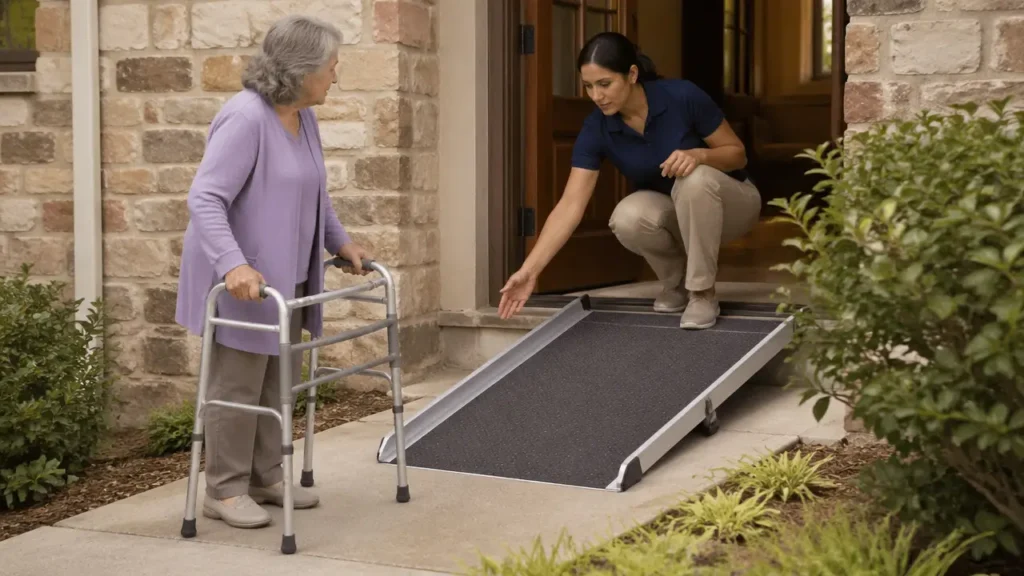
The safest ramp is not the one that simply reaches the doorway. It is the one a real person can use without tipping, drifting, slipping, or exhausting the caregiver. That is why ramp choice should start with three questions together: how steep is it, what keeps wheels or feet from slipping off the side, and what does the surface do in real weather?
Most bad ramp decisions come from focusing on only one part of the system. A ramp can have a reasonable length but poor side protection. It can have good edges but a slick surface. It can have plenty of grit but still be too steep for the person. This guide keeps those pieces together. For the wider entry-access picture, start with ramps and thresholds overview.
If entry access is only one part of the setup, the mobility and transfers master guide connects the wider transfer and equipment picture.
Why This Matters
Slope, side protection, and surface directly affect:
- uphill effort
- downhill control
- walker and wheelchair tracking
- edge drift risk
- wet-weather safety
- caregiver strain
The ADA and related accessibility guidance are useful reference points because they treat ramps as a system, not just a board on an incline. That means looking at slope, landings, edge protection, and surface condition together.
Key Factors That Change the Decision
Slope
For a full-use accessible ramp, 1:12 is the common maximum reference. That means one inch of rise for every twelve inches of run. Gentler is often better when space allows, especially for:
- manual wheelchair users
- caregiver pushing
- walker users
- wet outdoor entries
Side guards and edge protection
If there is a drop at the side of the ramp, wheels and feet need protection from drifting off the edge. That can come from:
- a curb edge
- a side barrier
- another design feature that clearly contains the travel path
The more the ramp is used in rain, fatigue, or tight tracking situations, the more important that edge protection becomes.
Surface
A ramp surface should be:
- stable
- firm
- slip-resistant
- maintainable in real weather
This is where many home ramps fail. The slope may be fine, but the surface becomes slick when damp, dirty, icy, or worn.
How to Use, Choose, or Set It Up Safely
Start with the rise and intended use
Before picking a ramp, know:
- the total rise
- whether the person walks or rolls
- whether the device is pushed by a caregiver
- whether the ramp is indoors, outdoors, or both
Then use ramp slope calculator basics to judge what length and landing setup make sense.
Match the side protection to the real risk
More edge protection matters when:
- the person tends to drift
- the wheels are narrow or small
- the ramp is long
- the ramp is exposed to rain or snow
- a caregiver must push downhill
If the risk of drifting off the edge is real, do not treat side protection as optional trim.
Choose a surface that can be maintained
Some traction options work well at first but fail quickly if they cannot handle the weather or the cleaning method. A good ramp surface decision asks:
- will this stay grippy in rain
- can it be cleaned without damaging it
- will wheels track well on it
- will winter maintenance destroy it
If the surface decision is the main problem, compare non-slip surfaces for ramps and thresholds and ramp care and anti-slip renewal.
Do not forget landings
Even a well-sloped ramp needs:
- a level place to start
- a level place to stop
- enough room to manage a door
- enough room to turn if the ramp changes direction
If the landing is too small, the rest of the ramp design may not rescue the setup.
Common Mistakes and Red Flags
Common mistakes:
- choosing the shortest ramp that physically fits
- assuming a gritty surface fixes a bad slope
- ignoring the edge because "no one has slipped off yet"
- forgetting that wet weather changes the effective safety of the ramp
- focusing on the run but not the landings
Red flags:
- the person drifts toward the edge
- the caregiver has to fight the downhill control
- the ramp feels much worse in rain than in dry conditions
- the landing does not leave room for the door swing
- wheelchairs or walkers jolt at transitions
If tracked-in water is part of the issue too, compare rain and wet floors strategy and non-slip surfaces for ramps and thresholds.
When to Get More Help
Get more help when:
- the ramp design needs a switchback or larger landing
- edge protection is missing on a meaningful drop
- the home entry is used daily and current workarounds still feel risky
- a portable ramp is being asked to do a permanent ramp's job
That is the point for a contractor, accessibility supplier, PT, or OT to assess the full access route.
Frequently Asked Questions
What is the safest home ramp slope to aim for?
Use 1:12 as a common maximum full-use reference, and go gentler when space and the person's needs make that possible.
Do side guards really matter on a home ramp?
Yes, especially when there is a real edge drop or the person may drift toward the side.
Can a rougher surface make a steep ramp safe enough?
No. Better traction helps, but it does not remove the risks created by a bad slope.
Why do landings matter so much?
Because people need room to stop, turn, manage doors, and regain control before and after the ramp.
Is a ramp with no side protection always unsafe?
Not always, but it is a serious concern when there is an exposed edge or meaningful drop beside the travel path.
What surface works best outdoors?
The best one is the one that stays slip-resistant in your weather and can be maintained without failing early.
When should I stop tweaking the surface and rethink the whole ramp?
When the ramp still feels too hard to control after traction fixes, or when edge protection, landing size, or slope remain the real problems.
If you still need to calculate whether the run is realistic, continue with ramp slope calculator basics and portable ramp types. If upkeep is the main issue now, compare ramp care and anti-slip renewal and non-slip surfaces for ramps and thresholds.